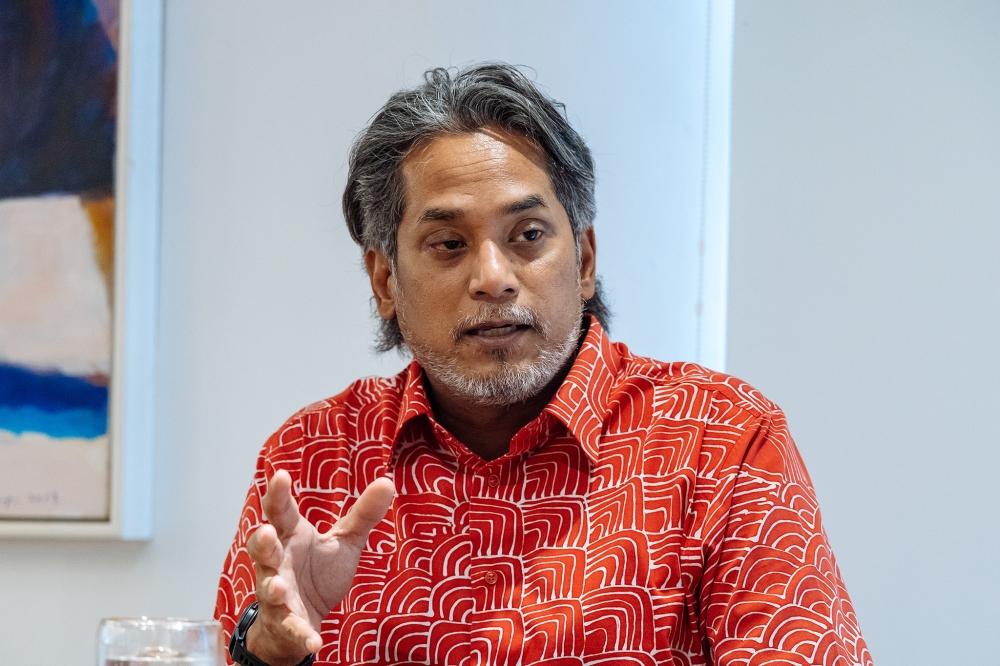
Senior political circles in Seremban have begun floating the possibility that Khairy Jamaluddin, the former Umno Youth leader and current Member of Parliament, could contest the Rembau state assembly seat as a Barisan Nasional candidate in future electoral contests. The speculation surrounding his political positioning has gained traction among observers who closely monitor developments within the ruling coalition's state machinery and leadership succession plans.
Khairy's name has surfaced amid broader discussions about BN's strategy for consolidating its control in Negeri Sembilan and identifying leadership figures capable of commanding both grassroots support and parliamentary credibility. His track record in youth politics and his established presence within Umno's organisational structure have made him a subject of internal party deliberations about potential candidates for significant electoral contests. The consideration of his candidacy reflects an attempt to leverage his political profile and experience within the state's electoral landscape.
What adds particular weight to these conversations is the suggestion that his transition to state-level politics could position him as a contender for the position of menteri besar. Malaysia's state government structures require the menteri besar to secure the confidence of the state assembly, making the establishment of a solid parliamentary base crucial for any serious aspirant to such offices. Khairy's potential shift from federal parliamentary representation to state assembly politics would ostensibly prepare him for executive responsibilities at the state level.
The political arithmetic in Negeri Sembilan has evolved considerably in recent years, with BN seeking to strengthen its organisational presence and ensure reliable representation across all state constituencies. Rembau, a mixed urban-rural constituency, represents the type of seat that could serve as a stepping stone for ambitious politicians aiming for higher office within state administrations. The constituency's demographic diversity and electoral significance within the state's overall political equation make it a valuable asset for coalition parties.
Khairy's political evolution over recent years has been marked by his efforts to reposition himself within Umno's hierarchy following his departure from the party's youth wing leadership. His parliamentary work and public engagements have kept him visible within national political discourse, though observers have noted his relative quietness compared to his more prominent interventions during his tenure as Umno Youth chief. A move to state politics could represent both a strategic repositioning and an attempt to broaden his power base beyond federal politics.
The menteri besar position carries substantial influence over state economic development, resource allocation, and local governance priorities. In Negeri Sembilan's context, the holder of this office would oversee critical portfolios including economic development, land administration, and state legislative agenda-setting. The significance of this role within Malaysia's federal structure means that selection processes for menteri besar candidates typically involve extensive consultation within BN's leadership structures and consideration of intra-party factional dynamics.
Within Umno's broader organisational context, Khairy's consideration for state-level candidacy reflects patterns seen elsewhere where senior federal politicians seek to establish alternative bases of power or consolidate political influence through multiple levels of representation. His selection as a BN candidate for Rembau would signal a deliberate strategy to deploy experienced personnel in constituencies deemed strategically important for the coalition's electoral performance and long-term political positioning.
The speculation about his potential elevation to menteri besar candidacy, however, should be understood within the context of established party protocols and factional considerations. Menteri besar selections typically involve negotiations among federal party leadership, state-level party organisations, and sometimes considerations of ethnic representation and community dynamics. Any official announcement regarding Khairy's candidacy would likely follow formal party selection processes and coalition coordination mechanisms.
For BN in Negeri Sembilan specifically, the question of leadership succession and candidate selection has become increasingly important given contemporary electoral competitiveness and shifting voter preferences across Malaysia's states. Deploying established figures like Khairy in state contests represents an effort to concentrate political experience and administrative capability within the state coalition apparatus. His parliamentary experience and national profile could serve as assets in campaigns that increasingly operate across multiple media platforms and require candidates capable of engaging sophisticated electorates.
The potential implications for Khairy's own political career trajectory are substantial. A successful transition to state politics and subsequent elevation to menteri besar would represent a significant advancement in his political standing, offering him executive authority and the opportunity to shape policy agendas at the state level. Conversely, a state-level position could be interpreted as a lateral move or partial retreat from his federal parliamentary status, depending on the broader political context and timing of such a transition.
For Malaysian politics more broadly, the consideration of such candidates reflects ongoing efforts by established coalition structures to maintain electoral competitiveness and adapt to changing political circumstances. The movement of experienced federal politicians into state-level contests and consideration for menteri besar roles demonstrates how mainstream parties continue to leverage experienced personnel across administrative levels. As Malaysia's political landscape evolves with generational transitions and shifting electoral coalitions, such strategic positioning of political figures remains a standard feature of coalition management and long-term political planning.

