The Ministry of Human Resources (KESUMA) has announced a comprehensive response to employment disruptions caused by the ongoing global supply chain crisis, committing to provide upskilling and reskilling opportunities through Technical and Vocational Education and Training (TVET) programmes. The initiative, unveiled in Johor Bahru on June 23, represents a targeted intervention aimed at stabilising the livelihoods of workers across Malaysia's most vulnerable employment sectors, signalling the government's recognition that structural economic shifts require coordinated workforce development responses.
Minister Datuk Seri R. Ramanan indicated that the affected worker population spans three economically significant sectors: services, manufacturing, and construction. These industries have been particularly susceptible to supply chain volatility, labour shortages, and production slowdowns stemming from global logistics challenges. By focusing intervention efforts on these sectors, KESUMA is directly addressing areas where displacement risk remains elevated and where demand for retrained personnel in emerging roles is likely to exceed supply in coming months.
Central to the government's approach is integration with the Social Security Organisation's (PERKESO) MYFutureJobs platform, a digital employment matching system designed to connect displaced workers with suitable vacancies. Rather than simply offering training in isolation, the programme combines skills development with active job placement support, ensuring that newly qualified workers move directly into matching employment opportunities. This end-to-end model reduces the gap between training completion and productive employment, a persistent challenge in workforce transition programmes globally.
The matching process emphasises precision in placement decisions. According to Ramanan, job matching will be conducted with careful attention to alignment between individual capability and employer requirements, minimising skills mismatches that commonly result in high staff turnover and worker dissatisfaction. This quality-focused approach suggests KESUMA is learning from previous upskilling initiatives where rushed placement sometimes led to poor retention and outcomes.
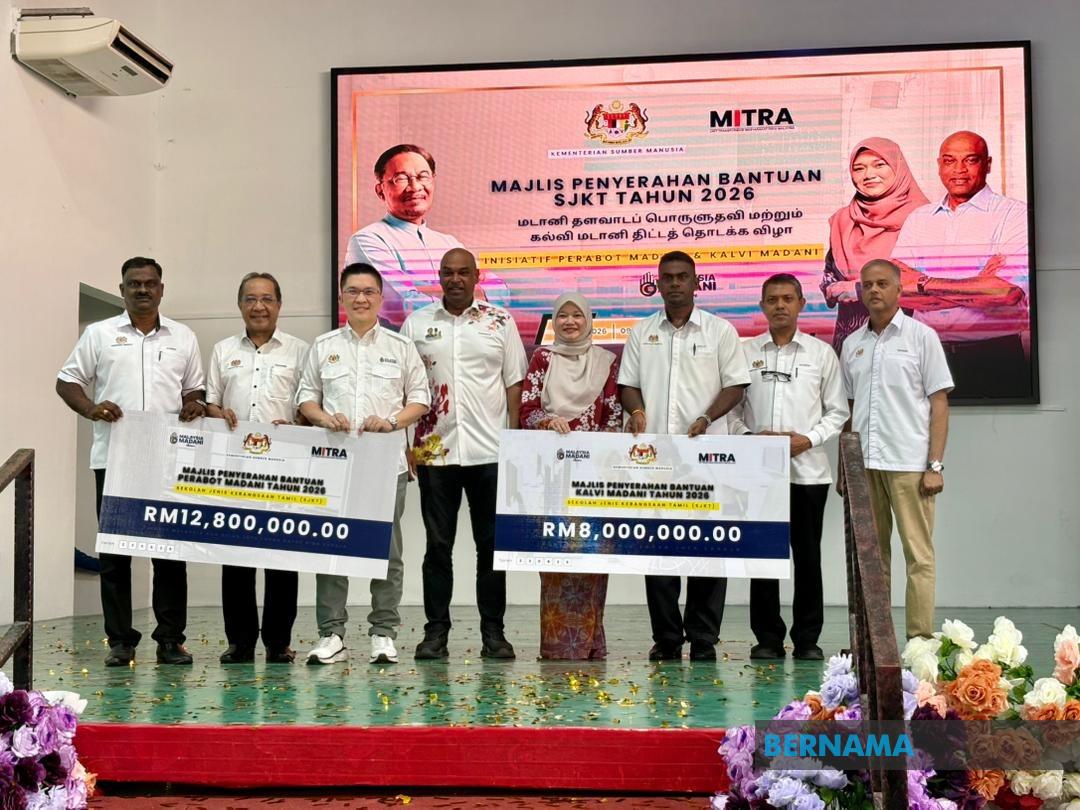
Simultaneously, KESUMA unveiled the MADANI Furniture Initiative, a RM12.8 million infrastructure investment targeting Tamil vernacular schools. The programme will distribute high-quality furniture and equipment including tables, chairs, storage cabinets, and cooling fans across 361 government-aided Tamil schools (SJKT) nationwide. Beneficiaries include approximately 39,692 pupils and 5,290 teachers, representing a significant proportion of Malaysia's Tamil-medium education system. The phased rollout commencing from June through August ensures orderly distribution while managing supply logistics.
Education Minister Fadhlina Sidek and Deputy Education Minister Wong Kah Woh's attendance at the Johor Bahru launch of these initiatives underscores whole-of-government commitment to address educational disparities and employment security simultaneously. The convergence of workforce development and vernacular school support reflects recognition that educational equity and labour market resilience are interconnected policy challenges requiring coordinated ministerial action.
The complementary KALVI MADANI Programme allocates RM8 million specifically toward Indian pupils' educational advancement and teacher support across 315 selected Tamil schools. This targeted programme encompasses free tuition classes addressing academic gaps, nutritional support ensuring physical development and concentration capacity, learning kits and technological devices facilitating modern pedagogical approaches, and teacher welfare initiatives recognising educator burnout. The approximately 10,410 Indian pupils directly benefiting from this initiative represent a distinct focus on historically marginalised communities within Malaysia's education landscape.
These interventions collectively reflect Malaysia's awareness that supply chain disruptions carry broader socioeconomic implications beyond immediate business disruption. Worker displacement without support pathways accelerates inequality, reduces consumer spending, and erodes social cohesion. By coupling workforce retraining with educational and nutritional support for vulnerable communities, KESUMA is adopting a holistic approach that acknowledges interconnections between employment security, educational quality, and social stability.
The timing of these announcements assumes particular significance for Southeast Asia's broader economic context. Malaysia's position as a regional manufacturing and services hub means that global supply chain volatility directly impacts local employment stability. Countries throughout ASEAN face similar pressures, and Malaysia's policy response—emphasising active labour market adjustment through TVET and digital job matching—offers a model that other regional economies may examine. The effectiveness of these programmes in facilitating smooth worker transitions could influence approaches adopted by neighbouring governments.
For Malaysian workers in affected sectors, these programmes represent concrete pathways toward economic security amidst external shocks beyond individual control. The emphasis on quality job matching rather than generic skills training suggests KESUMA recognises that worker confidence in retraining outcomes depends on demonstrable placement success. Success in placing retrained workers into suitable roles would validate TVET as a legitimate career pathway rather than a residual option, potentially shifting cultural perceptions of vocational education in a context where tertiary academic education traditionally dominates aspirational narratives.
The supply chain crisis, while presenting immediate economic challenges, has catalysed government investment in workforce adaptability infrastructure. Malaysia's commitment to TVET expansion and digital employment matching positions the economy for greater resilience against future disruptions. However, programme effectiveness ultimately depends on employer engagement, trainer quality, and sustained funding commitments extending beyond initial announcements. Monitoring implementation progress and measuring genuine employment outcomes for participants will determine whether these initiatives represent transformative policy change or temporary crisis response measures.