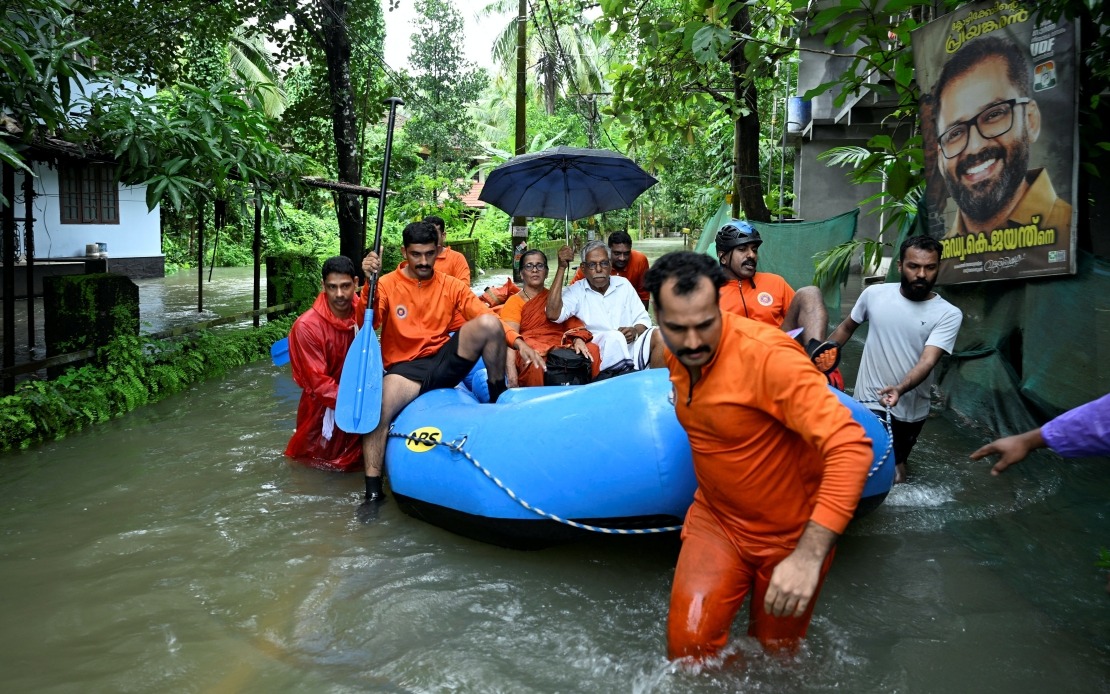
The human toll from Kerala's ongoing monsoon disaster continues to mount, with officials confirming 26 deaths linked to rain-related incidents across India's southern state. At a media briefing Wednesday, Chief Minister V D Satheesan disclosed that the casualty count reflects the severity of flooding and landslide events that have ravaged the region since early August. Beyond those killed, the state has registered 11 injured persons and continues searching for four people reported missing in the chaos, underscoring how rapidly natural disasters can overwhelm even prepared administrative systems.
The scale of displacement tells a deeper story about the disaster's reach into everyday life. Across Kerala, approximately 27,048 people have been forced from their homes as floodwaters persist in low-lying communities and inundation remains widespread in residential areas. To manage this humanitarian challenge, the state government has activated 462 relief camps throughout Kerala, providing temporary shelter and basic services to those who have lost access to their homes. This represents a significant mobilisation of resources and personnel, yet the ongoing nature of heavy rains means the situation remains fluid and potentially subject to further deterioration.
The economic impact extends deeply into agricultural communities, a sector that forms the backbone of livelihoods across rural Kerala. State officials have documented crop damage spanning 1,882 hectares of farmland, with the destruction affecting 23,537 farming families who depend on harvests for survival. This agricultural setback carries implications beyond immediate food security; it threatens household incomes during a critical period and may force many small farmers into debt cycles as they attempt to recover. The cascading effects of such damage ripple through rural economies for months or years after waters recede.
In response to the crisis, Chief Minister Satheesan announced a comprehensive relief package targeting affected families. The measures include enhanced compensation for those who have lost relatives in the disaster, financial assistance for those whose homes have been destroyed or severely damaged, and support for property losses incurred during the flooding. These interventions, while essential, arrive at a moment when the immediate priority remains keeping people safe as monsoon conditions persist across the region.
The meteorological outlook remains unsettling for Kerala's residents and recovery efforts. The India Meteorological Department issued an orange alert for Wednesday, signalling expectations of significant additional rainfall. The IMD's forecast extends through August 11, predicting widespread precipitation across Kerala, coastal Karnataka, and Telangana during this seven-day window. This extended warning means relief workers and residents cannot yet relax vigilance, and the risk of additional flooding, landslide events, and infrastructure damage remains elevated throughout the forecast period.
The geographical concentration of heaviest impacts has been particularly severe in northern Kerala's high-range areas. Districts including Kozhikode and Kannur have experienced intense rainfall since August 1, triggering multiple landslide events that have buried homes, blocked roads, and complicated rescue operations. The persistence of floodwaters in low-lying zones suggests that drainage systems have become overwhelmed by the volume of water falling from above. Many residential structures remain submerged, and residents displaced weeks earlier face uncertain timelines for returning home.
For Southeast Asian observers, Kerala's monsoon crisis offers a cautionary reminder about climate vulnerability shared across the region. Monsoonal rainfall patterns affect not only southern India but also Malaysia, Thailand, and other neighbouring nations during their respective wet seasons. The scale of displacement and casualties in Kerala—a relatively developed state with substantial administrative capacity—illustrates how even well-organised regions struggle when natural forces exceed historical precedent or exceed the capacity of existing drainage infrastructure. The crisis underscores the importance of investment in climate adaptation, early warning systems, and disaster preparedness across the broader region.
The relief camps themselves represent both a success in rapid response and a testament to ongoing strain on Kerala's systems. Housing 27,048 people in 462 locations requires coordination across water supply, sanitation, medical care, food distribution, and security. Each facility must meet basic humanitarian standards while operating under challenging conditions. The sustainability of these operations depends on continued government funding and volunteer support, which can waver as the initial crisis response phase transitions to longer-term recovery work.
Infrastructure damage compounds the humanitarian challenge, as roads remain blocked or severely compromised by flooding and landslides in affected areas. This isolation complicates the delivery of relief supplies and restricts movement for those attempting to reach safety or access medical care. Recovery of critical infrastructure may take weeks or months, prolonging the period during which affected communities remain partially cut off from broader economic activity and normal services.
The broader implications for disaster management in India's coastal and hilly regions suggest that existing early warning and evacuation protocols require continuous refinement. Although the IMD successfully issued advance alerts, the transition from warning to effective action depends on local infrastructure, community preparedness, and access to safe evacuation routes. Kerala's experience demonstrates both the necessity and limitations of meteorological forecasting when communities lack sufficient escape options or sheltering capacity in vulnerable areas.

