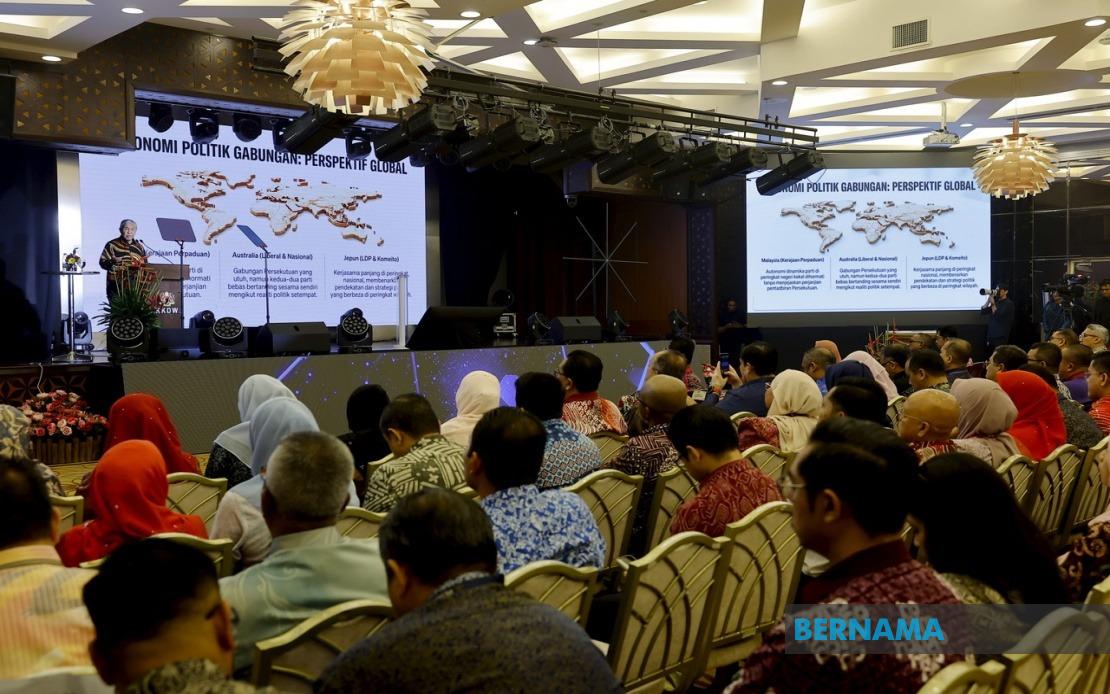
The Community Development Department (KEMAS) is embarking on an ambitious nationwide expansion of early childhood education services for children with special needs, with Deputy Prime Minister Datuk Seri Dr Ahmad Zahid Hamidi announcing plans to introduce Tabika Tunas Istimewa facilities in every district across the country within the next three years. The initiative represents a significant commitment to ensuring that rural and urban families alike maintain access to quality developmental services for children requiring additional educational support, without imposing heavy financial burdens on households.
Currently operating 19 classroom facilities, KEMAS intends to scale up operations substantially by adding up to 132 new classes through both the establishment of entirely new centres and comprehensive refurbishment of existing infrastructure. This expansion trajectory would bring the total operational capacity to approximately 151 classes nationwide by 2027, a figure that Ahmad Zahid said during the Rural and Regional Development Ministry's monthly assembly would guarantee geographic coverage across Malaysia's administrative districts. The phased approach reflects both the financial constraints inherent in large-scale government rollouts and the practical realities of establishing quality facilities that meet recognised standards for special needs education.
A cornerstone of the programme's design is its commitment to keeping monthly fees at RM100 regardless of location or facility type, a pricing structure intended to remove economic barriers for low and middle-income families accessing these services. This affordability principle proves particularly significant for rural communities where household incomes typically trail urban averages and where transportation costs alone create substantial disincentives for accessing centralised services. By maintaining uniform, modest fees, the programme signals that special needs education is positioned as a public good rather than a market commodity, aligning with broader social development objectives around equity and opportunity.
The expansion initiative sits within Ahmad Zahid's broader philosophical framework regarding rural development, which he articulated as prioritising tangible, measurable improvements in people's daily circumstances rather than abstract policy pronouncements. His emphasis on identifying "game changers" that unlock new economic opportunities and raise incomes in rural areas suggests that early childhood intervention for children with special needs is being viewed not merely as a social welfare expenditure but as an investment in human capital development that can yield long-term economic returns. Children receiving early developmental support are more likely to integrate successfully into mainstream education and subsequently into the labour market, reducing dependency on social safety nets and expanding the productive workforce.
Beyond the Tabika Tunas Istimewa programme itself, Ahmad Zahid outlined parallel initiatives aimed at optimising the utility and returns from government assets held by Regional Development Authorities (LKW). These agencies have been directed to achieve Return on Assets targets between four and six per cent, a performance metric that incentivises more productive deployment of state-owned resources. The requirement that all LKWs submit Asset Activation Plans within a compressed 100-day timeline reflects urgency around ensuring that public property portfolios generate measurable economic value for communities, transforming dormant or underutilised assets into revenue-generating operations or facilities.
The Rural Economic Council Executive Committee simultaneously moved to strengthen the Sustainable Village Programme by establishing a dedicated task force supporting cooperative enterprises. This task force will focus on governance capacity, brand development, market linkages, and strategic business networking for cooperative organisations operating in rural settings. The coordination between multiple government bodies and the emphasis on holistic support for cooperative enterprises reflects recognition that rural economic transformation requires interventions spanning education, asset management, and enterprise development simultaneously rather than in isolation.
For Malaysian policymakers and regional observers, the KEMAS expansion programme illustrates a broader strategic shift toward making public services more accessible at the district level rather than concentrating them in state or federal capitals. This decentralisation approach reduces both the direct costs families incur in accessing services and the indirect costs associated with travel time and foregone economic activity. It also acknowledges demographic realities: Malaysia's population remains substantially distributed across rural areas despite decades of urbanisation, and service provision patterns must reflect this geographic diversity.
The special needs education sector in Southeast Asia remains significantly underfunded relative to need, with many countries grappling with shortages of trained educators, inadequate facilities, and limited parental awareness about early intervention benefits. Malaysia's commitment to systematic expansion with affordability guardrails positions it as a potential regional leader in democratising access to these essential services, potentially creating replicable models for neighbouring countries confronting similar challenges. The emphasis on reaching every district within a defined timeframe provides measurable accountability and creates momentum that can sustain implementation despite inevitable bureaucratic friction.
Implementation challenges will inevitably emerge, particularly around sourcing adequately trained special education professionals, ensuring quality consistency across newly established facilities, and managing capacity constraints as demand responds to improved availability. Rural areas especially face recruitment difficulties for specialised educators, potentially creating bottlenecks in the expansion timeline. The success of this programme will ultimately depend on whether funding commitments remain stable across electoral cycles and budget cycles, whether recruitment and training pipelines develop sufficient capacity, and whether families become aware of and confident in accessing newly established services.
The RM100 monthly fee structure also merits ongoing scrutiny regarding whether it generates sufficient revenue to sustain operations or whether programmes depend on continuous government subsidies. International experience suggests that early childhood special needs services typically require substantial per-child public investment, and fee structures alone rarely cover operational costs. If the government intends these facilities to be self-sustaining, fee levels may eventually require adjustment, creating political sensitivity around programme affordability.
For Malaysian families with children requiring special needs support, the expansion programme signals substantially improved access to developmental services within their home districts, reducing travel burdens and associated costs. For rural communities more broadly, the concentration of multiple government initiatives around asset activation, cooperative strengthening, and service delivery expansion suggests a coordinated policy framework aimed at comprehensive rural transformation rather than fragmented, sector-specific interventions. The success or failure of these interconnected initiatives will significantly influence whether rural Malaysia's development trajectory continues to lag urban centres or whether targeted investments can generate more balanced national growth patterns.

