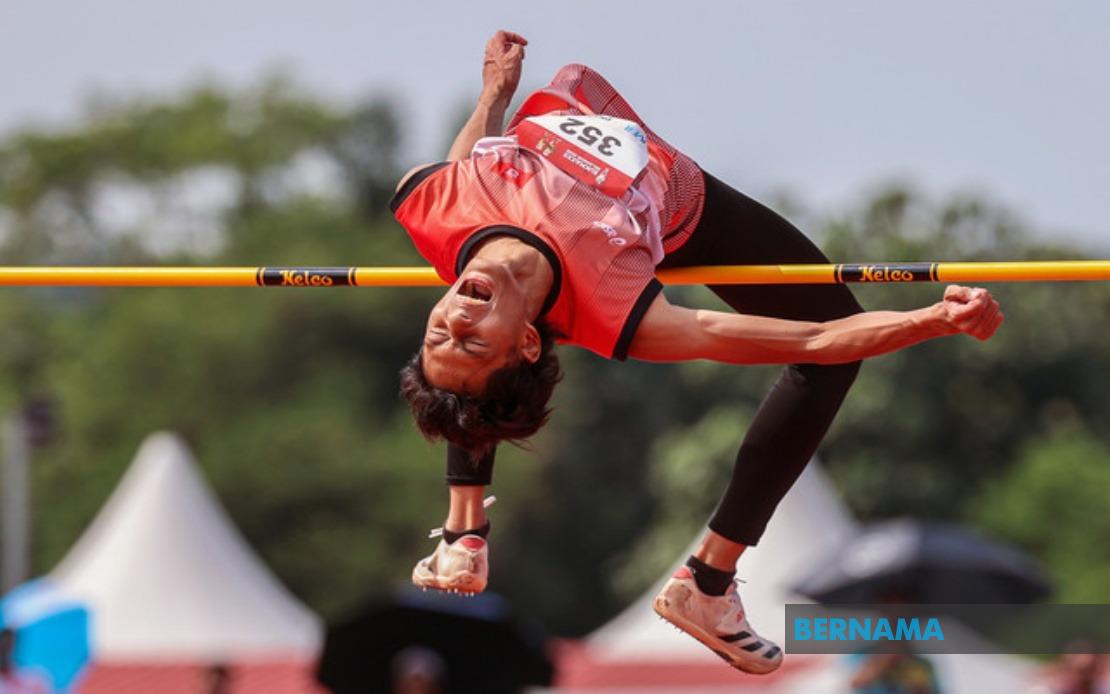
Dzul Darwisy Adam Khairulaswari has completed a remarkable two-year transformation in Malaysian athletics, culminating in a gold medal performance at the Selangor 2026 edition of the Malaysia Games held at Universiti Putra Malaysia (UPM) Sports Centre in Serdang. The 18-year-old Kelantan high jumper cleared 2.09 metres to claim his first victory at SUKMA, a result that carries particular weight given his modest 11th-place finish at the Sarawak games in 2024. His triumph also marks Kelantan's second athletics gold at these biennial championships, underlining the state's growing strength in track and field disciplines.
The competition saw strong performances across the podium, with both medallists coming from Kedah. Muhamad Nawawi Mohamad secured silver with a 2.07 metre effort, while Muhammad Naufal Zulkifli completed the medals with a bronze at 2.04 metres. The quality of jumping throughout the final suggested that Malaysian high jump has reached a competitive threshold where multiple athletes can now exceed the 2.04 metre mark consistently, a progression that bodes well for the nation's performance at regional competitions.
Dzul Darwisy's victory carries particular significance as his inaugural triumph at a major national championship level. In the immediate aftermath of his win, the teenager reflected on what had seemed an unlikely path just months earlier. He characterised his success as a blessing, acknowledging the sustained support from his family, friends, and coaching staff. For an athlete who had never previously won a major tournament title—including unsuccessful attempts at the Malaysian School Sports Council (MSSM) national championships—breaking through at SUKMA represents a watershed moment in his development.
The former national high jump champion Lee Hup Wei, who now works as the national reserve coach, was present to witness the final event, providing official recognition and continuity to Malaysia's high jump programme. This coaching presence underscores the institutional support surrounding athletes working towards regional and international standards. Dzul Darwisy's previous best achievement had been a third-place finish at the 2023 MSSM championships while he was still in Form Three, suggesting that his improvement trajectory has accelerated significantly during his transition through secondary school.
Notably, Dzul Darwisy competed at the Selangor 2026 games whilst managing a back injury that caused him considerable discomfort throughout the competition. Despite this physical setback, he managed to improve his personal best from the previous standard of 2.03 metres to 2.09 metres—a six-centimetre advancement that demonstrates both technical refinement and increased strength capacity. However, his original target for this competition had been considerably more ambitious, with the athlete aiming for heights between 2.13 and 2.15 metres, indicating that his potential remains untapped and that future performances could substantially exceed today's winning mark.
The young jumper has already established clear medium-term objectives that extend beyond his SUKMA success. His immediate focus centres on exceeding the 2.16 metre threshold, a benchmark he views as critical for securing qualification to the SEA Games scheduled for the following year. Breaking into that realm would position him among the region's elite high jumpers and represent significant progress toward Malaysia's sporting ambitions across Southeast Asia. Beyond the SEA Games, Dzul Darwisy has set his sights on the SUKMA record, currently held by A. Kavee Alagan of Negeri Sembilan at 2.21 metres, a mark established during the 2012 edition held in Pahang.
The gap between Dzul Darwisy's current capability and the SUKMA record is approximately 0.12 metres—a substantial but not insurmountable distance for an athlete showing his rate of improvement. Should he progress from 2.03m to 2.21m over the coming years, his trajectory would represent a gain of 0.18 metres, which whilst ambitious, sits within the realm of realistic achievement for a teenager showing consistent development. The combination of physical maturation, continued technical coaching, and injury-free training will determine whether he becomes the next athlete to reset the SUKMA high jump standard.
Dzul Darwisy's emergence as a medal contender arrives at a pivotal moment for Malaysian athletics, as the nation prepares for regional championships and longer-term planning toward larger international events. Young athletes breaking through at SUKMA traditionally receive enhanced support and visibility, opening pathways to higher-level competitions and coaching resources. The teenager's combination of youth, raw potential, and demonstrated improvement rate suggests he could become a fixture in Malaysian high jump for the next decade, potentially representing the nation at multiple SEA Games and Asian Games cycles.
The story of his ascent also reflects broader patterns in Malaysian sports development, where systematic coaching and competitive structures at the school and state levels gradually produce athletes capable of national success. Dzul Darwisy's journey from regional obscurity to national champion in two years validates the investment in grassroots athletics programmes and suggests that other states are developing talent that may not immediately surface at SUKMA level. His victory should prompt closer examination of high jump development across Malaysian schools, potentially identifying other young jumpers with similar potential who are still waiting for their breakthrough moment.
As Dzul Darwisy prepares for the next phase of his athletic career, his Selangor 2026 gold medal serves as both a celebration of hard-won achievement and a foundation for higher ambitions. Managing his back injury while maintaining progression will require careful attention to conditioning and recovery protocols. The presence of experienced coaches like Lee Hup Wei in Malaysia's high jump structure provides encouragement that proper support systems exist to nurture athletes through the demanding transition from SUKMA success toward international competition.

