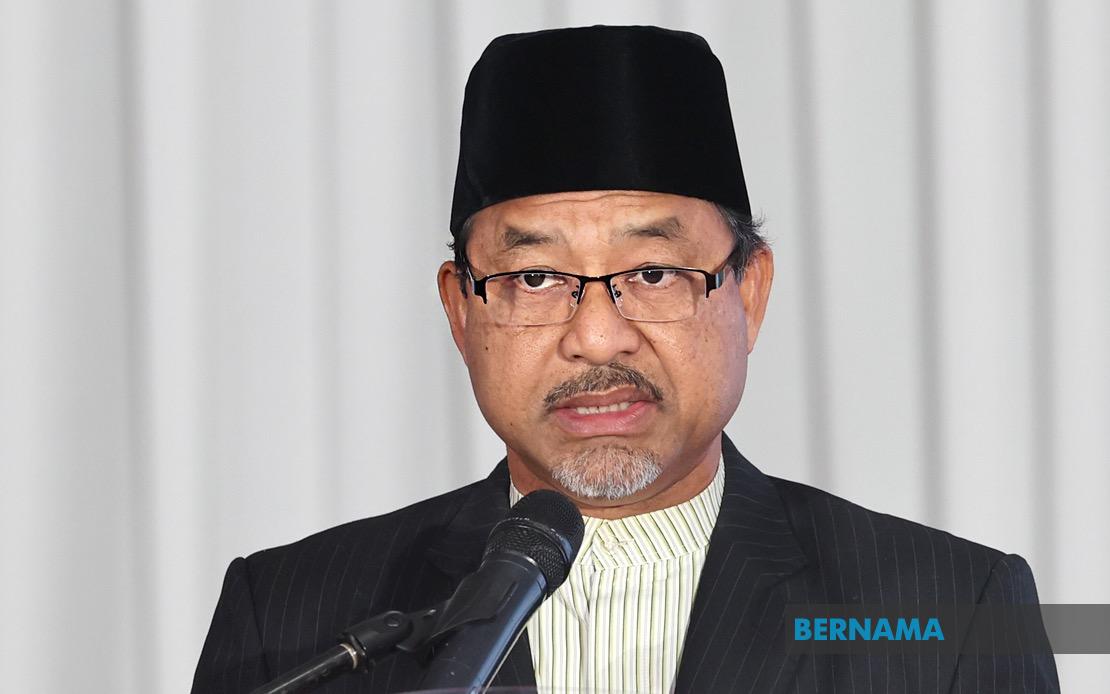
Kelantan has successfully maintained forest cover above the national threshold, with 778,708.34 hectares of forested land representing 51.79 per cent of the state's total area, the state legislative assembly heard this week. The achievement demonstrates the state's continued adherence to the Peninsular Malaysia Forestry Policy, which mandates that at least half of the country's land mass remain under forest and tree cover—a benchmark increasingly important as Malaysia positions itself as a regional leader in environmental stewardship.
Menteri Besar Datuk Mohd Nassuruddin Daud outlined how the state government's forest management approach balances conservation imperatives with economic needs. The Kelantan Forestry Department has adopted a multi-pronged strategy that extends beyond passive preservation, actively identifying state-owned parcels suitable for gazetting as Permanent Reserved Forests under the regulatory framework established by the National Forestry Enactment. This proactive land classification represents a significant step in institutionalising long-term forest protection across the state.
The framework governing Kelantan's protected areas has been strengthened by recent legislative amendments. Protected forests are now gazetted in accordance with specific forest function classes outlined under Section 10(1) of the National Forestry Enactment (Adoption) (Amendment) (No. 3) 2025, creating a more structured classification system that delineates between conservation zones, production forests, and other designated categories. This legislative clarity provides forest managers with clearer directives and reduces ambiguity in enforcement operations.
Beyond formal gazettement, the state government is actively expanding forest coverage through landscape restoration initiatives and coordinated tree-planting efforts. Participation in the Greening Malaysia campaign represents a commitment that extends restoration work beyond government-managed reserves into community and private spaces. These programmes address not only the quantitative target of maintaining forest area but also qualitative aspects including biodiversity recovery and ecosystem resilience in degraded regions.
The state's approach fundamentally rests on what officials describe as a balanced methodology—one that refuses to treat conservation and development as zero-sum propositions. Rather than imposing blanket restrictions on land use, Kelantan's model seeks to demonstrate that sustainable economic activity and forest protection can coexist when properly planned and monitored. This philosophy acknowledges that rural communities depend on forest resources and that local livelihoods must be factored into conservation equations if policies are to enjoy genuine social acceptance.
Technological capacity represents a pivotal dimension of Kelantan's contemporary forest management regime. The state has invested in sophisticated monitoring systems capable of detecting forest area fluctuations and identifying potential encroachment at nascent stages, before unauthorised activities can establish firm foothold. Digital surveillance tools provide early warning mechanisms that significantly enhance enforcement efficiency and reduce the likelihood that monitoring becomes reactive rather than preventive.
The verification process itself demonstrates procedural rigour. Information indicating forest area changes or suspected encroachment is not immediately subject to enforcement action but rather undergoes substantiation through ground-level patrols and detailed field inspections. This deliberate approach mitigates risks of false positives and ensures that enforcement resources target genuine violations rather than data anomalies. The procedure also affords affected parties opportunity to contest findings before official intervention occurs.
Kelantan's forest cover achievement carries implications that extend beyond state boundaries. As one of Malaysia's largest forest holders, the state's stewardship influences regional carbon sequestration capacity and biodiversity conservation across Peninsular Malaysia. The state's performance against the 50 per cent threshold demonstrates that maintaining forest cover remains technically and politically feasible even in jurisdictions where land pressures are considerable, offering instructive precedent for other states facing similar balancing challenges.
The alignment with national forestry policy underscores the integration of state and federal environmental agendas. Kelantan's compliance with the Peninsular Malaysia Forestry Policy framework reflects institutional coordination and shared commitment to nationally-set environmental objectives. This vertical alignment proves essential for coherent environmental governance across Malaysia's diverse state systems and reflects how federal standards can guide regional implementation without imposing centralised micromanagement.
Looking forward, sustaining the 51.79 per cent figure requires sustained investment in both conservation infrastructure and community engagement. The state's emphasis on balancing approaches suggests awareness that fortress conservation models—where local populations are excluded from forest management decisions—frequently generate resentment and undermine compliance. By positioning forest protection as a shared enterprise rather than top-down imposition, Kelantan appears to be building the social foundations necessary for long-term sustainability.

