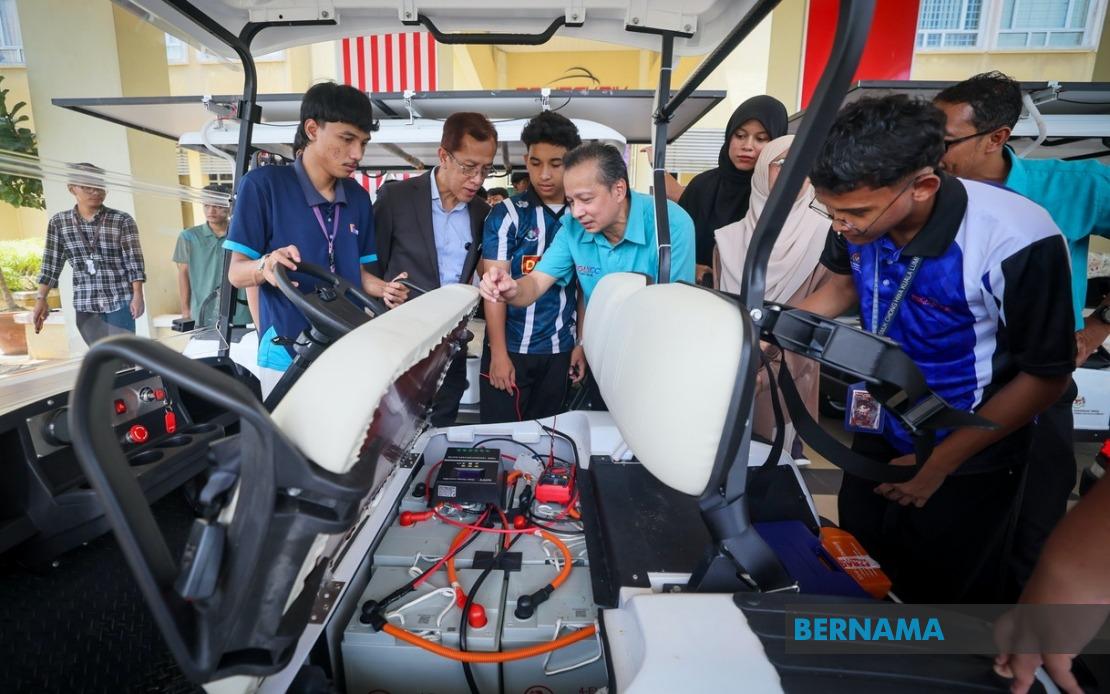
Jeli Kelantan Polytechnic (PJK) has achieved a notable milestone in renewable energy innovation by successfully launching solar-powered buggy cars, the first initiative of its kind in Kelantan state. The Solar Buggy Car Technology Innovation Project represents a tangible demonstration of how educational institutions can translate theoretical knowledge into practical, deployable green technology solutions that address Malaysia's broader sustainability objectives.
The project emerged from intensive collaboration between academic staff and students, with 20 third-semester learners from the Diploma in Electrical Engineering (Green Energy) programme completing the development phase in approximately one month. According to Mohd Zamre Ab Rahman, the polytechnic's director, the initiative required an investment of nearly RM300,000 and was spearheaded by lecturer Chung Boon Chuan. The compressed timeline reflects both the pedagogical efficiency of the programme and the practical grounding students acquire from their foundational coursework, which equipped them with essential technical competencies applicable to real-world engineering challenges.
The solar panel installation mechanism enables the buggy cars' battery systems to harness solar energy for charging, fundamentally reducing reliance on conventional electrical grid supply. This dual-benefit approach serves immediate operational advantages while simultaneously educating students about energy autonomy and off-grid technology viability. PJK currently operates six such vehicles—comprising four four-seater configurations and two two-seater variants—with each unit representing an approximate capital expenditure of RM40,000. The fleet's composition reflects consideration of practical utility, balancing transport capacity requirements with manufacturing and maintenance efficiency.
The polytechnic's commitment to establishing itself as a green campus extends beyond individual projects. The institution has positioned renewable energy adoption as a strategic institutional priority, signalling to students, industry partners, and state authorities that sustainability represents a core value rather than peripheral initiative. This positioning carries particular significance within Kelantan's economic development context, where traditional sectors are gradually complemented by emerging technology-focused industries requiring skilled personnel.
Enrolment growth in the green energy diploma programme demonstrates market responsiveness to curriculum innovation. Student intake numbers have doubled from 40 to 80 between programme inception in July of the previous year and the current academic session, indicating strong regional and national demand for graduates equipped with renewable energy competencies. This expansion reflects broader labour market trends as Malaysia accelerates energy transition planning and requires technically qualified professionals capable of implementing renewable infrastructure across residential, commercial, and industrial applications.
Kelantan's own renewable energy landscape is experiencing tangible expansion. Solar farm developments in locations including Tok Uban and Pasir Mas represent state-level commitment to generating capacity diversification and energy independence. These installations create employment opportunities throughout the development, construction, operation, and maintenance lifecycle, while simultaneously establishing a local ecosystem where polytechnic graduates encounter immediate career prospects. The alignment between educational programming and actual industry deployment strengthens the value proposition of technical education.
Institutional investment underscores commitment to capacity building. The Ministry of Higher Education allocated RM2 million to PJK during the previous fiscal year specifically for laboratory upgrades and acquisition of contemporary equipment supporting green energy teaching and research activities. This financial commitment provides students access to industry-standard technology, narrowing the gap between classroom learning environments and professional workplace conditions. Such infrastructure investment yields compounding returns through improved graduate preparation and enhanced institutional reputation within both academic and industrial sectors.
Beyond educational applications, PJK has signalled commercial readiness to serve external demand. The polytechnic now accepts installation orders from public agencies and private entities seeking to integrate solar charging systems into buggy car fleets. This commercialisation pathway transforms student projects into revenue-generating operations while providing authentic real-world experience where learners encounter client specifications, project management constraints, quality assurance requirements, and technical troubleshooting in genuine commercial contexts. Such experiential learning surpasses traditional classroom pedagogies in developing professional competence and problem-solving capability.
The initiative carries implications extending beyond Kelantan's immediate borders. As a regional education hub, the polytechnic's innovations attract attention from neighbouring states and international observers monitoring Malaysia's renewable energy transition progress. Demonstration projects of this nature build confidence in technological feasibility and local capacity, potentially catalysing similar initiatives within other states' technical education systems. The solar buggy car project exemplifies how polytechnics—intermediate institutions positioned between secondary education and university-level training—can function as innovation bridges translating research concepts into deployment-ready solutions.
The sustainability imperative shaping this project reflects Malaysia's positioning within global decarbonisation frameworks. The National Energy Policy and associated climate commitments establish targets for renewable energy integration within the national electricity generation mix. Institutional initiatives like PJK's demonstrate distributed commitment to these objectives, building human capital necessary for their achievement while creating proof-of-concept installations that validate technological approaches and build stakeholder confidence in renewable technologies.
Looking forward, the success of this inaugural solar buggy project positions PJK advantageously for expanded green energy innovation initiatives. Student enthusiasm, demonstrated competency, institutional leadership commitment, and emerging market demand converge to create conditions favouring continued programme development. Future initiatives might encompass energy storage systems, grid integration technologies, or applications extending beyond transport into stationary power generation or industrial process applications. The institutional trajectory suggests Kelantan's technical education sector is establishing itself as a regional centre for renewable energy innovation and skilled workforce development.

