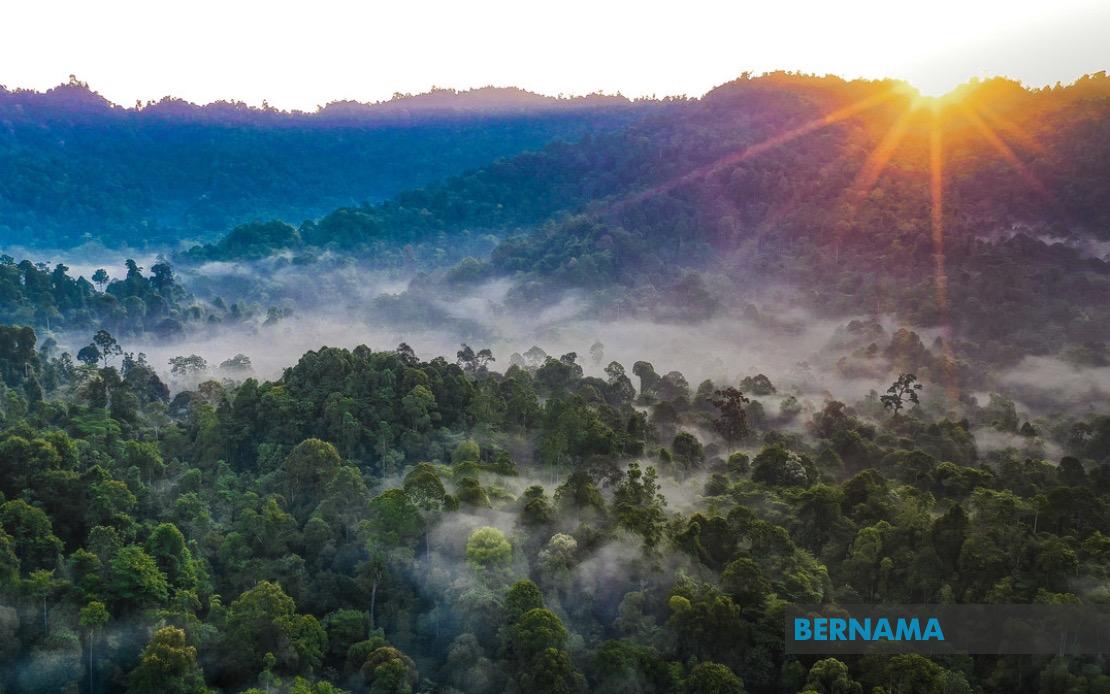
The Kelantan state government has committed to replacing every forest reserve area that undergoes degazetting for development or resource extraction activities, according to Deputy Menteri Besar Datuk Dr Mohamed Fadzli Hassan. The pledge represents an effort to safeguard the state's overall forest conservation commitments despite authorizing industrial activities in previously protected zones. This assurance emerged during a state government executive council meeting at the Kota Darulnaim Complex in Kota Bharu, where officials discussed management of natural resources and environmental preservation strategies.
The commitment takes on particular significance in light of ongoing controversy surrounding the Temangan Forest Reserve in Machang district, which was recently degazetted to facilitate granite mining operations. Dr Mohamed Fadzli clarified that the mining approval itself traces back to 2009, when the state authorized a company to extract granite from the reserve area. The decision to remove the forest reserve status from Temangan represents the formal culmination of that earlier approval, enabling the operator to proceed with extraction activities without the legal constraints imposed by forest reserve designations.
For the Malaysian resource sector, this announcement reflects the persistent tension between environmental protection and economic development priorities that characterize governance in the East Coast states. Kelantan, like neighbouring states such as Terengganu and Pahang, possesses significant reserves of granite, kaolin, and other mineral resources that generate state revenue and employment. However, these mineral deposits frequently exist within or beneath forested areas, creating policy dilemmas for state governments balancing fiscal needs with conservation objectives. The Temangan situation exemplifies this ongoing challenge and the government's chosen approach: permitting extraction while theoretically offsetting forest loss through replacement reserves elsewhere.
Dr Mohamed Fadzli indicated that he had requested the Kelantan State Forestry Department to provide detailed clarification on the status and timeline of replacement forest reserve identification and gazetting. The forestry department has apparently confirmed that its standard procedure requires that any forest reserve formally cancelled or degazetted must be matched with replacement designation of equivalent or greater forest areas. This procedural commitment, if consistently implemented, would theoretically maintain Kelantan's total forest reserve coverage despite individual degazettements authorized for specific projects.
The practical execution of such replacement commitments, however, presents significant implementation challenges. Finding suitable alternative forest areas for gazetting requires identifying land that meets forestry criteria, securing tenure clarity, and navigating bureaucratic processes that often move slowly. In Malaysian states, the gap between policy commitments and actual replacement gazetting has occasionally created situations where promised forest areas were never formally designated, effectively resulting in net forest reserve loss. Environmental advocates and research institutions have documented instances across Southeast Asia where degazetting proceeded more rapidly than replacement gazetting, leaving conservation targets unmet.
The broader context for Kelantan's policy involves the state's economic structure and revenue dependencies. As a state with lower GDP per capita than Selangor, Kuala Lumpur, or even several other peninsular states, Kelantan relies substantially on land-based resource extraction and agriculture. Mineral extraction, while contentious environmentally, generates state government revenue that funds services and infrastructure. State governments across Malaysia have frequently rationalized resource extraction authorizations on grounds that the economic benefits justify environmental trade-offs, particularly when offset by theoretical replacement conservation measures.
For investors and mining companies operating in Kelantan, the government's assurance regarding replacement forest reserves may provide regulatory clarity and reduce uncertainty about future degazetting approvals. The Temangan granite mining operation represents a substantial industrial activity, and the formal completion of degazetting procedures removes one layer of legal complexity that could have hindered operations. This streamlining of environmental approvals for established mining operations reflects regional trends toward facilitating resource sector expansion, though often subject to criticism from conservation organizations and international environmental groups monitoring Southeast Asian forest loss.
The degazetting of forest reserves in Malaysian states occurs within a framework of broader deforestation trends affecting the region. Peninsular Malaysia has experienced steady forest cover loss over recent decades, driven by agricultural conversion, urban expansion, and resource extraction. Kelantan's forest reserves represent important components of the state's remaining natural ecosystems, providing habitat for wildlife, watershed protection, and potential carbon sequestration benefits. Decisions to degazette these areas therefore carry implications extending beyond immediate economic considerations to affect long-term environmental health and climate-related resilience.
From a governance perspective, the deputy menteri besar's public commitment to replacement reserves represents an attempt to address environmental concerns while maintaining state prerogatives to authorize development. Whether such commitments translate into actual forest preservation depends critically on implementation rigor and follow-up monitoring. Civil society organizations, academic institutions, and international environmental bodies have increasingly emphasized the importance of tracking whether replacement gazetting occurs within reasonable timeframes and whether replacement areas meet ecological standards equivalent to degazetted zones.
The Temangan Forest Reserve situation also reflects how historical approval timelines can extend over extended periods before implementation. The original granite mining authorization from 2009 remained pending formal degazetting for several years, during which environmental concerns potentially accumulated without resolution. Streamlining approval processes and establishing clearer timelines for degazetting and replacement procedures could potentially improve predictability and environmental outcomes, though such administrative reforms require substantial governmental effort and commitment.
Moving forward, Kelantan's environmental trajectory will depend substantially on whether stated replacement commitments receive consistent budgeting, bureaucratic prioritization, and political support. Environmental management in Malaysian states functions within constraints of competing fiscal priorities and limited institutional capacity. The deputy menteri besar's assurance therefore merits monitoring through independent tracking of replacement gazetting progress, verification that replacement areas meet established forestry standards, and assessment of whether net forest reserve area stabilizes or continues declining in subsequent years.

