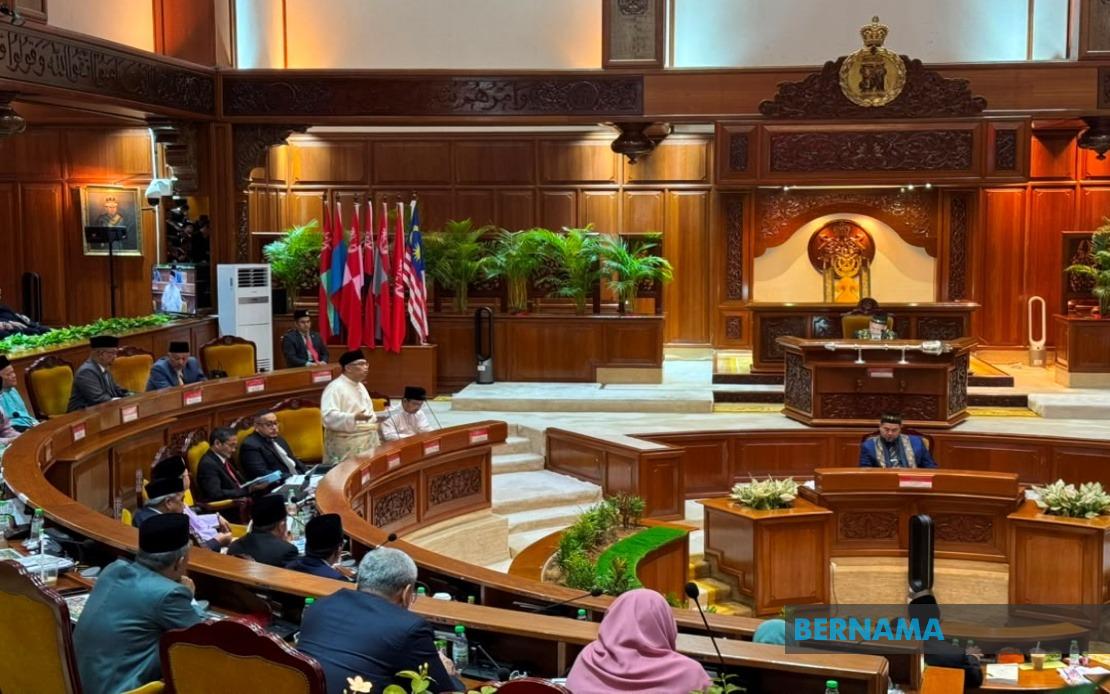
The Kelantan State Legislative Assembly has unanimously passed the Syariah Criminal Offences (Kelantan) Bill 2026, marking a significant restructuring of the state's Islamic criminal framework. According to Kelantan Deputy Menteri Besar Datuk Dr Mohamed Fadzli Hassan, the legislation introduces three pillars of reform: restorative sentencing mechanisms, provisions for compoundable offences, and substantially elevated penalty rates for religious transgressions. The comprehensive Bill encompasses nine parts, 62 clauses, and one schedule, representing the most extensive overhaul of Kelantan's Syariah criminal law since the current code was enacted in 2019.
The restorative sentencing component signals a philosophical shift toward rehabilitation and community reintegration within Kelantan's Islamic justice system. Rather than emphasising purely punitive measures, the framework mandates that community service periods must be completed within a 12-month window, placing responsibility on offenders to demonstrate reformation through structured civic engagement. This approach reflects emerging trends in Southeast Asia where Islamic legal jurisdictions increasingly integrate rehabilitative elements alongside traditional disciplinary measures, creating pathways for offenders to reintegrate into their communities whilst fulfilling religious and social obligations.
Compoundable offences represent another significant innovation, granting the Sultan of Kelantan authority to designate which infractions can be resolved through financial settlement or compensation rather than court proceedings. This discretionary mechanism, to be detailed through state gazette orders, provides flexibility in case management and reduces court congestion. The provision effectively creates a tiered justice system where less serious violations can be addressed administratively, reserving formal judicial proceedings for graver transgressions. For Malaysian practitioners of Islamic law and policy observers, this represents a modernisation attempt that balances traditional sultanate prerogative with pragmatic case administration.
Penalty escalation forms the enforcement backbone of the Bill, with enhanced whipping provisions targeting what legislators classify as severe religious offences. Attempted apostasy, child creed neglect, breaches of modesty obligations, consumption of intoxicating substances, gambling, illicit sexual relations, and out-of-wedlock pregnancy now face substantially increased corporal punishment thresholds. This severity escalation reflects Kelantan's positioning as Malaysia's most stringent Islamic law jurisdiction and underscores the state's intent to enforce religious compliance through heightened consequences. The approach may generate scrutiny from human rights organisations and comparative legal scholars examining corporal punishment within modern Islamic jurisprudence.
Six entirely new offence categories introduce coverage gaps previously unaddressed in Kelantan's Syariah legislation. Clause 10 criminalises neglect or abandonment of obligatory prayer observance, extending state enforcement into personal religious practice with unprecedented scope. Clauses 15 and 16 introduce dual provisions concerning bodily modesty and broader physical protection standards, distinguishing between private and non-private anatomical safeguarding. This granular differentiation suggests careful statutory drafting to accommodate varying levels of transgression severity and potential mitigating circumstances within a single offence category.
Clause 33 targets intellectual corruption through prohibitions on consuming substances or engaging in activities deemed mentally damaging, extending Islamic jurisprudence into psychological and cognitive protection territory. This represents an interpretative expansion of traditional Islamic criminal law, potentially encompassing digital media, educational content, and pharmaceutical use within regulatory purview. For Southeast Asian observers, this clause exemplifies how Islamic legal systems are adapting traditional concepts to address contemporary challenges whilst maintaining doctrinal coherence.
Clause 59 and 60 establish formalised compounding procedures for Syariah authorities, institutionalising what may previously have been informal settlement practices. By codifying compounding mechanisms, the Bill creates standardised protocols, transparency requirements, and accountability frameworks governing out-of-court resolution. This systematisation aligns with broader regulatory modernisation within Malaysian Islamic administration, moving toward documented procedures replacing discretionary, personalised arrangements.
The Bill repeals and recasts several provisions from Kelantan's 2019 Syariah Criminal Code Enactment, indicating evolution in legal thinking across the five-year intervening period. Section 11 concerning place-of-worship desecration has been repositioned as clause 12 addressing disturbance of Muslim worship spaces, suggesting refined categorisation logic. Most notably, sodomy provisions previously encoded in Section 14 have been dismantled and reconstituted as clauses 15 and 16 addressing bodily modesty obligations. This reconstruction implies Kelantan's legislature is reframing sexuality-related offences within broader physical decorum frameworks rather than treating them as discrete categories—a doctrinal repositioning with implications for penalty structures and enforcement patterns.
For Malaysian and regional legal professionals, the Bill's implications extend beyond Kelantan's borders. As Malaysia's most ambitious recent Islamic criminal law revision, it provides a test case for integrating restorative justice principles within Syariah frameworks, potentially influencing legislative discussions in other states and federal territories. The comprehensive overhaul also demonstrates sustained state-level legislative capacity within Malaysia's concurrent Islamic law jurisdiction, reasserting Kelantan's role as an Islamic legal innovator despite centralising pressures within Malaysian federalism.
The universal parliamentary approval suggests substantial political consensus across Kelantan's political spectrum regarding these reforms, though this unanimity may reflect governing party dominance rather than genuine ideological convergence. Implementation will prove critical—restorative sentencing success depends on adequate funding, trained officers, and community programme capacity; compounding mechanisms require clear sultanate directives; and penalty enforcement demands judicial consistency preventing arbitrary application disparities.
International observers will likely scrutinise the Bill's compatibility with Malaysia's constitutional safeguards and international human rights commitments. The heightened corporal punishment provisions particularly invite scrutiny from treaty-monitoring bodies and comparative law scholars examining modern corporal punishment justifications. Within Southeast Asia, where Islamic law jurisdictions navigate contemporary governance expectations, Kelantan's approach exemplifies the complex negotiation between religious legal authority, state modernisation, and international legal norms that characterises 21st-century Islamic jurisprudence in plural societies.

