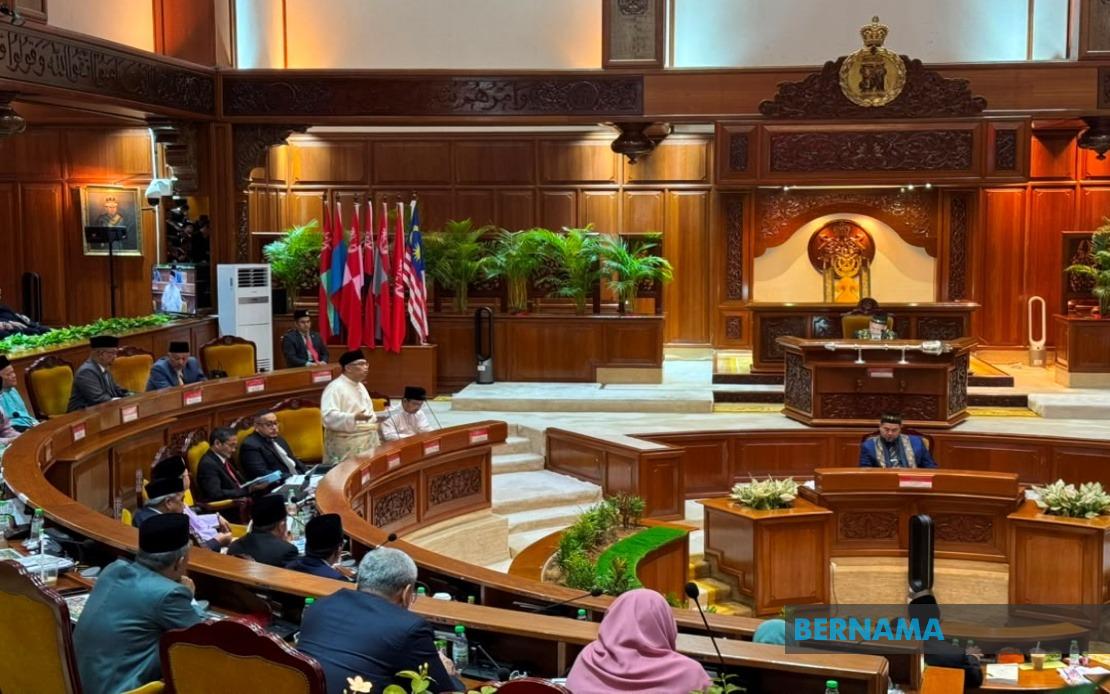
The Kelantan state legislative assembly has given its unanimous approval to the Syariah Criminal Offences (Kelantan) Bill 2026, marking a significant development in the northern state's efforts to establish a more robust and systematic framework for Islamic criminal jurisprudence. The legislative milestone was achieved during proceedings in Kota Bharu on August 12, with state officials presenting the revised Bill as a carefully calibrated response to constitutional concerns that had previously derailed portions of the state's Syariah legislation. The passage of the Bill represents an attempt by Kelantan to navigate the complex interplay between state and federal authority that has come to define contemporary debates over Islamic law enforcement in Malaysia.
Deputy Menteri Besar Datuk Dr Mohamed Fadzli Hassan tabled the legislation, which subsequently underwent parliamentary discussion involving representatives from six state constituencies including Pasir Tumboh, Melor, Galas, Jelawat, Kota Lama and Chempaka. The deliberation process culminated in remarks from both Dr Mohamed Fadzli and Menteri Besar Datuk Mohd Nassuruddin Daud, who jointly delivered the winding-up address before the chamber proceeded to second and third readings. The assembly's Speaker, Datuk Mohd Amar Nik Abdullah, presided over the unanimous passage, signalling broad political consensus around the measure within Kelantan's legislative body.
The 2026 Bill encompasses a comprehensive restructuring of Syariah criminal provisions through nine distinct sections containing 62 substantive clauses alongside a single schedule. Among its key features are provisions governing the obligation to perform obligatory prayers, protections relating to bodily integrity and private modesty, safeguards for intellectual capacity, and a framework emphasizing restorative justice principles. The legislation notably prioritizes whipping as a disciplinary mechanism and introduces a compounding system designed to provide flexibility in penalties. Together, these elements constitute what state officials describe as a modernized and more coherent approach to Syariah criminal enforcement.
Menteri Besar Mohd Nassuruddin emphasized that the Bill's development had proceeded through rigorous preparation and multiple stages of enhancement before reaching the assembly. He characterized the legislation as strengthening provisions through a process of revitalization grounded in Islamic jurisprudential principles. The official noted that this methodology represented a continuation of philosophical underpinnings already embedded in the earlier Kelantan Syariah Criminal Code (I) Enactment 2019, suggesting the new framework maintains conceptual coherence with previous legislative attempts rather than representing an entirely novel departure.
The passage of the 2026 Bill occurs against the backdrop of a significant constitutional setback that necessitated this legislative recalibration. In February 2024, the Federal Court delivered an 8-1 majority judgment that fundamentally undermined the legal foundation of Kelantan's preceding Islamic criminal legislation. The court declared 16 of the 18 provisions contained in the Kelantan Syariah Criminal Code (I) Enactment 2019 null and void, concluding that the state assembly had exceeded its constitutional authority by attempting to legislate offences properly falling within Federal jurisdiction. This decisive ruling created a substantial legal vacuum that the new Bill seeks to address through presumably more constitutionally defensible language and structure.
The Federal Court's decision was precipitated by a constitutional challenge mounted by a Kelantan-based lawyer, reflecting broader jurisprudential concerns about the distribution of legislative powers between Malaysia's Federal and state governments regarding Syariah criminal matters. The petition effectively contested the state's competence to create criminal offences that might encroach upon areas reserved for Parliament under the Federal Constitution. The resulting judgment has reverberated through Malaysia's Islamic legal landscape, prompting reassessment of similar provisions in other Syariah jurisdictions and intensifying debate over the appropriate boundaries of state-level Islamic legislation.
For Malaysian observers and legal analysts, the Kelantan assembly's swift passage of the revised Bill demonstrates the state government's determination to maintain and expand its Syariah criminal framework despite the constitutional constraints identified by the Federal Court. The legislative approach appears calibrated to address the specific judicial concerns raised, with officials presumably structuring the new provisions to remain within bounds the court recognized as constitutionally permissible for state legislatures. This strategy reflects an understanding that while certain areas remain foreclosed, considerable scope exists for states to legislate within their designated constitutional sphere.
The implications of Kelantan's legislative initiative extend beyond the state's boundaries. The Bill may influence how other Malaysian states approach similar Syariah criminal provisions, particularly those that might face analogous constitutional challenges. Perak, Pahang, and other states with significant Islamic law frameworks will likely monitor the 2026 Bill's reception and any subsequent judicial scrutiny it may encounter. The success or failure of this legislative framework could establish important precedents for the permissible scope of state-level Syariah criminalization across Malaysia's federal system.
For the wider Southeast Asian region, Kelantan's legislative effort illustrates ongoing tensions between Islamic governance aspirations and constitutional federalism in Muslim-majority nations. Malaysia's experience demonstrates how religious law and secular constitutional structures must be reconciled through careful legislative drafting and judicial interpretation. The region's other Islamic jurisdictions, including Brunei and Indonesia's Aceh province, similarly grapple with comparable questions about the proper extent and limitation of religious legal authority within broader national frameworks.
The unanimous passage of the 2026 Bill within Kelantan's assembly suggests that political consensus exists around the substance of enhanced Islamic criminal provisions, even as the Federal Court has questioned their constitutional validity. This disconnect between state-level political support and federal judicial skepticism highlights a persistent tension within Malaysia's constitutional architecture. The coming months will likely determine whether the reconstituted provisions can withstand potential future challenges, thereby clarifying the practical boundaries of state Syariah legislative authority in ways that ripple across Malaysia's federal system and potentially influence Islamic legal thinking throughout the region.

