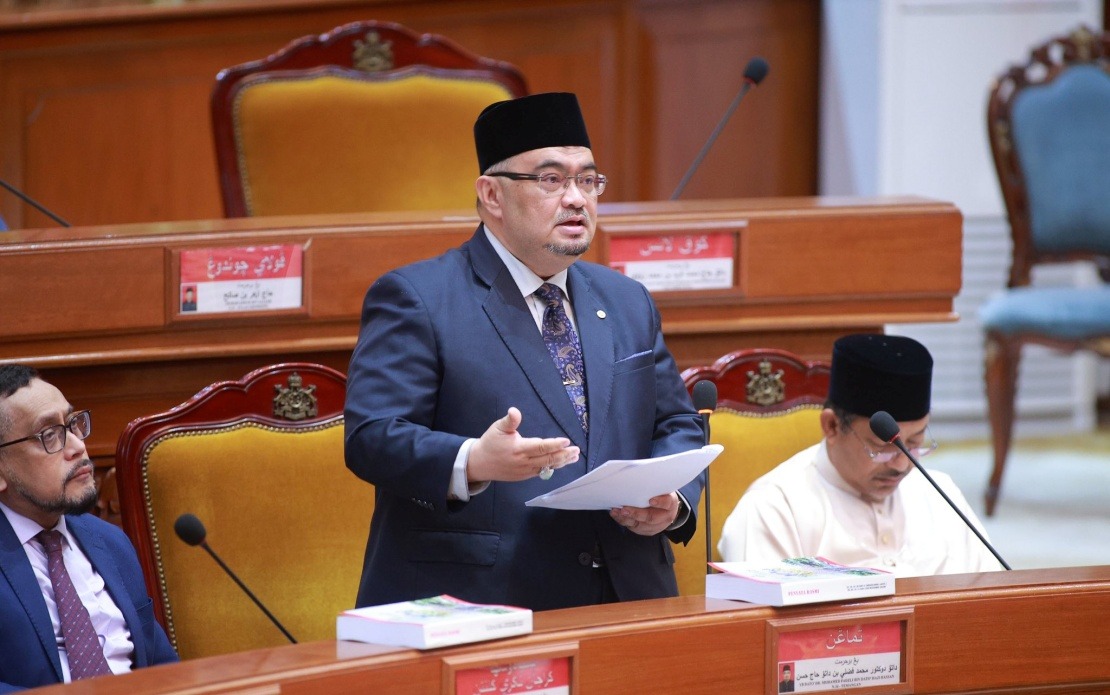
Kelantan's anti-encroachment and illegal mining drive has gained momentum with authorities opening 63 investigation papers over an eight-month period spanning early 2025 through June. The crackdown, announced by Deputy Menteri Besar Datuk Dr Mohamed Fadzli Hassan during a state legislative assembly sitting, reflects escalating government efforts to protect state lands and natural resources from unauthorised exploitation. The investigation papers have been forwarded to the Prosecution Unit of the Kelantan Land and Mines Office for prosecutorial review and formal charging decisions.
The enforcement campaign targeted four districts identified as hotspots for illegal activity: Gua Musang, Kuala Krai, Jeli, and Tanah Merah. Across these areas, authorities conducted 77 separate field operations designed to disrupt illegal mining networks and prevent further encroachment. The geographic concentration of enforcement efforts suggests that these districts face particularly acute challenges with unauthorised resource extraction, a problem that has plagued several Malaysian states where porous monitoring allows syndicates to operate with relative impunity. The multi-district scale of the operation indicates coordination between state and federal enforcement agencies tasked with protecting mineral resources and state land.
Equipment seizures represent a key strategic element of Kelantan's enforcement approach. Authorities recovered 65 excavators with a combined estimated value of RM15.8 million, significantly degrading the operational capacity of illegal mining enterprises. Excavators form the backbone of mechanised mining operations, and their confiscation directly impairs the ability of syndicates to extract ore or minerals efficiently. The equipment value underscores the substantial capital investment underpinning these illegal operations, suggesting organised criminal networks rather than isolated opportunistic ventures. Asset seizure serves both as punishment and deterrent, though its effectiveness depends on consistent enforcement over sustained periods.
The state government has signalled intent to enhance the legal framework governing penalties for land encroachment and illegal mining violations. Kelantan authorities are collaborating with the Land and Mines Office to review punishment structures, particularly for repeat offenders. Current penalties apparently have proved insufficient to deter recidivism, a pattern observed across Southeast Asia where mining and encroachment syndicates treat fines as operating costs. Stricter sentencing and enhanced penalties for subsequent offences could reshape the cost-benefit calculations that perpetrators make when deciding whether to engage in illegal activities.
Investigations are extending beyond operational miners to identify the broader criminal ecosystem supporting these activities. Deputy Menteri Besar Mohamed Fadzli acknowledged that authorities intend to pursue middlemen, financial backers, masterminds, and protecting officials who may facilitate or profit from illegal operations. This acknowledgement hints at systemic corruption or complicity within enforcement hierarchies—a persistent challenge in Malaysian resource management. Identifying upstream actors in supply chains and downstream purchasers of illegally extracted minerals could dismantle entire syndicates rather than merely prosecuting individual operators.
The state's investigative approach leverages land ownership records to identify parties benefiting from encroachment. Government officials indicated that because land registry systems identify proprietors, authorities can cross-reference seizures and activity reports against property records to determine who holds title and direct investigations accordingly. This methodology, though theoretically sound, depends on comprehensive record-keeping and assumes land titles accurately reflect beneficial ownership—a problematic assumption given historical documentation gaps and informal tenure arrangements in some rural areas. Nevertheless, the strategy acknowledges that encroachment typically benefits identifiable parties with financial or strategic interests in the affected land.
For Malaysian readers, Kelantan's enforcement campaign reflects broader nationwide concerns about sustainable resource management and state capacity to regulate economic activities within territorial boundaries. Illegal mining erodes state revenue, degrades ecosystems, and creates social tensions between communities and mining operators. The eight-month yield of 63 cases suggests either significant enforcement activity or, conversely, that the true scale of illegal operations vastly exceeds documented cases. Either interpretation carries implications for how federal and state governments should prioritise resource management and environmental protection against competing development demands.
The involvement of multiple enforcement agencies in Kelantan's operations mirrors regional patterns whereby effective anti-illegal mining campaigns require coordination between land authorities, police, military, and customs services. No single agency commands sufficient resources to patrol vast territories independently. This interagency cooperation model, while operationally sensible, can create accountability gaps when joint operations produce ambiguous outcomes or when institutional rivalries impede information-sharing. The Kelantan initiative's success will partly depend on whether participating agencies maintain momentum beyond initial high-profile enforcement sweeps.
International context provides perspective on Kelantan's challenges. Illegal mining plagues jurisdictions across the developing world, from West Africa to Southeast Asia, often driven by global commodity demand and the profitability differential between legal and unlicensed extraction. Southeast Asian governments have increasingly recognised that combating illegal mining requires not merely enforcement but also addressing upstream demand for minerals and downstream financing flows supporting operations. Kelantan's neighbour Terengganu and other states facing similar pressures may benchmark this campaign's effectiveness and adopt comparable strategies.
The prosecution phase will determine whether investigation papers translate into meaningful convictions and sentences. Malaysian courts have historically convicted mining-related offenders, though sentence severity has been inconsistent. Kelantan authorities' explicit commitment to pursue higher-tier actors—financiers, masterminds, and potentially corrupt officials—suggests institutional recognition that repeat convictions of minor operators alone perpetuate cycles without dismantling underlying criminal structures. Success metrics should extend beyond conviction counts to include asset recovery, prevention of future encroachment, ecosystem restoration, and identification of systemic vulnerabilities that enabled illegal operations initially.
Moving forward, Kelantan faces the challenge of sustaining enforcement intensity while addressing root causes including limited economic opportunities in affected districts and weak capacity of local communities to resist inducements from mining syndicates. Complementary initiatives involving economic development, community engagement, and improved governance transparency could reinforce enforcement-led efforts. Without addressing underlying socioeconomic drivers, Kelantan risks repeating enforcement cycles that suppress but do not eliminate illegal mining. The investigation papers opened thus far represent progress, but their ultimate impact will depend on prosecutorial follow-through and institutional commitment to systemic reform.

