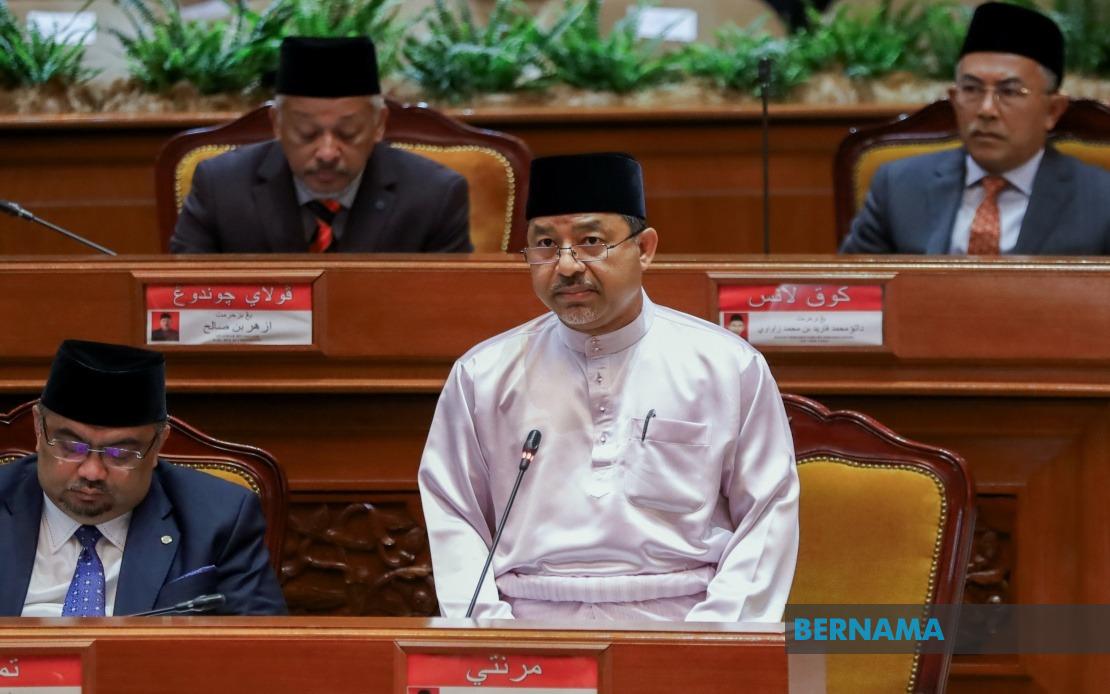
Kelantan continues to hold the distinction of having Peninsular Malaysia's largest allocation of Malay reserve land, with current records documenting 526,083 hectares under this classification. Kelantan Menteri Besar Datuk Mohd Nassuruddin Daud made this statement during a State Legislative Assembly sitting at the Kota Darulnaim Complex, reaffirming the northeastern state's significant landholding status within the federal system of land classification and protection.
The scale of Kelantan's Malay reserve holdings becomes clearer when examined against the broader land ownership picture. Representing 91.5 per cent of all land ownership in the state, these reserves are distributed across 816,020 individual titles, indicating a substantial decentralisation of property among the Malay population. In contrast, non-Malay reserve land comprises merely 8.4 per cent of Kelantan's total land area, equating to 48,344 hectares held under 43,255 titles. Combined, the state's total land ownership reaches 574,427 hectares, recorded across 859,275 titles according to the most recent land administration data available up to June 2026.
This concentration of Malay reserve land in Kelantan reflects historical constitutional arrangements under the Federal Constitution, which grants states authority over land matters. Malay reserves represent one of the fundamental social contracts established at independence, designed to protect indigenous Malay interests through restrictions on land transfer and usage. Kelantan's predominance in this classification underscores the state's particular commitment to maintaining these protections, with no recorded reductions in reserve holdings during the current administrative period.
Within Kelantan itself, the distribution of reserve land varies considerably across districts. Gua Musang commands the largest area at 122,735 hectares, reflecting its vast interior geography and lower population density. Pasir Mas follows with 56,656 hectares, while Tanah Merah and Kuala Krai contribute 56,246 and 53,473 hectares respectively. These figures demonstrate uneven geographic concentration, with northern and interior districts holding substantially larger allocations than more densely developed areas.
Percentage-wise, however, the pattern shifts markedly. Tanah Merah achieves near-total reserve designation at 99.9 per cent of all land holdings, followed closely by Tumpat, Pasir Puteh, Bachok, Pasir Mas, Kota Bharu, and Jeli. This distinction reveals that some districts have successfully restricted non-Malay land ownership to minimal levels, creating communities where reserve status encompasses virtually all property holdings. Such high percentages indicate effective historical application of reserve legislation and limited conversion of such land to non-reserve status.
The legal framework governing these reserves operates under the Kelantan Malay Reservations Enactment, which provides state authorities with comprehensive regulatory powers. Section 13A of the enactment specifically permits non-Malays to own land within designated reserve areas, yet simultaneously grants the state discretionary authority to regulate all transactions involving such property. This mechanism allows state governments to approve or deny sales, gifts, and other transfers based on whether transactions would jeopardise the fundamental interests underlying the reserve system.
For Malaysian policymakers and citizens, Kelantan's reserve statistics carry implications extending beyond administrative record-keeping. The state's position as custodian of Peninsular Malaysia's largest Malay reserve portfolio demonstrates sustained commitment to constitutional protections established during independence negotiations. These reserves traditionally served multiple purposes: ensuring Malay economic participation in land ownership, preventing displacement of indigenous communities, and maintaining rural agricultural foundations.
However, the preservation of such extensive reserves also raises contemporary questions about economic development and land utilisation efficiency. Large reserve holdings can complicate agricultural modernisation, industrial development, and infrastructure expansion when conversion to non-reserve status requires regulatory approval. State authorities must balance protection of traditional interests with facilitating productive economic activity, particularly as rural states compete for investment and diversification.
Kelantan's track record in maintaining intact reserve land holdings without reductions suggests a conservative administrative approach prioritising constitutional protections. The absence of recorded diminishments indicates that conversion requests—if any have been submitted—have either been denied or processed sufficiently slowly to leave net holdings unchanged. This stands in contrast to other states that have experienced gradual erosion of reserve areas through conversion and transfer processes approved under comparable state enactments.
The distribution of 816,020 titles across Kelantan's reserve land indicates fragmentation into relatively small individual holdings. This fragmentation presents both advantages and challenges for beneficiaries. While it democratises land ownership among the Malay population, it can also impede large-scale commercial or industrial development requiring consolidated land areas. Small title holders may struggle to achieve economies of scale in agriculture or secure financing for improvements without combining properties.
Regional context adds nuance to Kelantan's position. As a state governed by Parti Islam Se-Malaysia (PAS), which champions Islamic governance principles, the preservation of Malay reserves aligns with the party's ideological foundations emphasising protection of Malay-Muslim constitutional positions. The response to the assembly question from Datuk Abdul Rahman Yunus, himself a PAS representative from Pasir Tumboh, reflected consensus within the state administration regarding continued protection of these land classifications.
Looking forward, Kelantan faces the challenge of maintaining its reserve protections while addressing economic imperatives. Agriculture remains significant in districts holding large reserve areas, yet commodity prices and rural outmigration create pressures for land repurposing. Digital agriculture technologies, cooperative farming models, and value-added processing could enhance reserve land productivity without necessitating conversion or fragmentation. State authorities might explore mechanisms enabling modern economic development within existing reserve frameworks.
The constitutional guarantee of state control over land matters, reinforced through institutions like the Kelantan Malay Reservations Enactment, ensures that local leadership retains authority over reserve policies. This devolution of power to states reflects federalism's recognition that land and cultural protection require responsiveness to local conditions and preferences. Kelantan's demonstrated commitment to maintaining intact reserve holdings suggests this responsibility remains a priority for current state administration, regardless of broader economic transformation pressures affecting the region.

