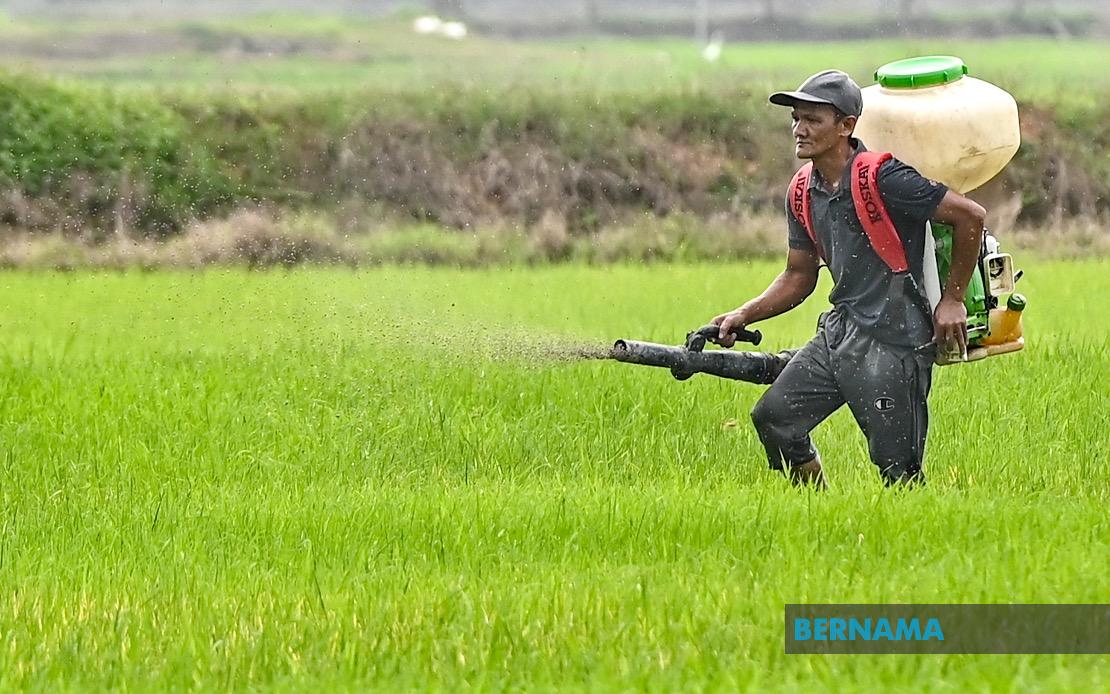
Kelantan's state government has committed RM3.64 million to advance its agricultural sector through a comprehensive 10-project initiative unveiled during state assembly proceedings in Kota Bharu this week. The substantial injection of funds reflects a deliberate policy shift toward modernising the state's primary industries and positioning agriculture as a genuine economic driver rather than a subsistence livelihood. Datuk Tuan Mohd Saripudin Tuan Ismail, the State Agriculture, Agro-Food Industry and Commodity Committee chairman, articulated how the investment spans multiple agricultural domains, signalling an integrated approach to rural development that extends beyond traditional farming into value-added production and commercial operations.
The scope of Kelantan's agricultural strategy reveals considerable ambition to activate dormant farmland and introduce high-yield production methodologies. The ten initiatives encompass land utilisation for idle parcels, paddy cultivation modernisation, diverse commodity crop development, and specialised vegetable and fruit farming operations. Critically, the programme incorporates structured entrepreneur development pathways, acknowledging that infrastructure and technology alone cannot generate sustainable agricultural growth without capable, well-trained operators. This recognition of the human capital dimension distinguishes Kelantan's approach from earlier, purely subsidy-driven agricultural policies that often yielded limited long-term impact.
Commercial agriculture represents a particular focus area, with the Kelantan State Agriculture Development Corporation (PKPNK) spearheading ventures that demand technical sophistication and market awareness. The corporation is implementing chilli fertigation systems, honeydew melon cultivation, and hydroponic vegetable production at Rong Chenok Agro Valley, each representing technology-intensive farming models that promise superior yields and reduced water consumption compared to conventional methods. These operations signal Kelantan's movement toward climate-resilient agriculture, particularly relevant given Southeast Asia's increasing weather volatility and water scarcity concerns. The emphasis on controlled-environment farming also reduces vulnerability to pest pressures and seasonal fluctuations that have historically constrained smallholder productivity in the region.
Kelantan's livestock sector has emerged as a significant beneficiary of state support mechanisms. More than 380 breeders across the state have accessed government programmes facilitating cattle, goat, sheep, deer, buffalo, and quail production, coupled with provision of essential support equipment. This diversification beyond conventional livestock species indicates an attempt to develop niche market opportunities and reduce producer dependence on narrow commodity markets. The distribution of support across multiple species classes also reflects astute risk management, ensuring that disease outbreaks or market volatility affecting one species category does not devastate entire rural communities whose livelihoods concentrate on single livestock types.
Aquaculture and fisheries represent particularly dynamic growth areas within Kelantan's agricultural portfolio. The state channelled RM382,094 to 122 aquaculture breeders during the reporting period, generating measurable production increases. Kelantan's aquaculture sector produced 7,901.74 tonnes valued at RM76.2 million in 2025, with ambitious targeting of 8,000 tonnes for the current year—representing incremental but meaningful capacity expansion. These production figures position Kelantan as a meaningful contributor to Malaysia's food security objectives, particularly for protein sourcing from domestic aquaculture rather than imported seafood. The sector's trajectory assumes greater significance given regional supply chain vulnerabilities and escalating seafood import costs that burden household food expenditure across Southeast Asia.
Infrastructure development underpins Kelantan's fisheries expansion strategy. Over 130 artificial hatcheries have been constructed to enhance breeding capacity and support wild fisheries regeneration through fingerling release programmes. Approximately 1.26 million fish and prawn fry have been released into public waters, contributing to stock replenishment efforts that benefit artisanal fishermen and small-scale operators. The PKPNK corporation has established formidable production capacity, generating up to one million catfish fry and 500,000 tilapia fry annually, alongside the white prawn hatchery at Pantai Geting, Tumpat, which produces approximately 400,000 kilogrammes annually. These figures demonstrate that Kelantan has developed genuine supply-side capacity rather than merely distributing external inputs, a critical distinction for sustainable sector growth.
Entrepreneur development constitutes the connective tissue linking production capacity to market realisation. As of mid-year, 1,560 agricultural entrepreneurs had benefited from 74 marketing infrastructure facilities and 99 marketing outlets established by the state government. These institutions provide essential infrastructure that individual operators cannot develop independently—aggregation centres, processing equipment, cold storage, packaging facilities, and market access channels that transform raw agricultural output into valuable consumer products. The Kota Bharu Rural Transformation Centre (RTC) exemplifies this infrastructure-focused strategy, functioning as a dedicated agro-food marketing and distribution hub that has accommodated approximately 800 entrepreneurs since its establishment.
The RTC's financial performance substantiates the viability of this marketing infrastructure investment approach. Cumulative sales between 2012 and 2025 reached RM4.16 billion, constituting a remarkable return on state investment and demonstrating that agricultural entrepreneurs, when granted access to professional marketing infrastructure and distribution networks, rapidly scale their operations. This performance metric carries implications for other Malaysian states considering similar rural economic development initiatives. The success suggests that bottlenecks constraining agricultural sector growth often reside in post-harvest handling, value addition, and market access rather than production capacity alone. Addressing these downstream constraints generates multiplier effects throughout rural economies, stimulating processing industries, transport sectors, and ancillary services.
Kelantan's comprehensive agricultural strategy reflects broader recognition within Malaysian state governance that agricultural modernisation requires simultaneous investment across production, infrastructure, and human capital dimensions. The allocation of RM3.64 million, while substantial for a single state budget category, remains modest relative to potential returns if implementation proves effective. The integration of technology-intensive production methodologies, diversified commodity bases, and professional marketing infrastructure positions Kelantan to enhance rural incomes and bolster national food security resilience. However, programme success ultimately depends on rigorous execution, transparent benefit distribution, and sustained bureaucratic commitment beyond the current budget cycle, challenges that have historically constrained agricultural development initiatives across Malaysia.

