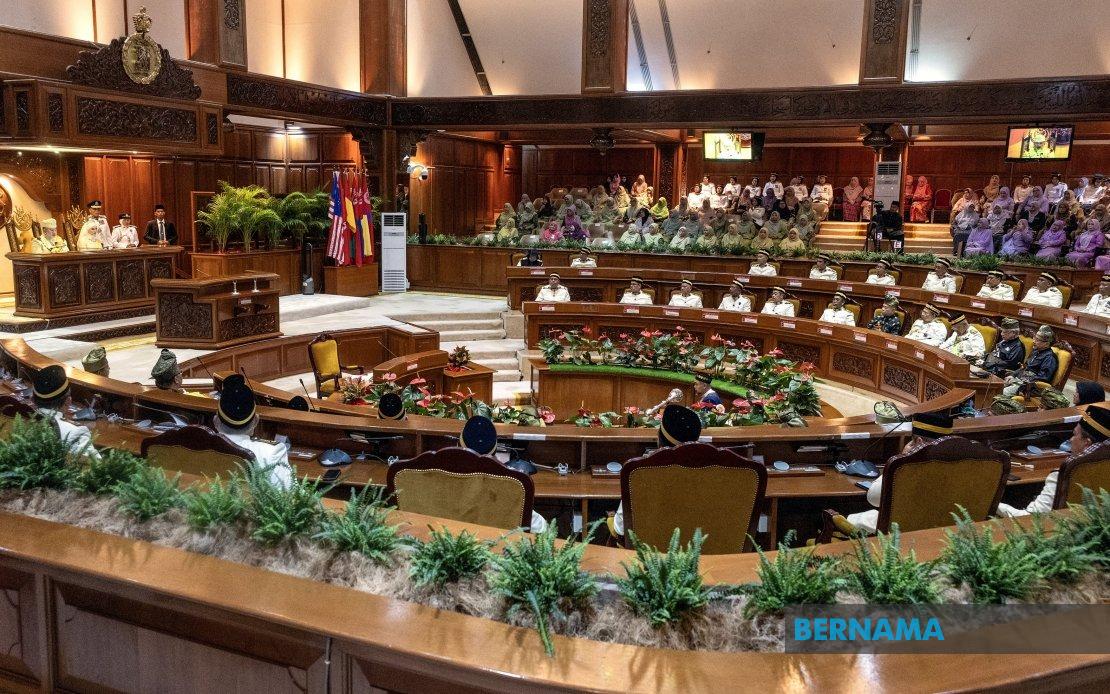
The Kelantan government is set to introduce comprehensive legislation redefining the boundaries of state authority over Syariah criminal matters, as it tables the Syariah Offences (Kelantan) Bill 2026 at the State Legislative Assembly sitting next Tuesday. The new Bill marks a significant attempt to recalibrate state-level Islamic law within the constitutional framework established by a landmark Federal Court decision earlier this year, signalling the ongoing institutional tensions in Malaysia's federalised approach to Syariah law.
Deputy Menteri Besar Datuk Dr Mohamed Fadzli Hassan explained that the new legislation is designed to supersede the Kelantan Syariah Criminal Code (I) Enactment 2019, which was substantially dismantled by the Federal Court's judgment on February 9, 2024. In that ruling, the court invalidated sixteen provisions of the 2019 enactment, finding that the state legislature had overstepped its constitutional authority by legislating on matters that fall squarely within Parliament's jurisdiction over Syariah criminal law.
The February decision, delivered by an 8-1 majority of the Federal Court, emerged from a constitutional challenge mounted by Kelantan lawyer Nik Elin Zurina Nik Abdul Rashid and a co-petitioner. The judgment reignited a crucial debate across Malaysia regarding the proper allocation of legislative power between the federal and state governments in the sensitive domain of Islamic criminal offences. For state governments, particularly those with significant Muslim populations, the ruling represents a constraint on legislative autonomy; for federal authorities and constitutional lawyers, it reinforces the principle that certain matters are reserved to Parliament.
The preparation of the replacement Bill has been underway since mid-2024, indicating the methodical approach Kelantan has taken to craft legislation that respects the Federal Court's constitutional boundaries. The drafting process has involved a broad committee comprising civil and Syariah legal practitioners, academics specialising in constitutional law, and serving Syariah judicial officers. This multidisciplinary composition reflects recognition that reconciling state-level religious governance with federal constitutional limits requires expertise spanning both secular legal doctrine and Islamic jurisprudence.
The draft legislation was also submitted to the Kelantan Council of Ulama, operating under the auspices of the Kelantan Islamic Religious and Malay Customs Council (MAIK), for scholarly and religious review. This consultation with Islamic legal and religious authorities underscores Kelantan's effort to ensure the Bill carries legitimacy within the Muslim community and aligns with established Islamic principles, even as it operates within narrower constitutional constraints than the invalidated 2019 enactment.
The new Bill is structured as a nine-part framework containing 62 substantive clauses and a single schedule. According to Mohamed Fadzli, the drafting methodology adheres to the constitutional principle of "pith and substance," a doctrinal approach that examines the essential character and purpose of legislation to determine proper jurisdiction. By grounding the Bill in this established constitutional principle, Kelantan appears to be signalling that it has carefully studied the Federal Court's grounds of judgment and has restructured its legislative approach accordingly.
A distinctive feature of the new legislation is that it has been designed to emphasise religious obligations while simultaneously incorporating what the deputy Menteri Besar described as "several new and reformative provisions." This dual emphasis suggests that Kelantan intends not merely to shrink its previous legislation to fit within federal constitutional bounds, but to introduce modernised or reformed elements into Syariah criminal law administration. The nature of these reformative provisions has not yet been disclosed publicly, though such measures could encompass procedural improvements, victim protections, or adjustments to penalty structures.
For Malaysian constitutional law and federal-state relations, the Kelantan Bill represents a test case in how state governments navigate the post-February 2024 landscape. The Federal Court's decision created legal uncertainty for all thirteen Malaysian states that maintain Syariah court systems, as provisions analogous to those struck down in Kelantan may exist in other state enactments. The careful approach Kelantan is adopting—with extensive consultation, multiple expert inputs, and explicit reference to constitutional principles—could become a template for other states contemplating similar reviews and revisions of their own Syariah legislation.
The timing of the Bill's tabling on Tuesday will also initiate formal parliamentary debate within the state assembly, where assemblymen will have the opportunity to examine, question, and ultimately vote on the legislation. Deputy Menteri Besar Mohamed Fadzli expressed optimism that assemblymen would support the Bill, an expectation that seems reasonable given that the Federal Court's ruling has already settled the fundamental constitutional question. Barring unexpected amendments or procedural objections during the assembly sitting, passage appears likely, though the parliamentary process may yield refinements to specific clauses.
Beyond Kelantan, the Bill carries significance for Southeast Asian observers of Malaysian federalism and religious governance. Malaysia's system of state-level Syariah courts operating alongside a federal civil judiciary is distinctive in the region, and the tensions between state autonomy and federal coordination in Islamic law administration resonate across Muslim-majority countries grappling with similar constitutional questions. The outcome of Kelantan's legislative recalibration may offer insights into how jurisdictional conflicts in religious law can be managed through careful statutory drafting and institutional consultation.
For ordinary Malaysians, particularly Muslims subject to Syariah law in Kelantan, the practical consequences of the Bill's passage remain to be clarified. The invalidation of sixteen provisions in 2019 created a gap in the state's Syariah criminal law, potentially affecting the prosecution of certain offences. The new Bill's passage should restore comprehensive coverage, though possibly with a narrower scope than the invalidated enactment. Civil liberties advocates and women's rights organisations will likely scrutinise the final Bill during its assembly passage to assess whether the "reformative provisions" genuinely strengthen protections for vulnerable groups.

