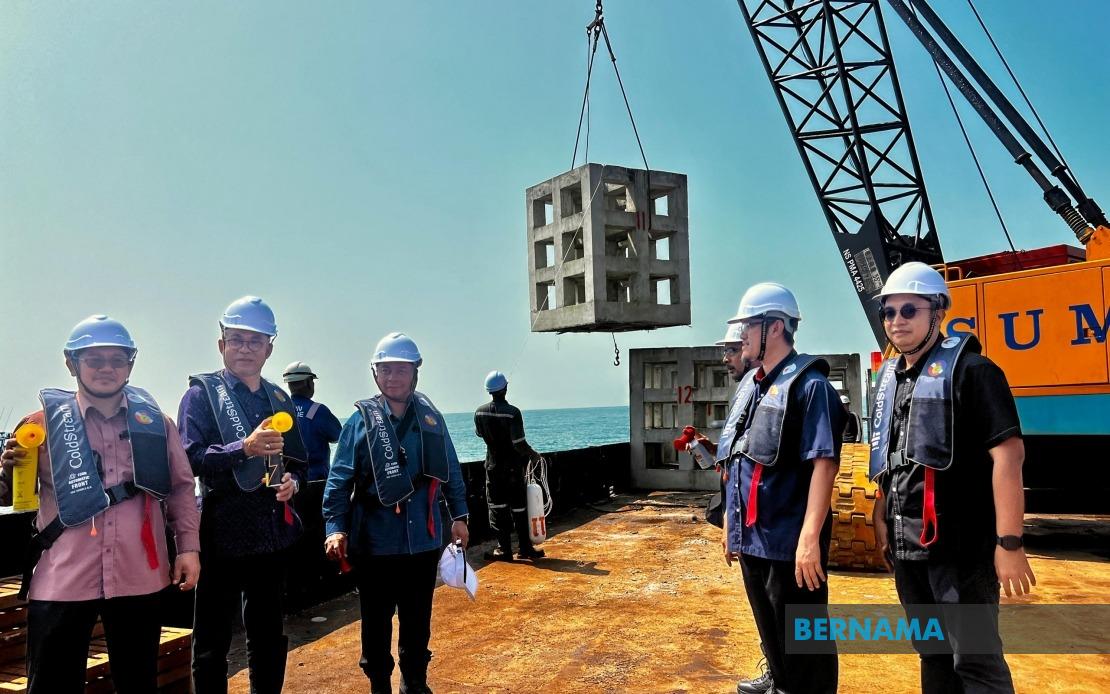
Artificial reef structures placed strategically in Kelantan waters are serving a dual purpose that extends well beyond simple marine conservation—they act as both ecological nurseries for commercially important fish species and physical barriers against illegal incursion by industrial-scale fishing operations that threaten the livelihoods of small coastal fishermen. The 30 artificial reefs installed approximately 4.6 nautical miles off the Tok Bali Jetty represent a innovative approach to a persistent problem affecting Southeast Asian fisheries: the tension between small-scale artisanal fishermen and large commercial vessels that increasingly encroach into territorial waters designated for local communities.
Kelantan Fisheries Department director Ismail Ibrahim outlined the multifaceted benefits of the deployment programme during an official ceremony at Tok Bali Tourism Jetty. The reef structures create an inhospitable environment for industrial trawlers by deliberately tangling their nets and fishing equipment on submerged installations, rendering the shallow coastal zones economically unviable for large-scale operations while remaining accessible to traditional fishing methods employed by local fishermen. This passive deterrent mechanism proves particularly valuable in regions where enforcement capabilities remain limited and illegal fishing activities continue despite regulatory prohibitions.
The ecological dimension of the artificial reef initiative addresses another critical concern facing Malaysian fisheries: declining catch volumes and shrinking fish populations resulting from overharvesting and habitat degradation. As fish populations migrate to these newly constructed reef systems to spawn and nurture juvenile specimens, coastal communities experience tangible improvements in landing volumes. The programme directly contributes to national food security objectives by maintaining productive fishing zones near population centres while avoiding dependence on distant offshore operations that require expensive fuel and equipment investments beyond the reach of typical village fishermen.
Sultan Muhammad V's direct financial contribution to this conservation initiative underscores growing awareness among Malaysia's leadership that protecting artisanal fisheries requires substantial investment beyond routine government budgets. The royal patronage signals commitment to preserving traditional maritime communities against the relentless pressure of industrialised fishing practices that prioritise short-term extraction over long-term sustainability. This approach mirrors successful conservation models implemented in other Southeast Asian nations where governments have recognised that protecting small-scale fishermen safeguards not merely economic interests but entire cultural identities tied to coastal heritage.
The Kelantan Fisheries Department's track record demonstrates sustained commitment to reef-based conservation architecture. Since 2007, approximately 400 artificial reefs have been positioned across four distinct locations within state waters, with an additional 72 units scheduled for phased deployment throughout the current year. This progressive expansion reflects growing confidence in the methodology's effectiveness and resource availability to implement larger-scale programmes. The geographic distribution across multiple sites creates a network of protected zones that collectively shield extensive stretches of coastal territory from industrial incursion.
Regulatory and maintenance frameworks supporting these installations ensure long-term functionality despite environmental challenges and accumulated debris. Dedicated monitoring and periodic cleaning operations remove fishing gear, ropes, and other materials that become entangled on reef structures, preventing degradation of their ecological functions. This labour-intensive commitment distinguishes genuinely effective marine conservation from superficial initiatives that lack operational follow-through. Malaysian fisheries managers recognise that abandoned or poorly maintained artificial structures rapidly lose capacity to provide either ecological or protective benefits.
The temporal dimension of reef effectiveness requires patient stewardship aligned with natural ecosystem development cycles. Kelantan officials anticipate observable improvements in fish spawning and breeding outcomes within six months following initial deployment, though this timeline remains contingent on local environmental conditions and the pace at which marine organisms colonise new reef surfaces. This realistic assessment acknowledges that artificial reef systems function optimally only after populations stabilise and ecological relationships establish equilibrium. Premature evaluation often generates misleading conclusions about programme success or failure.
For Malaysian policymakers examining approaches to fisheries management across the broader Southeast Asian context, Kelantan's initiative offers instructive lessons regarding the integration of traditional livelihood protection with marine resource sustainability. The artificial reef model avoids the contentious confrontations between industrial and artisanal sectors that characterise fisheries disputes in less carefully managed jurisdictions. By rendering coastal zones physically incompatible with large-scale commercial operations while simultaneously enhancing biological productivity, the approach satisfies conservation objectives while protecting vulnerable fishing communities from displacement.
The programme's success hinges substantially on continued government funding and political will to expand deployment beyond initial phases. Budget constraints frequently undermine conservation initiatives in developing economies where competing demands constantly vie for limited resources. Sustained royal patronage and departmental advocacy must translate into permanent budgetary allocations that enable regular expansion and maintenance rather than episodic projects dependent on exceptional funding windows. This represents perhaps the ultimate challenge confronting Malaysian fisheries conservation efforts.
As Kelantan advances its artificial reef programme, neighbouring states and federal authorities increasingly recognise similar protective mechanisms could address comparable pressures affecting their own coastal communities. The scalability of this conservation approach across Malaysia's maritime zones could substantially reshape the balance between industrial and traditional fishing sectors. However, implementation requires not merely technological solutions but fundamental political commitment to privileging food security and community welfare over narrow commercial interests seeking unregulated access to shared marine resources.

