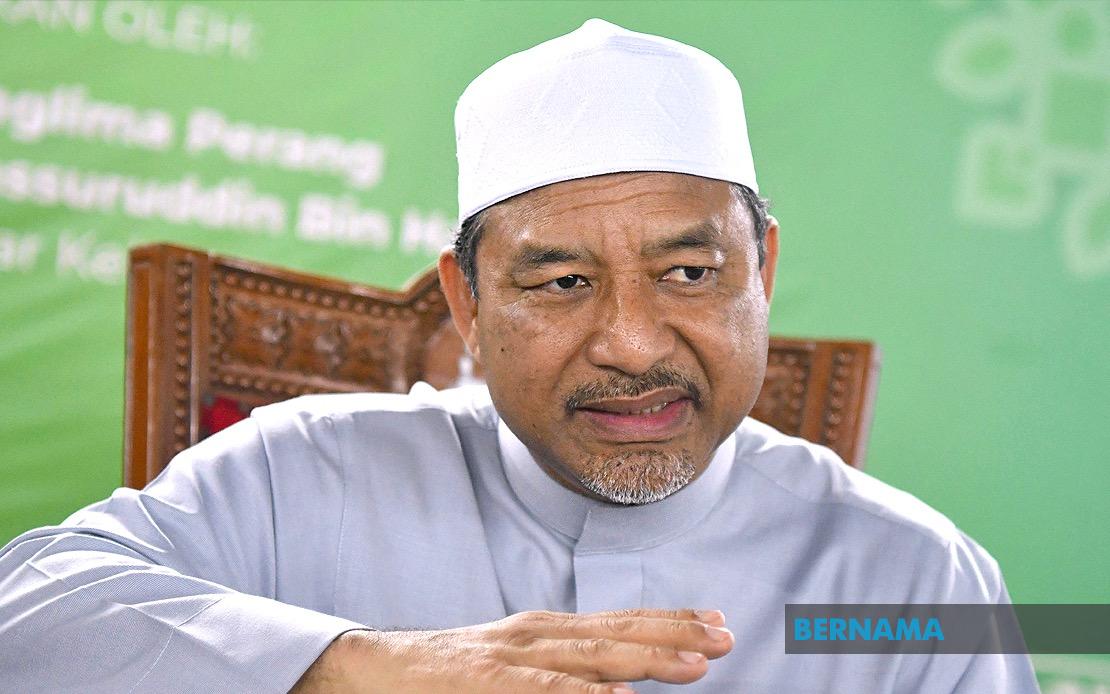
Kelantan's government intends to sustain its commitment to preserving the state's distinctive arts and cultural traditions, provided they operate within a framework of Islamic values. This stance was articulated by Menteri Besar Datuk Mohd Nassuruddin Daud at the conclusion of the Kelantan Arts Festival (FKRK) 2026 in Pasir Puteh, where he outlined the administration's nuanced approach to heritage management and its role in both tourism and community identity.
The Menteri Besar clarified that the state government's position is not one of blanket rejection of traditional practices simply because they are old. Rather, Kelantan's authorities engage in careful assessment and refinement of cultural expressions to ensure they resonate with contemporary Islamic standards. This methodology, he explained, reflects a sophisticated understanding that culture and religion need not exist in tension, but can instead be harmonised through thoughtful curation and adaptation.
Under this framework, certain traditional performances that were previously prohibited have been reconsidered. Where specific elements conflicted with Islamic principles, the state government has worked with cultural practitioners to modify or remove those components, allowing the performances to resume once they meet the refined standards. This represents a pragmatic middle ground that neither freezes culture in amber nor dismisses religious considerations as irrelevant to artistic expression. The approach acknowledges that tradition itself—the mere existence of a practice across generations—does not provide automatic exemption from ethical or moral scrutiny.
Kelantan's cultural inheritance, according to Mohd Nassuruddin, encompasses performing arts, traditional games, handicrafts, traditional food preparation and other expressions rooted in Malay and Islamic civilisation. These represent what he termed "valuable treasures" containing accumulated wisdom and philosophical insight that future generations deserve to encounter. The preservation of such heritage thus transcends nostalgia or entertainment; it serves as a living connection to ancestral knowledge and identity.
The broader context of Islamic development in Kelantan has historically intertwined with flourishing of knowledge, language and artistic expression, the Menteri Besar noted. Rather than suppressing cultural activity, Islamic civilisation in the state has traditionally nurtured it, suggesting that the contemporary effort to harmonise tradition with religious principle continues an established historical pattern. This framing provides legitimacy to both the preservation effort and the Islamic filtering mechanism.
The four-day FKRK 2026 festival, which concluded following the Menteri Besar's remarks, served purposes extending well beyond mere entertainment or tourism promotion. The event functioned as a gathering space for heritage practitioners, enabling knowledge exchange, economic stimulation through cultural tourism, and broader introduction of Kelantan's distinctive identity to visitors. In Malaysia's competitive domestic tourism landscape, cultural differentiation remains a significant economic asset, and festivals like FKRK represent deliberate efforts to monetise heritage while maintaining cultural integrity.
Among the revival efforts highlighted was the resurrection of traditional games including gasing uri, congkak, dam aji and tating. The Menteri Besar emphasised that these games possess contemporary relevance beyond historical interest, serving as counterbalances to the technological saturation increasingly dominating younger Malaysians' leisure time. In an era of smartphone dependence and digital entertainment, traditional games offer physical engagement, social interaction and cognitive challenges rooted in cultural practice. Their revival thus addresses both cultural preservation and youth wellness concerns.
Kelantan's approach reflects broader regional conversations about modernisation and cultural retention. Across Southeast Asia, governments grapple with preserving distinctive traditions while meeting expectations of development and religious observance. Kelantan's formula—neither wholesale adoption of foreign modernity nor defensive rejection of innovation, but rather selective refinement of heritage through a recognised value system—may offer instructive precedent for other communities navigating similar tensions.
The festival's organisation by the Ministry of Tourism, Arts and Culture in partnership with the National Culture and Arts Department (JKKN) Kelantan indicates institutional commitment extending beyond rhetoric. Annual staging requires sustained funding, coordination and strategic planning, suggesting this is not merely declarative policy but an ongoing programme with resource allocation and measurable objectives.
For Malaysian readers and observers across Southeast Asia, Kelantan's experience demonstrates one pathway through the complex intersection of tradition, religion and modernity. The state's leadership explicitly rejects both extremes—neither treating Islamic principles as incompatible with artistic flourishing, nor treating cultural heritage as automatically exempt from ethical consideration. This calibrated approach, centred on refinement rather than rejection, suggests how communities can honour both their inherited traditions and contemporary value systems without requiring wholesale sacrifice of either.
The implications extend to Malaysia's broader cultural policy discussions. As other states and federal authorities formulate their own cultural strategies, Kelantan's articulation of selective preservation and guided evolution provides a model emphasising dialogue between tradition and principle rather than their inevitable conflict. Whether this approach ultimately satisfies all stakeholders—from purist cultural advocates to strict religious interpreters—remains to be seen, but it represents a genuine attempt at sophisticated navigation of competing claims on authenticity and propriety.

