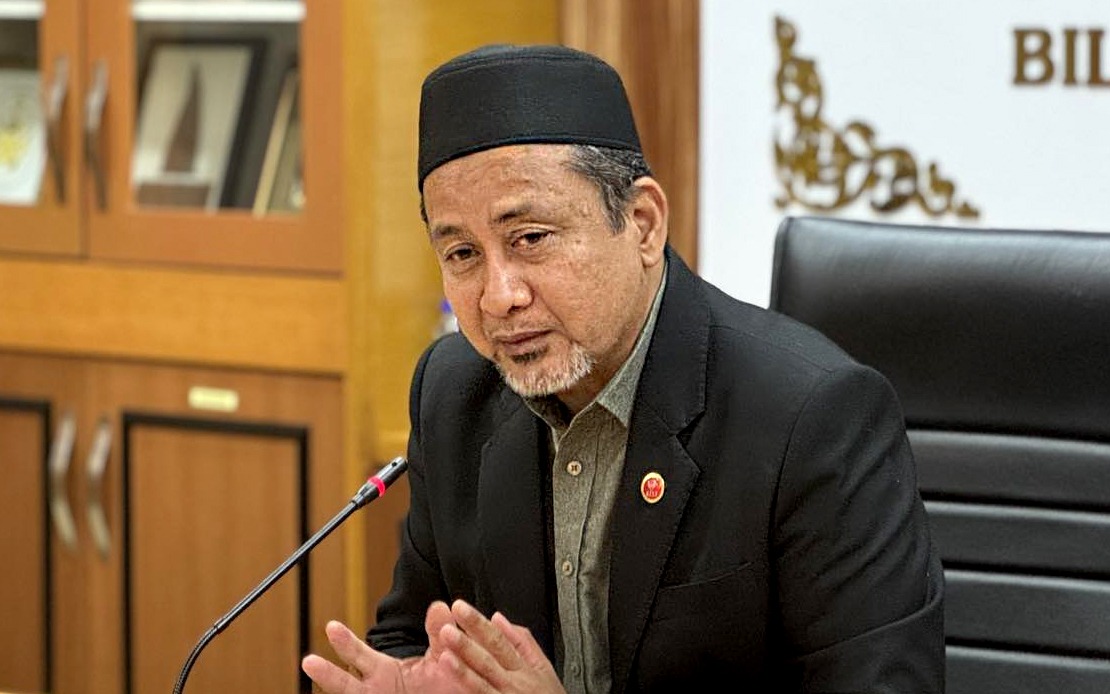
The Kelantan Sports Council is stepping up its commitment to holistic athlete development by partnering with Yayasan Kelantan Darulnaim (YAKIN) to offer education financing options for sportspeople pursuing degrees at public higher education institutions. The collaborative initiative marks a significant shift in how Kelantan approaches talent development, moving beyond traditional coaching and competition funding to address the long-term educational and career prospects of its athletic population.
Zamakhshari Muhamad, chairman of the State Youth, Sports, NGOs and Community Unity Committee, emphasised that the programme reflects the state government's belief that comprehensive support must encompass both sporting excellence and academic achievement. Rather than viewing sports and education as competing priorities, Kelantan's strategy positions them as complementary elements in building well-rounded individuals capable of contributing to society regardless of their athletic trajectory. This recognition is particularly important in a state where many young athletes face real financial constraints that could otherwise force them to choose between continuing their sports and pursuing tertiary qualifications.
Under the expanded support framework, athletes demonstrating academic excellence will receive targeted incentives beyond basic loans. Those achieving outstanding results in the Sijil Pelajaran Malaysia (SPM) and Sijil Tinggi Persekolahan Malaysia (STPM) examinations will qualify for academic excellence awards, creating a dual incentive system that rewards sporting talent without neglecting intellectual achievement. The approach acknowledges that many student-athletes possess the capability to excel in multiple domains, yet often lack the financial resources to do so simultaneously.
The state's broader athlete welfare package already encompasses considerable direct support mechanisms that now work in tandem with the YAKIN partnership. Through the Special Programme, Kelantan provides monthly allowances to athletes enrolled in its Imtiyaz initiative, ensuring that financial hardship does not impede training or development. The council also funds participation in both domestic and international competitive events, recognising that competitive exposure is essential for skill refinement and talent identification. Beyond competition costs, athletes receive nutritional supplements and sports equipment, addressing the practical requirements for effective training that can otherwise strain household budgets, particularly in lower-income families.
The welfare initiatives extended by the state government extend into personal circumstances that might otherwise derail an athlete's career trajectory. Support mechanisms activate during natural disasters, accidents, marriage, and bereavement, acknowledging that life's contingencies affect athletes no differently than other citizens, yet the consequences of financial stress may more severely disrupt years of talent development investment. This holistic approach to welfare reflects recognition that sustainable elite performance requires stability across multiple dimensions of an athlete's life.
Zamakhshari articulated an ambitious vision for the programme's impact, hoping that these resources would catalyse pursuit of excellence not merely in sporting contexts but across education and personal development pathways. The framing suggests that Kelantan views athlete investment as part of broader human capital development, where individuals trained in discipline, goal-setting, and performance management through sports can transfer these capabilities to academic and professional spheres. This perspective aligns with international best practice in athlete development, which increasingly recognises the interconnection between sporting success and educational attainment.
The initiative's success will depend significantly on coordination among its stated strategic partners, which include the National Sports Council, state education and youth and sports departments, and both public and private higher education institutions. This multi-stakeholder architecture creates potential for comprehensive support but also introduces complexity in implementation and communication. Institutions must align their athlete-student policies, education departments must recognise training schedules when structuring academic programmes, and the sporting bodies must facilitate rather than obstruct the educational pursuits of their charges.
For Malaysian athletes more broadly, and particularly those from Kelantan, the programme addresses a persistent structural challenge in the country's talent development ecosystem. Many promising young athletes have historically faced binary choices between nurturing their sporting potential and completing educational qualifications, with few resources available to support concurrent pursuit of both objectives. The YAKIN partnership begins to resolve this tension, though questions remain about the adequacy of funding available, the eligibility criteria that will govern access, and whether similar frameworks might be extended to other states facing comparable athlete welfare challenges.
The timing of this initiative reflects broader recognition across Malaysian sporting institutions that sustainability of athletic performance cannot be separated from post-career prospects. Athletes who invest exclusively in sport without educational credentials face precarious futures when injuries terminate playing careers or when competitive performance naturally declines with age. By embedding educational progression within the athlete support system, Kelantan is encouraging a more prudent approach to individual career planning while maintaining the intensive training required for international competitiveness.
The programme also carries implications for regional talent development patterns within Malaysia. If Kelantan successfully implements this model and demonstrates improved retention of talented individuals within competitive pathways, other states may adopt similar approaches. Conversely, if implementation falters or funding proves insufficient, it could underscore broader resource constraints limiting athlete development investment outside major urban centres. The coming months will reveal not merely the success of Kelantan's specific initiative, but potentially whether state-level sports systems can genuinely balance sporting and educational advancement.

