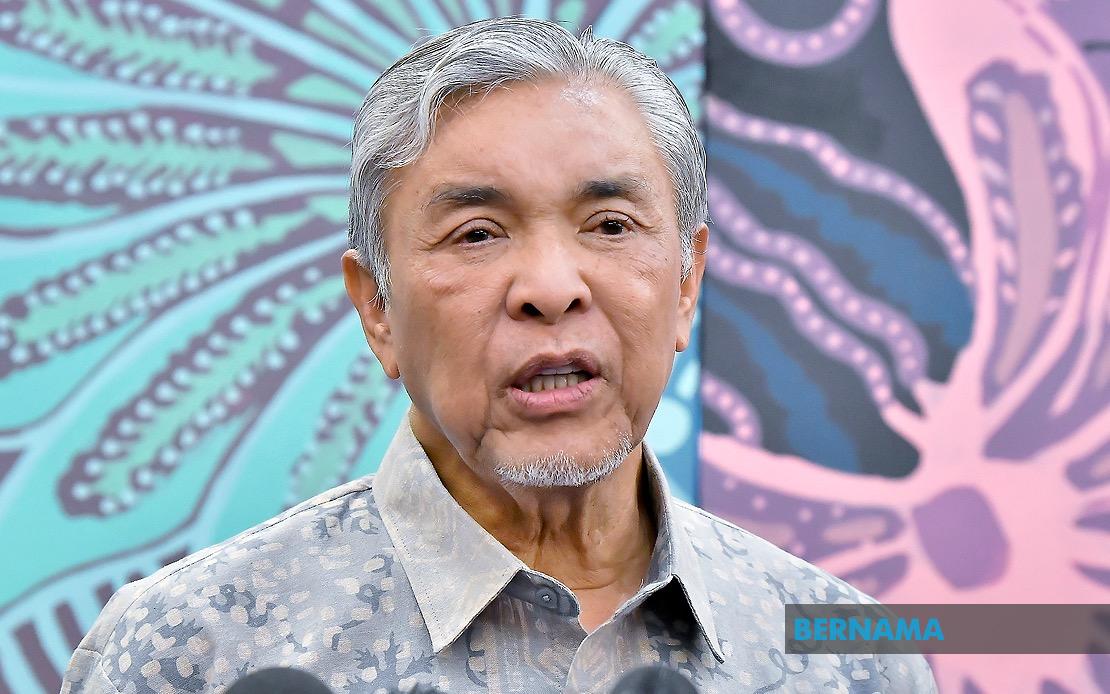
Deputy Prime Minister Datuk Seri Dr Ahmad Zahid Hamidi moved to address widespread concerns about the South East Johor Development Authority's expansion plans, emphasising that the initiative centres on harmonising development efforts across the region rather than pursuing land ownership in target districts. Speaking at an awards ceremony in Kota Tinggi, Ahmad Zahid, who also leads the Rural and Regional Development Ministry, acknowledged the need for public reassurance, noting that misconceptions had circulated regarding KEJORA's intentions towards landholdings in the proposed expansion zones.
The clarification proves timely given that large-scale development authority expansions often trigger anxiety among residents and local communities about potential land grabs or displacement. By reframing the proposal as a coordination mechanism rather than an acquisition strategy, Ahmad Zahid sought to reposition KEJORA's role as a facilitator of orderly growth rather than a property consolidator. This distinction carries practical weight in Malaysian governance, where development authorities typically coordinate across multiple stakeholders—federal agencies, state governments, local councils, and private investors—to ensure projects align strategically.
The push for expanded authority comes on the back of KEJORA's documented performance metrics. With a 98.3 per cent success rate across its project portfolio, the development body has established a track record that proponents argue justifies extending its remit into additional areas. This achievement level significantly exceeds typical completion rates for large infrastructure initiatives in the region, suggesting that expansion advocates believe operational competence warrants territorial growth. The high success rate reflects both efficient project management and strong coordination between various stakeholders, a capability that supporters contend would benefit underutilised areas if applied more broadly.
Southeast Johor, particularly Pengerang, has emerged as a focal point for rapid economic expansion driven by significant industrial and tourism investments. KEJORA's proposed territorial reach would encompass zones experiencing sustained infrastructure demands as major projects take shape. The agency's existing portfolio demonstrates capacity to manage complex, multifaceted development initiatives that require sustained coordination across government layers and private sector participation. By expanding KEJORA's jurisdictional authority, the federal government hopes to maintain momentum in southeast Johor while standardising development quality and integration.
Public acceptance of the proposal appears robust, with a survey commissioned by KEJORA recording 96 per cent support among respondents. This substantial backing suggests that communities within affected districts recognise potential benefits from expanded coordination, or at minimum, perceive KEJORA's governance model as preferable to fragmented alternatives. In the Malaysian context, where public consultation increasingly shapes major policy decisions, such polling data provides political cover for implementation and suggests genuine grassroots acceptance rather than imposed change.
Nevertheless, Ahmad Zahid underscored that formal approval remains contingent upon consent from His Majesty Sultan Ibrahim and the Regent of Johor, Tunku Mahkota Ismail. This constitutional pathway reflects Johor's constitutional position as a state with substantial autonomy over land and territorial matters. Securing royal approval transforms what might appear a routine administrative expansion into a decision requiring top-level political alignment, ensuring that territorial changes respect Johor's governance traditions and legal frameworks. This requirement also demonstrates the federation's respect for state-level prerogatives, even when federal agencies seek operational expansion.
The Rural and Regional Development Ministry has provisioned approximately RM138 million in funding directed to KEJORA's development initiatives across the region. This substantial allocation supports 107 programmes already underway, with roughly 350 additional smaller-scale projects planned as implementation proceeds. The budgetary commitment demonstrates genuine intent behind expansion rhetoric, converting policy pronouncements into concrete resource allocation. For Malaysian readers and observers, this investment level signals sustained federal commitment to southeast Johor's economic trajectory, potentially anchoring investor confidence and long-term planning for private sector activities in the zone.
Parallel to KEJORA expansion discussions, Datuk Seri Azalina Othman Said, the Member of Parliament for Pengerang and Minister in the Prime Minister's Department, has advocated for elevating Pengerang to district status. This complementary proposal reflects recognition that administrative structures have not kept pace with economic dynamism—the zone has outgrown existing governance arrangements designed for slower-growth economies. Coupled with Azalina's proposal to construct a new hospital serving Pengerang's expanding population, these initiatives address practical infrastructure shortfalls that rapid industrialisation creates. Ahmad Zahid's expressed support for these proposals suggests coordination between federal ministries on the broader development vision for southeast Johor.
The district elevation proposal carries implications beyond administrative tidiness. Pengerang's transformation from a smaller local authority into a full district would grant expanded powers for local governance, revenue collection, and planning authority. This restructuring would enhance municipal autonomy and allow decision-making closer to communities experiencing rapid change. Combined with KEJORA's expanded coordinating role, such institutional changes could create a more integrated governance framework where strategic coordination occurs at multiple levels, from federal development authority guidance through to enhanced local administrative capacity.
Healthcare infrastructure expansion through the proposed new hospital represents a tangible deliverable addressing quality-of-life concerns accompanying rapid development. Large industrial complexes and tourism operations generate substantial employment but also place demands on medical facilities, emergency services, and social infrastructure. By committing to hospital construction, policymakers demonstrate responsiveness to demands that economic growth must yield corresponding improvements in public services. For regions like Pengerang experiencing demographic shifts through workforce migration, adequately resourced healthcare becomes essential for retaining skilled workers and supporting family stability.
The broader policy trajectory evident in these proposals reflects a strategic vision for southeast Johor as an integrated growth corridor combining industrial development, tourism expansion, and improved governance structures. Rather than allowing these elements to develop independently, the government appears intent on creating institutional frameworks—expanded KEJORA authority, district status for Pengerang, healthcare investment—that knit diverse development strands into coherent regional strategy. This coordinated approach differs markedly from piecemeal project implementation, instead positioning southeast Johor for sustained, sequenced expansion aligned with infrastructure and governance capacity.
For Malaysia and Southeast Asia more broadly, the KEJORA expansion model offers insights into managing rapid regional development within federal systems where state autonomy intersects with federal development ambitions. The emphasis on coordination rather than centralised land control, the reliance on public consultation generating substantial support, and the commitment to obtaining state-level consent through royal approval demonstrate approaches to balancing development imperatives against federalism principles. Observers from other regional jurisdictions facing analogous growth pressures may find instructive lessons in how KEJORA's expansion navigates institutional complexity while maintaining legitimacy and stakeholder alignment.

