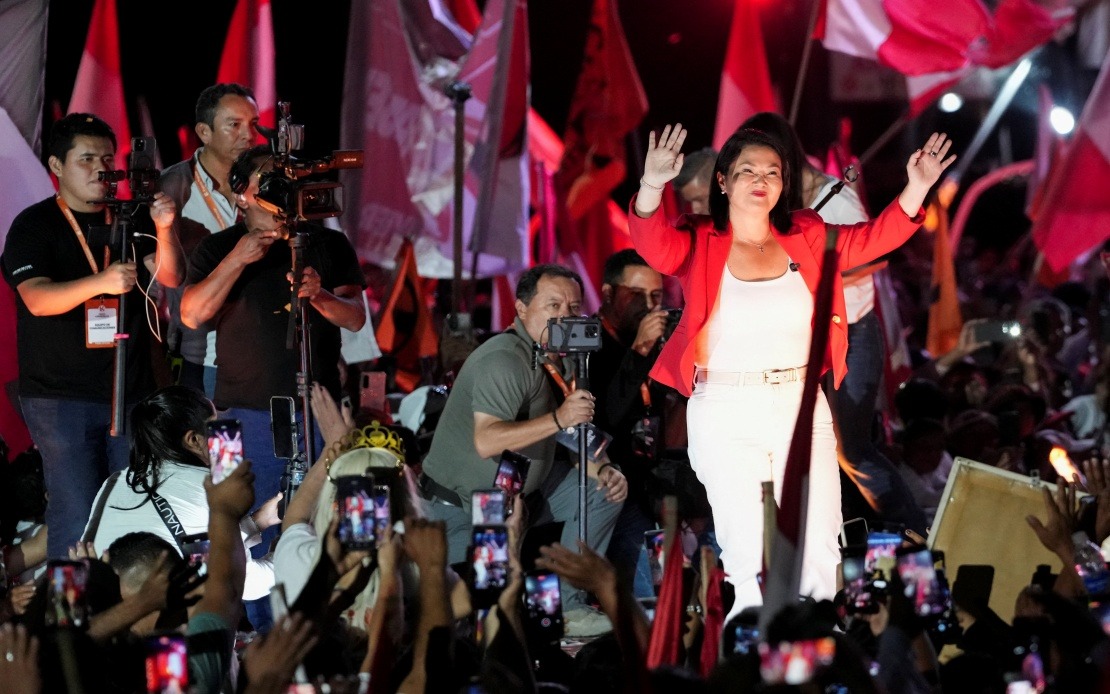
Peru's right-wing Popular Force candidate Keiko Fujimori has claimed victory in the country's presidential election, capturing just over half of all valid votes cast in the June 7 ballot. The complete official count released on Monday by Peru's National Office of Electoral Processes (ONPE) confirmed Fujimori's narrow triumph, though the razor-thin margin underscores the deep political divisions gripping the South American nation at a critical moment in its democratic evolution.
Fujimori accumulated 50.135 per cent of valid votes, translating to 9,223,396 ballots, while her opponent Roberto Sanchez of the Together for Peru coalition secured 49.865 per cent, representing 9,173,755 votes. The victory margin of just 49,641 votes—less than one per cent of the total—signals an extraordinarily polarized electorate unable to reach broader consensus on the country's direction. This wafer-thin lead represents a significant political statement in itself: despite commanding slightly more than half the vote, Fujimori faces the immediate challenge of governing without a strong popular mandate.
The daughter of former President Alberto Fujimori, who led Peru from 1990 to 2000, will now assume the presidency after three earlier campaigns that ended in defeat. Her father's decade in power remains a defining period in Peruvian politics, remembered both for economic stabilization and allegations of human rights abuses that continue to reverberate through the country's institutions. Fujimori's victory represents a potential return to the policy orientation associated with her father's tenure, characterized by market-friendly economics and hardline governance approaches, though she will need to navigate the legacy questions surrounding his administration.
Sanchez, her defeated rival, had served as a cabinet minister under former President Pedro Castillo during 2021 and 2022. Castillo's own tumultuous presidency ended in a failed self-coup in December 2022, after which he was arrested and imprisoned. The presence of Sanchez on the ballot represented a choice between fundamentally different visions for Peru's economic and social policy. His strong second-place finish indicates that a substantial portion of Peruvian voters remains committed to left-leaning approaches despite the recent turmoil on that side of the political spectrum.
The ONPE's complete tabulation involved processing all 92,766 tally sheets from the election, a process that took several days following the June 7 voting. The real-time platform maintained by the electoral authority allowed observers to track results as they were entered, though the final official confirmation only came with Monday's complete count. This methodical approach aimed to ensure accuracy and transparency in what many observers viewed as a crucial test of Peru's democratic institutions after months of political instability and institutional strain.
Roberto Burneo, president of the National Jury of Elections, the body responsible for certifying election results, indicated that the official proclamation of Fujimori as president-elect was expected to occur on Friday. This formal declaration represents the final step in the electoral process and would clear the way for her transition planning and eventual inauguration. The timing allows a brief window for any final challenges or appeals, though with such a conclusive official count, significant changes appear unlikely.
Fujimori's victory carries implications well beyond Peru's borders, particularly for Southeast Asia given regional economic integration and migration patterns. Peru represents one of Latin America's larger economies and an important hub for Chinese investment and trade, factors that shape broader regional dynamics. The election outcome may influence Peru's foreign policy orientation, including its approach to infrastructure projects, trade relationships, and diplomatic alignment in the Western Hemisphere.
The narrow victory margin also raises questions about the stability of any government Fujimori forms and her ability to implement her stated policy agenda. With nearly half the electorate backing her opponent, she will face considerable legislative and social opposition. Peru's congress is also fragmented across multiple parties, making coalition-building essential for passing legislation. These structural constraints may limit her room for maneuver despite winning the presidency.
For regional observers and analysts, the election outcome demonstrates the ongoing volatility in Peruvian politics and the country's difficulty in establishing durable political institutions. Multiple presidents have faced legal troubles, and institutional instability has become a recurring feature of the political landscape. Fujimori's administration will inherit this challenging context, and her initial policy decisions will signal how she intends to address governance challenges while consolidating her political position amid such a divided national mood.

