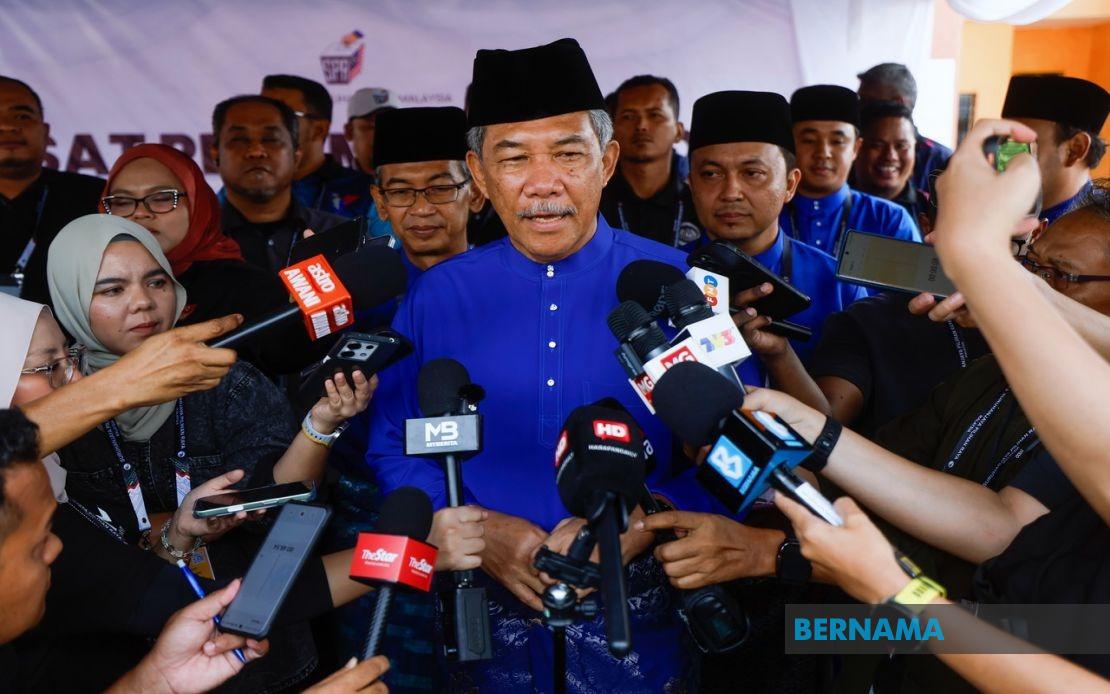
Barisan Nasional deputy chairman Datuk Seri Mohamad Hasan has issued a clear directive to the party's election machinery, instructing them to refrain from politicising Negeri Sembilan's adat institutions during the ongoing 16th state election campaign. The warning, delivered at Dewan Seri Rembau following the nomination process, underscores growing sensitivities around how traditional customs and governance structures are being treated as electoral territory, particularly in a state where customary law and royal protocol carry deep cultural and constitutional significance.
Modamad, who also serves as UMNO deputy president, contended that the adat system deserves respect and protection from the rough-and-tumble world of partisan politics. His intervention signals concern within BN leadership that candidates and party activists might be tempted to exploit traditional governance frameworks as wedge issues to mobilise voters. Such an approach, he warned, would only generate tensions and undermine the orderly conduct of the democratic exercise. The explicit prohibition reflects a recognition that Negeri Sembilan's adat structures remain emotionally and institutionally important to many residents, and that mishandling them during campaigning risks fracturing social cohesion.
The context of this warning is important for understanding Malaysian electoral dynamics. Negeri Sembilan, uniquely among Malaysian states, operates a federal-style system where the Duli Yang Maha Mulia Tunku Muhriz holds executive authority rather than serving in a ceremonial capacity alone. The state's adat council and associated institutions play substantive roles in governance and dispute resolution. Any attempt to drag these institutions into partisan campaign rhetoric could invite backlash from traditionalists and those who view such bodies as standing above electoral competition. Mohamad's intervention suggests BN recognises this risk and seeks to ring-fence adat from campaign warfare.
What makes his statement particularly noteworthy is its defensive posture. By pre-emptively warning party members not to raise adat issues, Mohamad essentially acknowledged that such temptations exist within BN ranks. Whether responding to actual pressure from activists or simply setting clear expectations, the directive reveals that maintaining campaign discipline around sensitive institutional matters is a genuine concern for coalition leadership. The warning also implicitly signals that BN wishes to compete on other grounds—economic policy, service delivery, governance track records—rather than on issues touching cultural and customary domains.
Meanwhile, BN's relationship with Perikatan Nasional continues to develop tactically in Negeri Sembilan. Rather than formalising a full coalition as occurred in Johor during that state's elections, the two blocs are maintaining what Mohamad described as an electoral understanding. This arrangement allows them to coordinate in constituencies where one alliance chooses not to contest, thereby pooling anti-opposition votes where it matters most. The strategy reflects lessons from recent Malaysian state elections, where careful seat negotiation and vote-splitting risks have become critical to maximising opposition-leaning bloc performance.
The electoral understanding between BN and PN represents a pragmatic middle ground. Full coalition formation risks institutional complications and ideological tensions between the partners, but complete independence would squander opportunities to concentrate anti-opposition strength. By maintaining flexibility—with BN and PN helping one another in specific constituencies while competing separately overall—both coalitions preserve their independence while extracting electoral advantages. For Negeri Sembilan voters, this arrangement means encountering a fragmented opposition challenge from multiple blocs operating under a loose understanding rather than a unified front.
The timing of the Negeri Sembilan election follows the dissolution of the state assembly on June 5, with the Election Commission scheduling early voting for July 28 and general polling for August 1. The 36 state seats represent a substantial battleground for testing voter sentiment at a state level, where national political trends sometimes manifest differently than in federal contests. Early voting will allow eligible personnel and those with legitimate reasons to cast ballots before general polling day, spreading the voting period and potentially easing congestion at polling stations.
For Malaysian observers accustomed to seeing traditions and customs weaponised in electoral campaigns, Mohamad's prohibition represents an attempt to maintain guardrails around institutional matters that transcend partisan competition. Yet the very need for such an explicit warning suggests that erosion of such boundaries remains an ongoing temptation for campaign operatives. Whether BN's machinery will respect this directive throughout the campaign period remains to be seen, though senior leadership's clear statement should provide a reference point for accountability if breaches occur.
The Negeri Sembilan contest will offer important signals about several dimensions of Malaysian politics beyond traditional ballot outcomes. It will demonstrate whether cross-coalition cooperation can function effectively at state level without formal merger, whether customary and traditional institutions can remain insulated from electoral competition, and how voters prioritise different campaign messages when multiple blocs compete for their support. The state's unique constitutional arrangements and adat structures give it particular significance as a test case for how Malaysia's political system manages the intersection of tradition and democracy.

