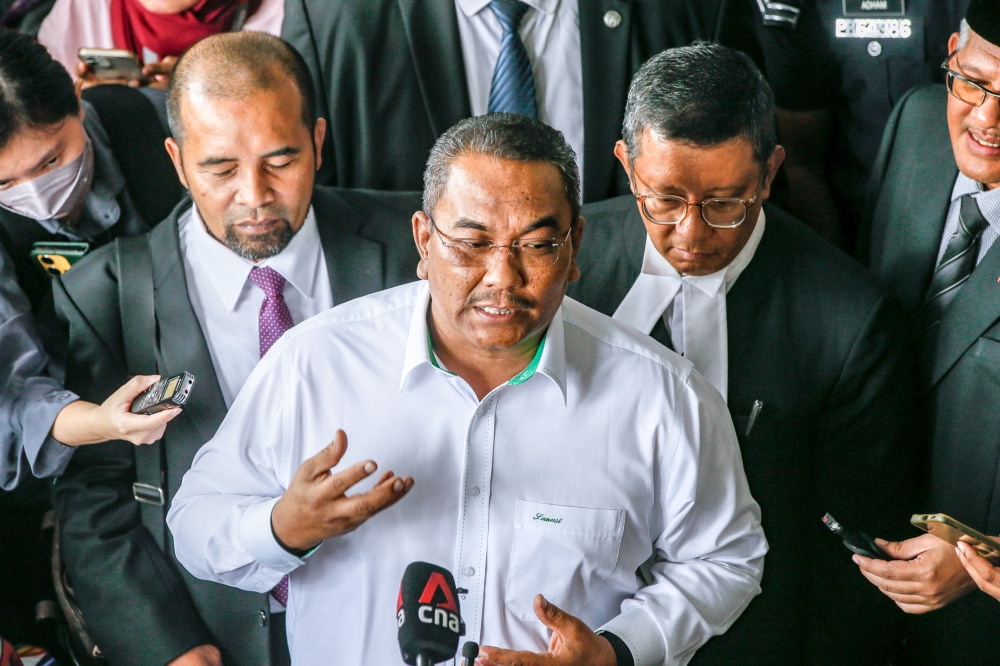
Kedah Menteri Besar Datuk Seri Muhammad Sanusi Md Nor has escalated a political dispute into the legal arena by issuing formal letters of demand to DAP politician Nga Kor Ming and two associates, accusing them of deliberately distorting his public remarks. The move, announced from Alor Star, represents a hardening of political tensions between the state government and the opposition, with the dispute centring on allegations that Sanusi's words were twisted to damage his political standing and reputation.
The letters of demand constitute a formal legal notice, typically a precursor to potential defamation proceedings, and signal Sanusi's determination to pursue the matter through courts rather than through conventional political channels. Such actions are increasingly common in Malaysian politics when politicians believe their statements have been deliberately misrepresented by rivals seeking electoral advantage or to undermine their credibility. The decision to involve lawyers rather than confine the dispute to public statements or parliamentary debate suggests Sanusi views the alleged distortion as sufficiently serious to warrant judicial intervention.
Nga Kor Ming, a prominent DAP figure who has held various positions within Malaysia's complex multi-party political landscape, would be required to respond to the legal demand within a specified timeframe, typically between 14 and 30 days. The demand likely calls for a public retraction, apology, and potentially compensation for alleged damage to Sanusi's reputation. The involvement of two additional recipients indicates the dispute may extend beyond a single politician to encompass a coordinated effort or broader statement made by multiple parties.
The timing and nature of the dispute reflects broader tensions within Kedah's political ecosystem. As a northern state governed by Sanusi's administration, Kedah has experienced significant political competition between ruling coalitions and opposition forces. The DAP, as a component party in various coalitions depending on the electoral cycle and political circumstances, frequently engages in robust criticism of state administrations, particularly when it perceives governance failures or policy missteps.
For Malaysian observers, such legal escalations highlight how political disputes increasingly spill into civil courts. While freedom of speech protects political commentary and criticism in Malaysia's constitutional framework, the boundaries between legitimate criticism and defamatory statements remain contested terrain. Politicians on all sides have pursued defamation actions, though success rates vary considerably depending on how courts interpret the distinction between statements of opinion and statements of provable fact.
The Kedah situation carries particular significance given the state's political volatility. The state has witnessed multiple shifts in government, coalition realignments, and contested leadership claims over recent decades. Sanusi himself has navigated complex political terrain, and maintaining his authority within the state government requires not only effective governance but also protecting his political image from what he perceives as coordinated attacks from rivals.
From a Southeast Asian perspective, Malaysia's approach to political speech through defamation law differs from some neighbouring democracies. While Indonesia and the Philippines have seen courts increasingly protect political speech, Malaysia's approach has sometimes drawn international scrutiny regarding restrictions on expression. However, Sanusi's action represents an individual politician's choice to pursue legal remedies rather than a systematic government crackdown on opposition voices.
The alleged distortion of Sanusi's remarks suggests a dispute over interpretation and context. In modern politics, statements are frequently recorded, circulated on social media, and subjected to intense scrutiny and reinterpretation. What one party presents as deliberate misrepresentation, another may characterise as highlighting concerning implications or problematic undertones. This interpretive flexibility creates genuine legal uncertainty about whether courts will ultimately view the dispute as defamatory or merely as the rough-and-tumble of political disagreement.
The three recipients of the letters of demand will likely consult legal counsel before responding. They may choose to comply with demands for retraction and apology, dispute the allegations, or simply ignore the demand and await potential court proceedings. The decision will depend on their assessment of legal risk, the strength of evidence supporting their original statements, and the political implications of each response option for their party and constituencies.
For Kedah's governance and political climate, the legal action may intensify partisan divisions during a period when cooperation across political lines might benefit policy implementation. Opposition politicians frequently argue that legal threats against political speech have a chilling effect on legitimate parliamentary scrutiny, while government figures counter that protecting reputation is essential for effective leadership and that frivolous misrepresentation must be addressed.
The broader implications extend to how Malaysian politics navigates the relationship between free expression and reputation protection. As social media amplifies political messaging and allows rapid dissemination of contested claims, questions about accountability and responsibility for accurate representation grow more pressing. Whether courts ultimately rule in Sanusi's favour will likely influence how politicians in other states and contexts assess the risk-reward calculation of pursuing defamation actions against political opponents.
Stakeholders across Malaysia's political spectrum will be watching how this particular dispute evolves through legal channels. The outcome may set precedent for how seriously courts treat allegations of political misrepresentation and could influence calculations for future political disputes between state governments and opposition forces.

