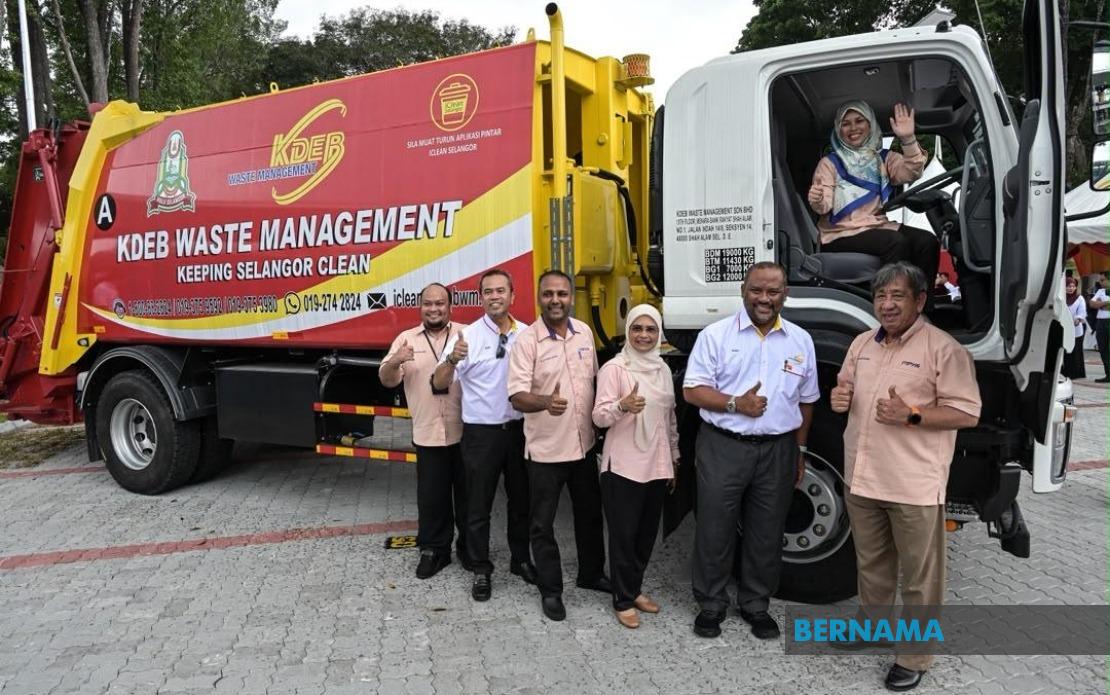
KDEB Waste Management has significantly expanded its fleet capacity in Hulu Selangor, handing over 33 newly acquired compactor lorries to improve refuse collection under its freshly commenced seven-year contract with the Hulu Selangor Municipal Council. The fleet acquisition, comprising 18 Isuzu units, five Mitsubishi Fuso vehicles and ten UD Trucks, represents a substantial investment in upgraded waste infrastructure for the district as the operator begins its second term managing municipal sanitation services.
The seven-year agreement, valued at RM117.2 million or approximately RM16.7 million annually, commenced on July 1 and extends through June 30, 2033. This continuation reflects confidence in the operator's performance during its initial tenure, which began in 2018 and concluded at the end of June. The new fleet is engineered with contemporary specifications intended to streamline collection operations whilst maintaining safety standards and environmental compliance throughout the contract period.
According to KDEBWM managing director Datuk Ramli Mohd Tahir, the organisation has witnessed remarkable growth in waste volumes across the district. During the previous contractual period, daily collection typically ranged between 100 and 150 tonnes. Current projections indicate this will surge to between 150 and 250 tonnes daily under normal operations, with potential capacity to reach 300 tonnes as residential and commercial activity expands. This escalation underscores the growing waste generation challenges facing local authorities in the Klang Valley corridor and suburban Selangor more broadly.
The expanded fleet deployment reflects broader infrastructure modernisation efforts within Hulu Selangor. MPHS president Julaihah Jamaludin emphasised that the partnership encompasses not only residential refuse collection but also coordinated management of industrial waste from small and medium enterprises throughout the district. By enlisting certified concession panel companies for SME waste streams, the council seeks to professionalise disposal practices and ensure compliant handling of varied waste types beyond conventional household refuse.
A significant operational shift accompanies this fleet upgrade: the municipal council has transitioned to a door-to-door collection system commencing July 1. Rather than relying on neighbourhood collection points or leach bins previously utilised, KDEBWM contractors now collect waste directly from residential properties and business premises according to scheduled routes. This methodology aims to reduce littering, minimise unauthorised dumping, and create predictable collection schedules residents can rely upon.
Implementation of the new collection paradigm necessitates substantial changes to household waste management practices. Residents are required to invest in covered waste bins holding a minimum capacity of 120 litres, distinctly labelled with their house or lot numbers to prevent sorting confusion and misalignment during collection cycles. All domestic refuse must be placed in sealed plastic garbage bags tied securely before disposal into the bins, maintaining closed lids at all times to prevent wildlife scavenging and rainwater contamination—measures particularly relevant during monsoon seasons when environmental protection becomes critical.
These operational adjustments address practical challenges endemic to tropical urban environments. Uncovered waste and open collection points invite disease vectors, particularly rodents and insects thriving in humid Malaysian conditions. The sealed bin requirement and enclosed waste bag protocols substantially reduce pathogenic exposure and environmental contamination risks. For households accustomed to open-air collection methods, this transition demands behaviour modification and infrastructure investment, though long-term public health and environmental benefits justify the adjustment.
The waste volume surge documented by KDEBWM reflects broader demographic and economic trends across Selangor's peripheral districts. Hulu Selangor, experiencing residential expansion and commercial development, generates increasingly substantial waste streams as population density rises and consumption patterns intensify. Municipal authorities throughout the Klang Valley corridor confront similar pressures as migration to outer suburbs accelerates, straining existing sanitation infrastructure not initially designed for current population scales.
For Malaysian local authorities and neighbouring municipal councils, the Hulu Selangor model demonstrates effective strategies for scaling waste management infrastructure. Investment in modern compactor technology, systematic contractual frameworks spanning multiple years, and progressive implementation of door-to-door collection systems represent evidence-based approaches other councils might emulate. The seven-year contract structure provides operational stability enabling long-term planning and equipment investment, contrasting with shorter tenures that discourage substantial capital deployment.
The environmental implications of enhanced waste collection efficiency warrant consideration. Modern compactor lorries reduce soil leakage and contamination during transport compared to older vehicles, whilst systematic collection prevents waste accumulation and associated environmental degradation. Sealed household bins further minimise landfill methane generation during decomposition, as waste reaches disposal facilities more rapidly without intermediate environmental exposure.
Public cooperation remains essential for successful implementation. Residents must adhere to bin labelling requirements, waste segregation protocols, and collection schedules. Municipal councils often struggle to secure community compliance with new waste management procedures, particularly when established practices differ markedly from prescribed methodologies. MPHS must invest in public education campaigns explaining collection protocols, environmental rationales, and penalties for non-compliance to achieve systematic compliance across diverse residential areas.
Looking forward, the contract through 2033 establishes performance benchmarks for waste management delivery across Hulu Selangor. Collection efficiency metrics, environmental compliance records, and community satisfaction ratings will illuminate whether modernised infrastructure and systematic approaches effectively address waste challenges in rapidly urbanising districts. Success here could provide templates for similar initiatives across Selangor and other Malaysian regions experiencing comparable development pressures and sanitation demands.

