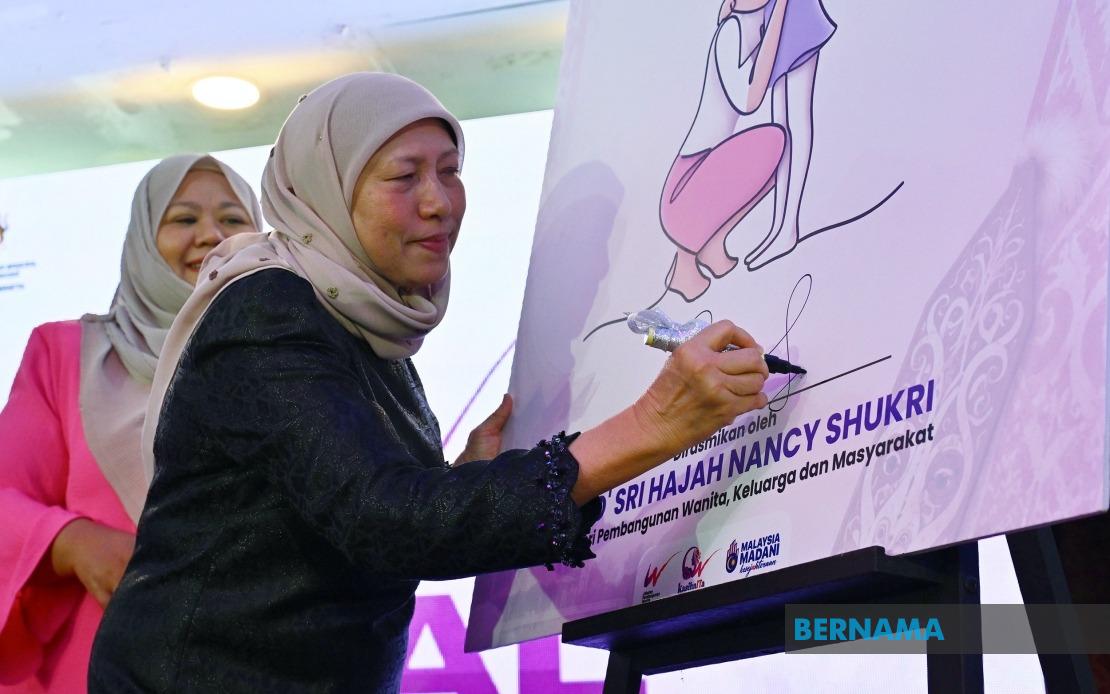
The Ministry of Women, Family and Community Development (KPWKM) has extended its Single Mothers Support programme, known as KasihnITa, to Sarawak as part of a broader rollout across Malaysia. Minister Datuk Seri Nancy Shukri inaugurated the state-level KasihnITa 2026 programme in Kuching on July 19, marking another milestone in the government's commitment to supporting vulnerable families. The initiative represents a coordinated approach to addressing the multifaceted challenges faced by single mothers, combining expertise from multiple government agencies under one umbrella programme.
Following an initial launch in Selangor, the programme has now arrived in Sarawak with 130 participants attending the inaugural three-day session. This phased expansion strategy allows the ministry to refine its delivery mechanisms and gather meaningful feedback before scaling further across the country. By bringing the programme to different states with distinct demographic and socioeconomic profiles, KPWKM gains insights into regional variations in single mothers' circumstances, ensuring that support mechanisms remain relevant and responsive across Malaysia's diverse communities.
The backbone of KasihnITa lies in its coordinated engagement of multiple government institutions, each contributing specialised expertise. The Credit Counselling and Debt Management Agency (AKPK) and Bank Negara Malaysia provide financial literacy training, equipping participants with practical knowledge for managing household budgets, building savings, and avoiding debt traps. The Legal Aid Department and Syariah Judiciary Department contribute legal advisory services, addressing the often complex terrain of maintenance claims, child custody arrangements, and enforcement of court orders. This integrated approach acknowledges that single mothers' challenges extend beyond mere financial constraints; they encompass legal rights, access to justice, and navigating multiple government systems.
Financial empowerment forms a central pillar of the programme's design. Beyond basic budgeting instruction, participants gain exposure to savings strategies, investment options suited to modest income levels, and understanding how to leverage government assistance schemes. For single mothers often managing tight household budgets while bearing sole responsibility for childcare and household expenses, such knowledge translates directly into improved family stability and long-term economic security. The programme recognises that financial literacy, when paired with practical mentorship, can help participants transition from crisis management to deliberate financial planning.
A particularly significant aspect of KasihnITa addresses the persistent challenge of child maintenance compliance. Many single mothers struggle when ex-spouses default on court-ordered maintenance payments, creating financial hardship that impacts children's education and welfare. By providing access to legal advisors within the programme setting, mothers gain clarity on their rights and recourse options without the intimidation or cost barriers often associated with seeking legal help independently. The Syariah Judiciary Department's involvement ensures that Islamic family law matters are handled with appropriate expertise, a critical consideration in Malaysia where Syariah courts govern family matters for Muslim citizens.
Minister Shukri emphasised that the programme serves a dual purpose beyond service delivery. KPWKM actively solicits feedback from participants to inform future policy development, creating a feedback loop where beneficiaries directly shape government initiatives affecting them. This participatory approach counters the risk of top-down programming that misses crucial ground realities. By gathering first-hand accounts of single mothers' experiences, challenges, and aspirations, the ministry gains intelligence essential for designing targeted interventions that address actual rather than assumed needs.
The inclusive development agenda underpinning KasihnITa reflects a broader policy orientation within KPWKM. The ministry's stated commitment that no woman be left behind in Malaysia's development trajectory acknowledges single mothers as a previously marginalised demographic requiring deliberate policy attention. Single-parent households, whether headed by women or men, face systemic challenges in access to housing finance, employment discrimination, and social stigma. By institutionalising support through KasihnITa, the government signals commitment to addressing structural inequalities rather than treating single motherhood as a temporary or exceptional circumstance.
The psychological and social dimensions of the programme merit particular attention. Monthly gatherings create spaces where single mothers encounter others navigating similar circumstances, reducing isolation and fostering peer support networks. These connections often prove as valuable as formal services, enabling knowledge-sharing about childcare resources, employment opportunities, and coping strategies. For many participants, programme participation affirms that government recognises their contributions to families and society, countering internalised stigma that some single mothers experience.
From a regional development perspective, the programme's rollout across states reflects Malaysia's ongoing efforts to address inequality between urban and rural areas, and between peninsula and East Malaysian states. Sarawak's inclusion ensures that single mothers in the state access similar support systems as counterparts in more urbanised regions. This geographical equity dimension matters significantly for states where informal support networks and institutional resources may be thinner on the ground.
The coordination mechanisms embedded within KasihnITa offer lessons for broader social policy integration in Malaysia. Rather than single-issue programmes isolated within individual ministries, KasihnITa demonstrates how structured inter-agency collaboration can create comprehensive support ecosystems. Replicating such models across other vulnerable demographic groups—elderly persons, persons with disabilities, children in poverty—could substantially enhance the reach and effectiveness of Malaysia's social safety net.
Looking forward, the programme's sustainability depends on sustained funding, adequate staffing, and continuous evolution based on participant feedback. The three-year planning horizon implicit in the KasihnITa 2026 branding suggests medium-term commitment, though ensuring long-term institutional viability will require demonstrating measurable outcomes and maintaining political support across electoral cycles. Participants who gain employment, achieve debt reduction, or successfully pursue maintenance claims become powerful advocates for programme continuation.
The expansion to Sarawak also positions Malaysia as a regional leader in targeted family support programming. As other Southeast Asian nations grapple with rising single parenthood rates amid urbanisation and changing family structures, Malaysia's experience with KasihnITa offers a replicable model. Whether through bilateral knowledge-sharing or regional cooperation mechanisms, the programme contributes to broader conversations about inclusive development and social protection in the region.

