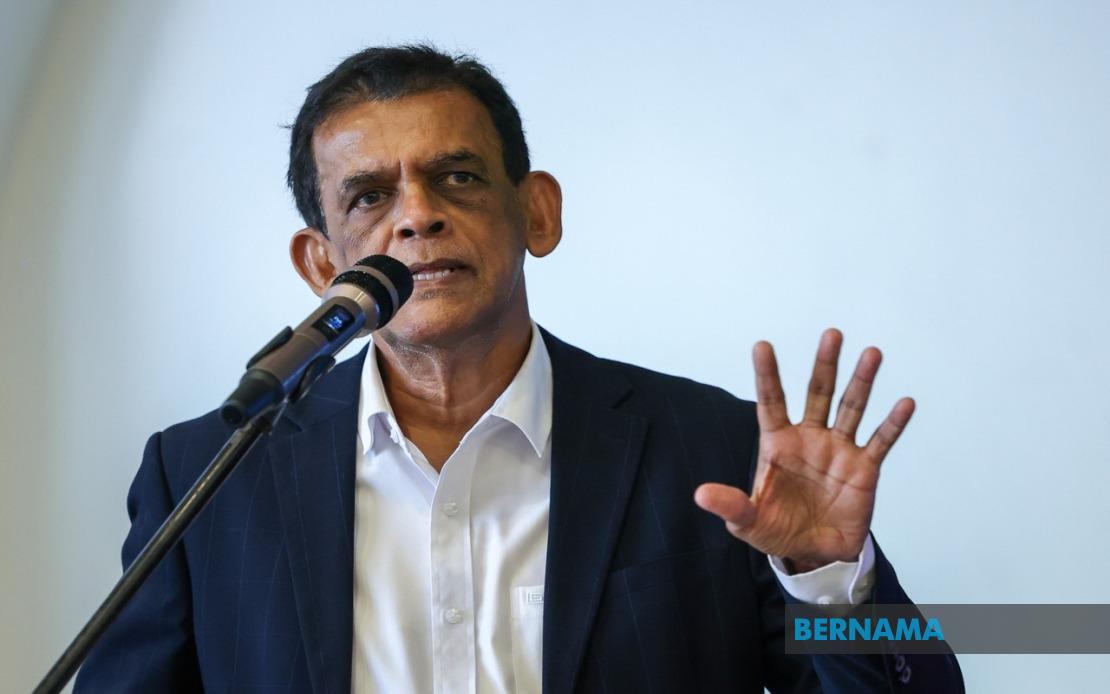
The Malaysian Artistes Association (Karyawan) has formally called on the government to take over the management and distribution of music royalties, arguing that the current fragmented system has failed musicians and rights holders for more than two decades. The proposal, endorsed unanimously at Karyawan's annual general meeting, represents an escalation in industry pressure for structural reform at a time when public performance royalty collections are approaching RM200 million annually—a substantial sum that should be reaching artists but often remains caught in bureaucratic and administrative delays.
Datuk Freddie Fernandez, Karyawan's president, outlined the association's vision in a statement, emphasizing that the current system has become untenable due to persistent complaints about transparency, excessive administrative overhead, fragmented collection structures, and ongoing disputes among the three primary collective management organisations operating in Malaysia. The scale of the problem becomes apparent when considering that a country with Malaysia's music industry profile and population should be managing royalties far more efficiently than it currently does. The situation has become so problematic that Karyawan, alongside MyIPO and various government agencies, has taken legal action against the three royalty collection bodies—Music Authors' Copyright Protection, Public Performance Malaysia, and Recording Performers Malaysia—signalling a breakdown in the existing regulatory framework.
The association's proposal draws inspiration from Indonesia's institutional model, where the National Collective Management Institution operates as a centralized body overseeing public performance royalty collection. Indonesia's adoption of this government-supervised approach came after that country experienced similar industry dysfunction, suggesting that regional precedent exists for reforming collection systems. The Indonesian experience indicates that government intervention can resolve longstanding inefficiencies that private or quasi-private entities struggle to address, particularly when those entities operate competitively rather than collaboratively.
Central to Karyawan's vision is the establishment of a digital royalty management platform operating under government oversight. This system would function as a national music rights registry, creating a comprehensive database where every musical work, sound recording, ownership structure, licensing agreement, usage report, and payment transaction is recorded, verified, and fully auditable. Such a platform would represent a fundamental modernization of Malaysia's music rights infrastructure, enabling automated matching of song usage to legitimate rights holders and facilitating immediate royalty calculation and distribution based on verified ownership data and actual usage metrics.
The digitalized approach addresses several chronic problems simultaneously. By eliminating duplicate administrative processes across multiple collection bodies, the system would reduce overhead costs that currently consume a disproportionate share of collected royalties before reaching artists. The centralized platform would provide unprecedented transparency, creating clear audit trails accessible to the government, rights holders, users, and other stakeholders. This transparency mechanism would hold administrators accountable in ways the current system does not, allowing musicians and their estates to track exactly where their royalties are held, how much has been collected, and why distributions may be delayed.
Karyawan framed the proposal as consistent with Malaysia's newly developed Copyright (Collective Management Organisation) Guidelines 2025, suggesting that government oversight would strengthen governance, record-keeping, reporting, and accountability mechanisms already envisioned in emerging regulatory frameworks. This positioning indicates that the proposal aligns with official policy direction rather than contradicting it, potentially increasing its political viability. The timing is strategic, leveraging recent policy developments to argue that government takeover represents the natural evolution of Malaysia's copyright management architecture.
The association also emphasized an emerging concern regarding artificial intelligence-generated music, arguing that a unified government system could better regulate and manage AI-related music rights issues before they proliferate into the industry. Without proactive intervention through structural reform, Malaysia risks developing an even more chaotic royalty system as AI-generated content proliferates alongside traditional music. A centralized digital platform would theoretically be better equipped to handle the novel rights questions that AI music raises than the current fragmented system.
Beyond systemic issues, Karyawan highlighted acute individual hardships illustrating the human cost of the current system's failures. The case of legendary musician Sudirman Arshad exemplifies the problem: his family waited many years before finally receiving RM367,000 in accumulated royalties despite his decades-long career. This scenario is not exceptional. Karyawan reports that numerous members have approached the association after discovering they have not received fair royalty payments from record sales and streaming services. The association is currently compiling information from affected members to pursue collective representation and legal claims for fair resolution, transforming individual grievances into a broader campaign for systemic change.
The proposal reveals fundamental tensions between record labels, collection bodies, streaming platforms, and artists regarding royalty attribution and payment obligations. Record labels allegedly fail to pass appropriate royalty shares to performing artists, while collection bodies struggle to distribute funds fairly and transparently. Streaming platforms operate with their own royalty calculation methodologies, often creating additional opacity. Meanwhile, government regulatory bodies lack centralized oversight mechanisms to monitor and enforce compliance across this complex ecosystem. A government-managed system could establish binding standards and enforcement procedures that currently remain fragmented across multiple private entities with competing interests.
Karyawan's call reflects broader Southeast Asian trends toward government involvement in copyright management and cultural industries governance. As countries in the region develop more sophisticated approaches to intellectual property, the question increasingly becomes whether market-based or government-administered systems better serve creators' interests. Malaysia's proposal, if adopted, would position the country among early adopters of centralized government music royalty administration in Southeast Asia, potentially establishing a model that other nations might subsequently examine.
The proposal's success will likely depend on negotiating the interests of existing collection bodies, many of which would face diminished roles or elimination under a government takeover. These organizations may resist losing the authority and revenue streams they currently control, creating political obstacles even if the proposal's logic is compelling. Additionally, implementing a comprehensive digital platform requires significant technological investment and expertise, necessitating government commitment beyond rhetorical support. Whether Malaysia's government proves willing to undertake such reform remains uncertain, though the near-unanimous support from Karyawan members suggests growing consensus within the music industry that the status quo is unsustainable.

