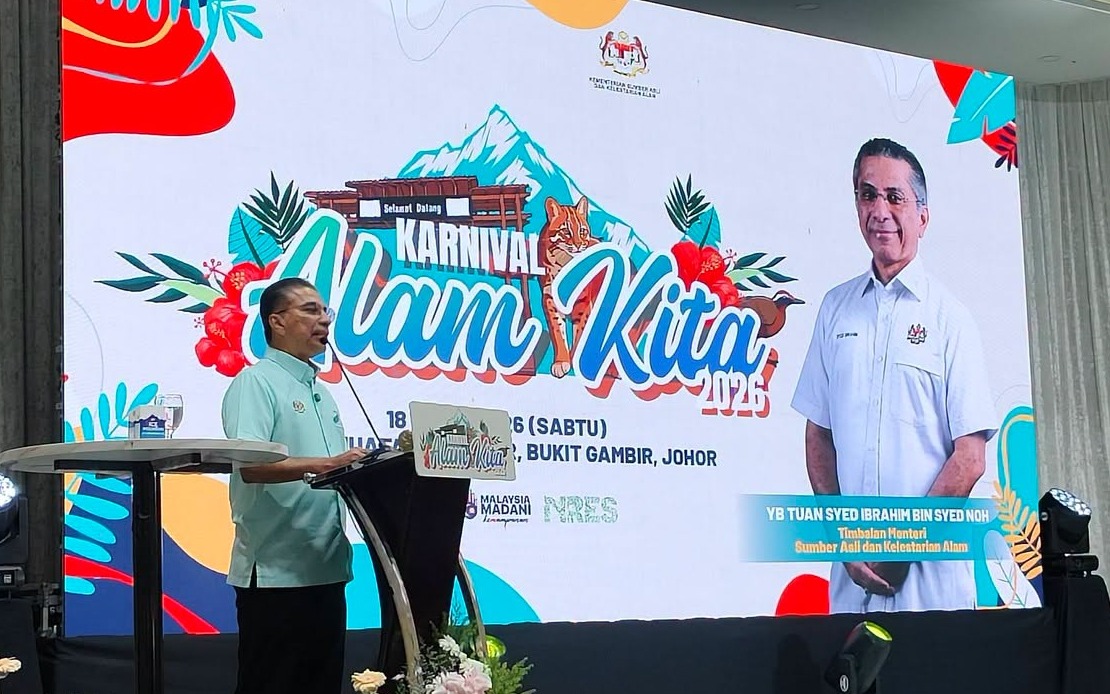
The Karnival Alam Kita (KAK) 2026 roadshow has arrived in Johor as part of a broader national effort by the Ministry of Natural Resources and Environment to embed environmental consciousness into the daily routines of Malaysian households, schools, and workplaces. The initiative represents a strategic shift in how the government approaches sustainability communication, moving away from top-down messaging toward direct community engagement where residents can observe practical applications of eco-friendly practices in their own neighbourhoods.
Deputy Natural Resources and Environment Sustainability Minister Syed Ibrahim Syed Noh underscored that this year's carnival framework prioritises accessibility and tangibility. Rather than overwhelming communities with technical jargon about rare earth elements, electronic waste, or carbon reduction targets, the ministry's revised strategy focuses on translating complex environmental challenges into relatable contexts that resonate with everyday Malaysian life. The emphasis reflects an acknowledgment that sustainability messaging often fails because it remains too distant from citizens' immediate concerns and lived experiences.
A central insight from Syed Ibrahim's remarks centres on the shared responsibility model for environmental stewardship. The minister stressed that environmental sustainability cannot be the exclusive domain of government agencies; instead, it requires a collective commitment beginning at the household level and extending through educational institutions and workplaces into the broader community fabric. This philosophy suggests a recognition that lasting behavioural change emerges not from regulatory mandates alone but from organic cultural shifts in how Malaysians perceive their relationship with natural resources.
The programme introduced at the July 19 launch in Johor included the Young Environmental Ambassador Programme, a capacity-building initiative targeting secondary school students. This youth-focused component aims to cultivate a generation of environmental leaders capable of influencing their families' consumption patterns and sustainability practices. By investing in teenage champions rather than solely addressing adult populations, the ministry adopts a generational strategy that could yield compounding environmental benefits over decades as these young ambassadors mature into decision-makers in their communities.
Concurrently, the NRES Lestari Squad executed the KUDAH clean-up initiative in partnership with Bateriku (M) Sdn Bhd, demonstrating the carnival's commitment to translating awareness into immediate environmental action. During this particular operation, volunteers recovered 37 kilogrammes of waste, including 17.3 kilogrammes of plastic bottles, collectively preventing an estimated 43.2 kilogrammes of carbon dioxide equivalent from entering the atmosphere. To contextualise this impact for Malaysian drivers, the environmental savings equate to removing a petrol vehicle from roads for approximately 100 kilometres—a concrete figure that helps residents visualise how micro-level waste collection cascades into macro-scale environmental benefits.
The participation of diverse stakeholders—from government bodies to non-governmental organisations and private sector partners—illustrates a whole-of-society approach to embedding sustainability into Malaysia's economy and culture. By assembling recycling campaigns for electronic waste and used cooking oil, biodiversity education exhibitions, and green product markets under one carnival umbrella, the ministry creates a holistic ecosystem where citizens encounter multiple pathways toward greener living rather than isolated, disconnected initiatives.
For Malaysia's ongoing transition toward a net-zero carbon economy by 2050, events such as KAK 2026 serve as crucial scaffolding that bridges the gap between national climate commitments and household-level implementation. Southeast Asian nations, particularly Malaysia with its substantial manufacturing and palm oil sectors, face particular scrutiny regarding emissions reduction credibility. Public-facing environmental carnivals help substantiate government claims by demonstrating tangible community mobilisation and behavioural shifts.
The Johor location holds symbolic significance as the state represents a convergence of urban-industrial development and biodiversity-rich landscapes, making it an ideal testing ground for sustainability messaging that must resonate across both metropolitan and semi-rural populations. Success in Johor could provide replicable models for rolling out KAK across other Malaysian states, each with distinct demographic and geographic profiles.
The Young Environmental Ambassador Programme's emphasis on school-based training acknowledges that educational institutions wield considerable influence in shaping environmental attitudes during formative years. Rather than treating sustainability as peripheral content occasionally mentioned during science lessons, embedding it through dedicated ambassador training suggests a structural commitment to environmental literacy as foundational knowledge for Malaysian youth.
Looking beyond immediate waste collection metrics, the deeper strategic value of KAK 2026 lies in its attempt to destigmatise and normalise sustainable practices as ordinary rather than burdensome or aspirational. By creating carnival atmospheres—inherently celebratory spaces—around environmental action, the ministry counters the tendency for sustainability messaging to feel austere, guilt-laden, or exclusively aligned with elite concerns detached from working-class realities.
The partnership framework with private entities like Bateriku (M) Sdn Bhd signals recognition that the transition to a green economy requires private sector participation and innovation. Manufacturers of sustainable products, recycling enterprises, and technology providers benefit from expanded market access whilst simultaneously advancing environmental objectives, creating alignment between profit motives and climate imperatives.
As Malaysia navigates increasingly stringent international climate obligations and domestic pressures to balance economic growth with environmental stewardship, initiatives such as KAK 2026 function as essential mechanisms for building grassroots support and behavioural foundations for larger policy changes. The extent to which these carnivalised sustainability drives translate into sustained behavioural modification rather than momentary enthusiasm will ultimately determine their contribution to Malaysia's environmental trajectory.

