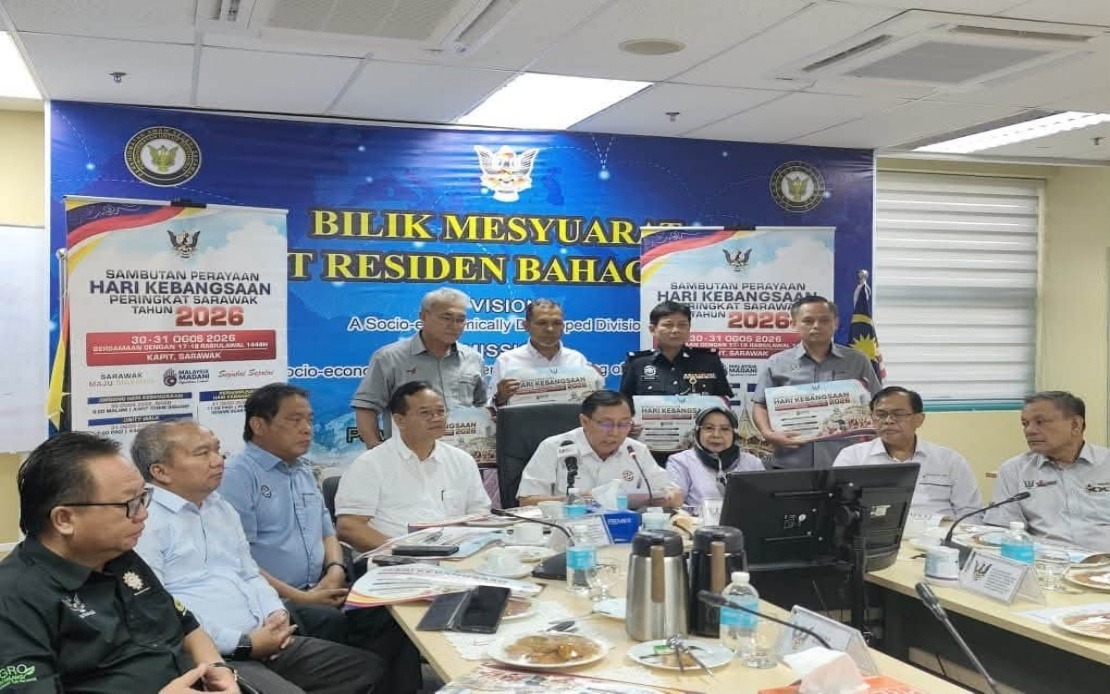
Kapit, a town in the heart of Sarawak's river systems, will take centre stage as the venue for the state-level National Day celebration on August 30 and 31. The two-day event represents a significant occasion for the Sarawak government to commemorate Malaysia's independence while reinforcing messages of national unity and patriotism among residents of the Kapit Division and neighbouring communities.
The celebration carries symbolic importance beyond the routine observance of National Day. According to Datuk Seri Dr Stephen Rundi Utom, the Sarawak Food Industry, Commodity and Regional Development Minister and overall coordinator of the festivities, the occasion will serve multiple purposes: honouring the sacrifices of earlier generations who contributed to nation-building, strengthening communal bonds across different demographic groups, and deepening citizens' emotional connection to Malaysia as a political entity. This multi-layered approach reflects growing recognition among state administrators that national celebrations function most effectively when they interweave historical acknowledgement with contemporary social cohesion objectives.
The event will draw attendance from Sarawak's highest constitutional and political offices. Tun Dr Wan Junaidi Tuanku Jaafar, the Governor and ceremonial head of state, will participate in two of the three main activities, signalling the occasion's formal status within the state's calendar. Tan Sri Abang Johari Tun Openg, Sarawak's Chief Minister and chief executive, will attend the main gathering, underscoring the administration's investment in the celebration. Such high-level participation typically amplifies media coverage and public interest, particularly in interior divisions like Kapit that may receive less frequent visits from senior officeholders.
The organisational framework comprises three distinct components, each designed to engage participants in progressively formal settings. The festivities commence on the evening of August 30 with a National Day Eve celebration at Kapit Town Square, establishing an informal, celebratory atmosphere that encourages public participation and cultural expression. This evening component serves as an accessible entry point for residents who may have work or family commitments during daytime hours.
On August 31, proceedings shift toward more structured, ceremonial formats. The Unity Walk at 7 am represents an intentional choice of timing and activity type, encouraging early participation and embodying the concept of collective movement toward shared national ideals. Morning walks carry cultural significance in Malaysian civic contexts, associating exercise with patriotic purpose. Following this, the National Day Gathering at Dewan Suarah Kapit at 11 am will provide the formal centrepiece, where dignitaries will deliver addresses and ceremonies will unfold according to established protocols.
Kapit's selection as the venue carries practical and symbolic implications for East Malaysia. The division, located along the Rajang River, has historically represented the interior regions of Sarawak with substantial indigenous populations and strong connection to traditional livelihoods. Hosting the state-level celebration there broadcasts a message that Sarawak's national commemoration extends beyond urban centres like Kuching, acknowledging and including communities in less developed areas. This choice potentially increases civic engagement among populations who might otherwise feel peripheral to state-level events.
The invitation to public participation extends beyond physical attendance. Recognising that geographical constraints, health considerations, or other factors may prevent interested citizens from travelling to Kapit, the organisers have arranged live broadcast coverage through TVS (Television Sarawak) and social media platforms maintained by UKAS, the Sarawak Public Communications Unit. This multimedia approach democratises access to the celebration, allowing dispersed audiences throughout Sarawak to experience key moments in real time. Such arrangements have become standard practice in Malaysian governance since the pandemic normalised hybrid participation in official events.
From a broader Southeast Asian perspective, Sarawak's approach to National Day celebrations reflects Malaysia's ongoing efforts to balance national integration with respect for regional distinctiveness. Unlike peninsular states that typically observe National Day according to uniform federal templates, Sarawak retains considerable autonomy in organising state-level commemorations. This flexibility permits adaptation to local contexts and preferences, potentially strengthening identification with both national and state identities simultaneously.
The emphasis on "unity" across multiple event descriptions warrants analytical attention. For Sarawak, a state with diverse ethnic composition including Iban, Bidayuh, Orang Ulu, Malay, and Chinese communities, unity messaging carries particular weight. National Day celebrations across Malaysia have historically served instrumental functions in promoting intercommunal harmony alongside patriotic sentiment. In Kapit specifically, where indigenous populations predominate but Chinese and Malay communities also maintain significant presence, the Unity Walk and collective gathering provide occasions for visible, performative expressions of multiethnic cooperation.
The logistical coordination required to execute state-level celebrations in interior divisions presents challenges distinct from urban venues. Kapit's location necessitates careful planning regarding participant accommodation, food service, security, and traffic management. Successfully delivering such an event demonstrates administrative capacity and commitment to serving populations beyond major urban areas, aspects that factor into electoral calculations and public satisfaction metrics for state governments.
Minister Rundi's public invitation to participation reflects standard Malaysian governmental communication practices, though the specific emphasis on Kapit Division and surrounding areas suggests targeted outreach to constituencies most likely to attend. In Malaysian political culture, visible turnout at official celebrations carries significance, both for participants demonstrating civic engagement and for organisers demonstrating popular support for government initiatives.
The scheduling around Malaysia's traditional National Day date carries constitutional and historical resonance. August 31 marks the date of Malaya's independence in 1957, while Sarawak and Sabah joined the federation on September 16, 1963. Sarawak's decision to host state-level celebrations around August 31 rather than September 16 reflects federal harmonisation policies that prioritise a unified national date, though some Sarawakian voices periodically advocate for greater emphasis on September 16 as distinctly relevant to East Malaysian historical experience.
This celebration ultimately exemplifies how Malaysian governance structures attempt to weave together national cohesion narratives, regional distinctiveness, ethnic diversity acknowledgement, and popular participation within ceremonial frameworks. The success or resonance of such events among Kapit residents will depend on execution quality, perceived accessibility, cultural relevance, and whether participants experience the occasion as meaningful commemoration or routine governmental procedure.

