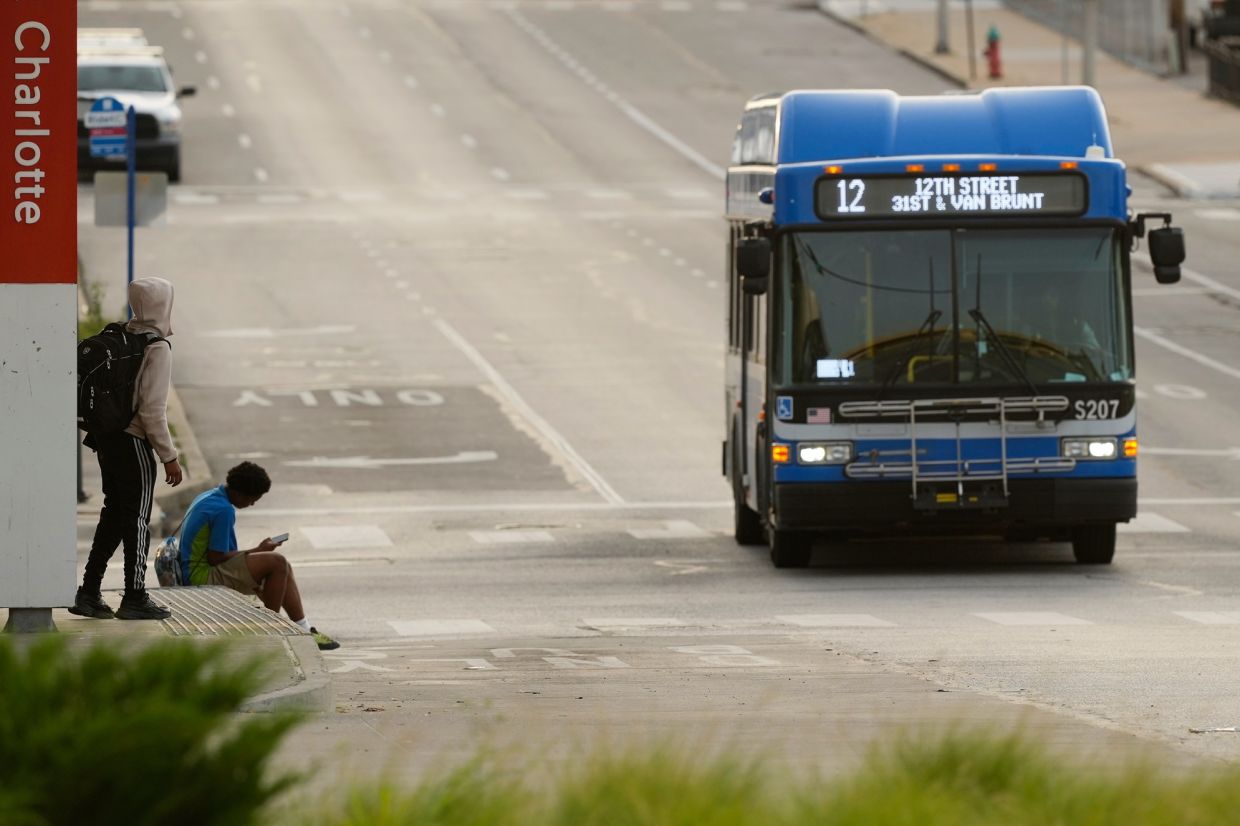
Authorities in Kansas City, Missouri, are moving forward with plans to install facial recognition technology on selected public buses, marking what many observers consider a watershed moment for artificial intelligence deployment in American public transportation. The system would scan passengers against digital databases containing images of banned riders, missing persons, and individuals flagged by law enforcement, demonstrating how cities are beginning to integrate sophisticated AI surveillance into everyday civic infrastructure. This initiative has crystallised a fundamental tension that extends well beyond Missouri's borders—the competing imperatives of public safety and personal privacy that increasingly define technological governance across North America and globally.
The technology partnership brings together Kansas City Transportation Authority with SafeSpace Global, a Tennessee-based firm that has spent years refining facial recognition systems for use in nursing homes, prisons, and educational institutions. The company's expansion into transit represents both a logical business progression and a significant conceptual leap, as it marks the first major deployment of live facial recognition on public buses within the United States. SafeSpace Global argues that its approach is deliberately circumscribed: captured facial data would be immediately discarded if no alert match occurs, with only archived video footage retained on local servers for up to five years. However, this technical safeguard offers little reassurance to civil liberties advocates who view even limited deployment as a dangerous precedent.
Jay Stanley, a senior policy analyst at the American Civil Liberties Union, articulated the core concern animating this debate. The real watershed, according to Stanley, is not the technology itself but rather its application to live surveillance in public spaces—a boundary that remained uncrossed for nearly twenty-five years despite rapid advances in computational capability. This distinction matters enormously because it represents a psychological and institutional shift from passive recording to active, real-time identification of ordinary citizens. Once that boundary dissolves, Stanley warns, the political and technical obstacles to expansion shrink considerably. Surveillance scope creep becomes not merely possible but probable, as watch lists expand and the system's architecture gradually accommodates increasingly broad categories of monitoring.
City officials and project supporters dismiss such concerns as technophobic resistance to inevitable progress. Tyler Means, chief mobility and strategy officer at Kansas City Transportation Authority, characterised facial recognition as simply a new iteration of existing surveillance infrastructure already present on buses for decades. His framing suggests that incremental technological advancement should proceed largely unexamined, with public acceptance emerging naturally once citizens acclimate themselves to the new normal. This normalisation argument proves particularly influential in security contexts, where officials argue that citizens already accept cameras in airports, shopping malls, and street corners. Yet critics distinguish between passive recording and active identification—between cameras documenting activity and systems that match faces against databases to identify specific individuals regardless of criminal activity or legitimate reason.
The financial and technical hurdles delaying implementation ironically bought time for public scrutiny that might otherwise have been absent. The Missouri state government declined funding the project due to facial recognition concerns, forcing reliance on local and federal resources instead. Simultaneously, technical requirements emerged: upgrading Wi-Fi infrastructure to support both the new cameras and a parallel fare collection system modernisation stretched implementation timelines. These delays, frustrating to project proponents, actually shifted the Kansas City deployment from a spring launch timed to coincide with World Cup hosting into ongoing discussion, extending the window for policy development and public debate.
The historical context of facial recognition deployment in American cities reveals a pattern of initial enthusiasm followed by rapid retreat when public backlash crystallised. Tampa, Florida's post-9/11 experiment with facial recognition cameras in the Ybor City neighbourhood collapsed almost immediately due to community opposition. More recently, New Orleans police secretly deployed facial recognition surveillance despite a municipal ordinance explicitly prohibiting the technology, suggesting that enforcement mechanisms prove inadequate when political will favours expansion. Detroit's experience with high-definition cameras and licence plate readers demonstrates how surveillance projects persist even after generating community concern, with authorities simply restricting rather than eliminating problematic applications. These precedents suggest that deployment rarely represents the final stage of technological adoption; instead, it typically marks the beginning of expansion.
Will Owen from the Surveillance Technology Oversight Project crystallised the fundamental objection: residents should not serve as test subjects for unproven technology developed by Silicon Valley ventures. This framing rejects the implicit assumption underlying many government-corporate partnerships—that public acceptance validates technological deployment. Instead, it asserts that democratic process and informed consent must precede introduction of surveillance systems that will inevitably become embedded in municipal infrastructure. The distinction proves crucial for Malaysian and Southeast Asian readers monitoring similar technological developments in their own cities, where government-technology partnerships often advance without sustained public deliberation or meaningful community input.
Former Detroit police chief James Craig presented the countervailing argument with particular force. Rather than viewing surveillance skepticism as legitimate democratic restraint, he characterised opposition to facial recognition as reflexive technophobia that deprives law enforcement of powerful crime-fighting tools. According to this perspective, the problem lies not with facial recognition itself but rather with inadequate policy frameworks and insufficient accountability mechanisms. If police departments and city governments established robust oversight structures, transparent guidelines, and genuine accountability procedures, Craig suggested, facial recognition would enhance public safety without justifying wholesale abandonment. This position resonates particularly strongly among security professionals and elected officials focused on measurable crime reduction metrics.
The delayed implementation timeline has nevertheless produced unexpected benefits for policy development. Ryana Parks-Shaw, serving as Kansas City's mayor pro tem, explicitly welcomed the extended timeline as opportunity for deliberate policy construction rather than hasty deployment. Her statement reflects an emerging recognition among some municipal leaders that surveillance systems, once installed and integrated into operational procedures, develop constituencies resistant to reform or removal. By contrast, delaying implementation creates space for establishing clear guardrails, transparent policies, and accountability mechanisms before systems become operationally entrenched. This approach respects both legitimate security interests and fundamental privacy protections, though it requires political will to resist pressure from technology vendors and security officials advocating rapid deployment.
The Kansas City case carries particular resonance for Southeast Asian readers because it demonstrates how cities globally encounter comparable pressures to adopt AI surveillance while confronting similar civil liberties objections. Malaysia, Singapore, and other regional cities have already begun deploying facial recognition in public spaces—sometimes with explicit government authorization, sometimes through incremental introduction without comprehensive public debate. The American experience suggests that technological deployment, once initiated, becomes extraordinarily difficult to constrain or reverse. Decisions made in Kansas City about scope limitations, data retention, and oversight mechanisms will inevitably influence how other municipalities approach similar projects, potentially establishing either protective precedents or cautionary examples depending on implementation outcomes.
Kansas City's expanded deployment timeline—potentially accommodating thirty buses rather than the originally planned nine-bus pilot—reflects confidence that implementation obstacles prove primarily technical and financial rather than substantive policy questions. Project organizers intend to proceed with full-scale deployment once funding materialises and Wi-Fi infrastructure upgrades complete. Meanwhile, World Cup security planning reverted to traditional policing approaches: deploying approximately forty additional officers to patrol transit stops and centres. This conventional alternative, while more labour-intensive and expensive, preserved public transit security during the crucial international sporting event without introducing permanent surveillance infrastructure. The implicit message—that modern policing functioned adequately before facial recognition technology—challenges the inevitability narrative underlying much surveillance deployment rhetoric, suggesting that security needs and technological capacity constitute separate questions that should not automatically collapse into presumed integration.

