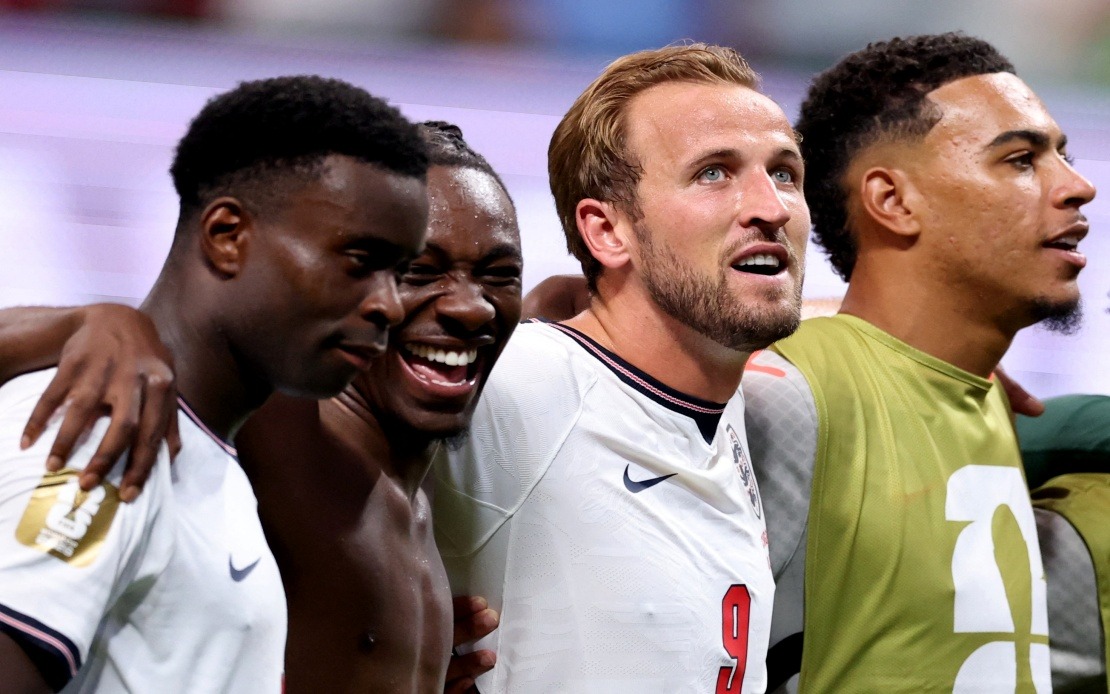
Harry Kane delivered a commanding second-half performance to pull England back from the brink of a stunning World Cup upset, steering Thomas Tuchel's side to a 2-1 comeback victory against the Democratic Republic of Congo in Atlanta on Wednesday. The dramatic turnaround in the round of 32 clash prevented what would have been a catastrophic early exit for one of the tournament's strongest contenders, though the manner of England's struggles has raised serious concerns about their ability to compete against the competition's elite teams.
England's start to the match could hardly have been worse. The Democratic Republic of Congo struck early through Brian Cipenga, catching the European side on the back foot and immediately threatening to replicate one of international football's greatest shocks—England's elimination by Iceland at Euro 2016. For much of the first half, Tuchel's men appeared sluggish and poorly organised, allowing an unfancied opponent to dictate passages of play and maintain genuine threats on goal. The contrast between England's perceived strength and their stuttering opening performance created visible anxiety among supporters.
Congo's goalkeeper Lionel Mpasi emerged as one of the most impressive figures on the pitch during the opening period, making several crucial saves to maintain his side's slender advantage. The Congolese defence, inspired and resolute despite their relatively modest reputation, repeatedly frustrated England's attacking players and prevented them from establishing the kind of dominance that normally characterises matches between such disparate opponents. Yoane Wissa came particularly close to extending Congo's lead when he struck the woodwork late in the first half, a moment that could easily have proven decisive. Kane himself believed he had been denied a clear penalty, adding to the growing frustration evident in England's play.
The second half witnessed a marked shift in England's approach and intensity. Rather than panic or abandon their system entirely, Tuchel's tactical adjustments and the introduction of fresh personnel gradually swung momentum back toward the European favourites. The introduction of Anthony Gordon as a substitute proved particularly influential, with the winger providing two decisive passes that created scoring opportunities for his captain. Kane's composure and positioning in the penalty area remained sharp despite the sustained pressure, and he capitalised clinically on both occasions to complete England's comeback.
This was the first occasion since England's 1966 World Cup final victory that the team had recovered from conceding first in a World Cup match, a statistic that underscores both the rarity of such comebacks and the importance of Wednesday's revival. The psychological weight of such a scenario—facing humiliation against genuinely unfancied opposition—cannot be overstated in the context of tournament football, where momentum and confidence play outsized roles in determining outcomes. England's ability to maintain composure and execute their way back into the match, despite the evident vulnerability in their defending and lapses in concentration, suggests some mental resilience.
However, the nature of England's performance should not be glossed over. The fact that a team featuring some of Europe's most talented attacking players and one of the world's most expensive squads required a sustained second-half effort to overcome a team making their World Cup knockout debut raises legitimate questions about their defensive stability and in-game adaptability. Tuchel inherited a squad with significant expectations but has obvious work to do in terms of cohesion and tactical flexibility, particularly in how England transitions between defensive stability and attacking ambition.
England now faces Mexico in a fixture that carries considerable narrative weight and represents a genuine step up in competition. The Mexicans, co-hosts of this World Cup, bring experience and familiarity with conditions on American soil, alongside a consistent ability to trouble top-ranked opponents in knockout football. This matchup will serve as a far more revealing examination of whether England can truly compete for the tournament trophy or whether Wednesday's display represents a more fundamental weakness that stronger opponents will exploit systematically.
For Southeast Asian readers following the tournament, England's near-miss highlights how World Cup football remains unpredictable and how the gap between ostensibly dominant sides and genuine underdogs can be narrower than perceived. The Democratic Republic of Congo's spirited performance, despite their relative obscurity on the global stage, demonstrates that tournament football rewards organisation, intensity, and tactical discipline regardless of a nation's FIFA ranking or historical pedigree. It serves as a reminder that any team capable of reaching the knockout stage possesses sufficient quality to trouble opponents on any given day.
The road ahead for England remains challenging despite their progression. Their defensive vulnerabilities, inconsistent attacking rhythm, and occasional lapses in concentration suggest that encounters against the tournament's strongest sides—should they navigate the latter rounds—could prove far more decisive than Wednesday's narrow escape. Tuchel will likely use the remaining matches to identify solutions to these problems, with the Mexico clash providing the next crucial opportunity to demonstrate that England can sustain performance against genuinely competitive opposition.

