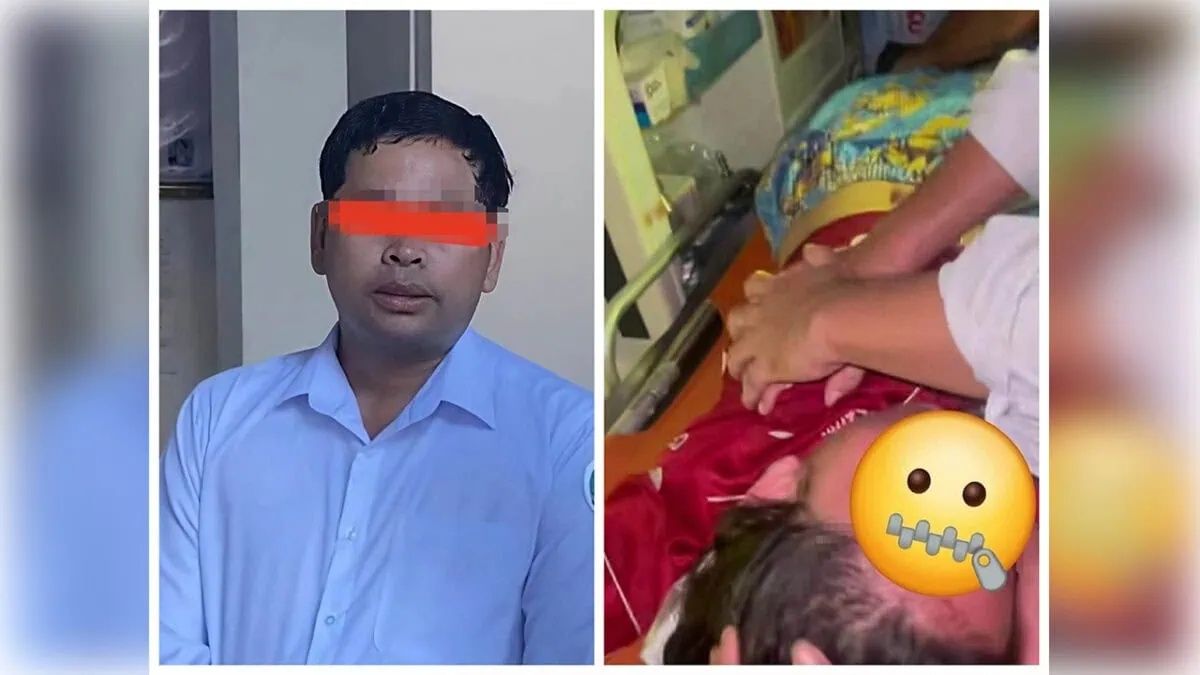
The rapid fall from authority of a provincial health centre director in Cambodia illustrates the power of social media to hold public officials accountable, even as questions linger about due process and the pressures facing frontline medical workers in developing countries. Kuoch Chamroeun, the governor of Kandal province, acted decisively on Tuesday, 4 August, to relieve Chhun Phally of his post as chief of Setbo Health Centre, immediately reassigning him to an administrative role under provincial authority following mounting public criticism sparked by a video that spread virally across social media platforms.
The controversy originated when footage emerged showing Phally administering emergency first aid to a 17-year-old female patient who had suffered seizures and respiratory distress upon arriving at the facility. A family member had recorded the treatment intending to share medical updates with relatives, but the recording escaped that private context and ignited debate across social media about whether the intervention adhered to proper medical standards and respected the patient's dignity. The rapid dissemination of the video prompted numerous users to question not only the clinical appropriateness of the procedures employed but also to allege that the manner of treatment constituted harassment and violated fundamental principles of patient protection and consent.
While the provincial governor's administrative order did not explicitly articulate grounds for Phally's removal, the timing made clear that the decision capitulated to public pressure rather than emerging from an independent institutional review. The reassignment took effect immediately, effectively stripping Phally of his leadership authority at the health centre where he had overseen operations. This swift action demonstrated the vulnerability of mid-level officials to reputational damage in an era of instant communication, though observers note that administrative shuffling without transparent investigation can itself obscure accountability rather than clarify it.
The Kandal provincial health department moved quickly to establish formal procedures to examine what had occurred. Kiem Piseth, acting as provincial health director, indicated that investigators would assess whether medical protocols had been properly followed and whether any misconduct had taken place. His statement carried significant weight: authorities suggested they would pursue legal remedies if evidence emerged of sexual harassment or other violations, moving beyond simple administrative discipline. This escalation signalled that the incident had transcended routine workplace disagreement to touch sensitive questions about patient safety and professional conduct in healthcare settings.
Phally himself sought to salvage his reputation through a public apology issued after the firestorm erupted. He maintained that his singular objective throughout the emergency intervention had been to preserve the patient's life during a critical medical situation, disclaiming any intention to behave inappropriately or to harass the teenager. His statement acknowledged that his actions, however well-motivated, had generated misunderstanding and caused distress to both the patient and her family members. The apology reflected a recognition that perceptions of professional conduct matter as much as intentions, particularly in medical contexts where vulnerability and privacy intersect acutely.
The incident carries significance well beyond Kandal province, reopening broader questions about professional standards, training, and oversight within Cambodia's healthcare infrastructure. Many observers have seized on the case to advocate for stronger institutional protections for patients, including enhanced privacy safeguards, clearer protocols for emergency treatment, and more rigorous training in both technical medical skills and ethical conduct. The debate underscores a fundamental tension in developing healthcare systems: ensuring workers receive adequate preparation to handle medical crises while simultaneously establishing robust mechanisms to protect patients from exploitation or misconduct.
For Malaysia and other Southeast Asian nations, the Cambodia incident offers instructive lessons about accountability in healthcare administration. The region's health systems frequently grapple with similar challenges around training consistency, documentation standards, and investigative capacity when allegations of misconduct emerge. Social media's role in mobilizing public attention to institutional failures—as occurred in the Kandal case—has become a constant reality, placing pressure on bureaucracies to respond visibly and swiftly even before investigations conclude. This dynamic creates risks of hasty decision-making that sacrifices fairness to the accused in favour of perceived responsiveness to public sentiment.
The provincial health department's commitment to investigate formally represents an important counterbalance to purely reactive administrative action, though questions about investigative independence and transparency remain. If misconduct is substantiated, authorities have flagged potential legal consequences beyond employment discipline, suggesting a willingness to pursue criminal remedies. However, the absence of clear timelines for completing inquiries or communicating findings raises concerns about whether accountability mechanisms will ultimately deliver justice or closure for the patient and her family, or whether the matter will gradually fade from public attention without resolution.
As this case develops, it will likely influence how health officials throughout Cambodia and the broader region approach emergency medical situations, particularly those involving vulnerable populations such as adolescents. Healthcare workers may become more cautious about undertaking necessary interventions for fear of triggering social media backlash, with potentially dangerous consequences if that hesitation delays life-saving treatment. Conversely, clearer institutional guidance and protection protocols could encourage workers to act decisively while maintaining ethical standards. The Kandal situation exemplifies how individual incidents can catalyze systemic examination and reform, provided that investigations remain thorough and findings are transparently communicated to the public.

