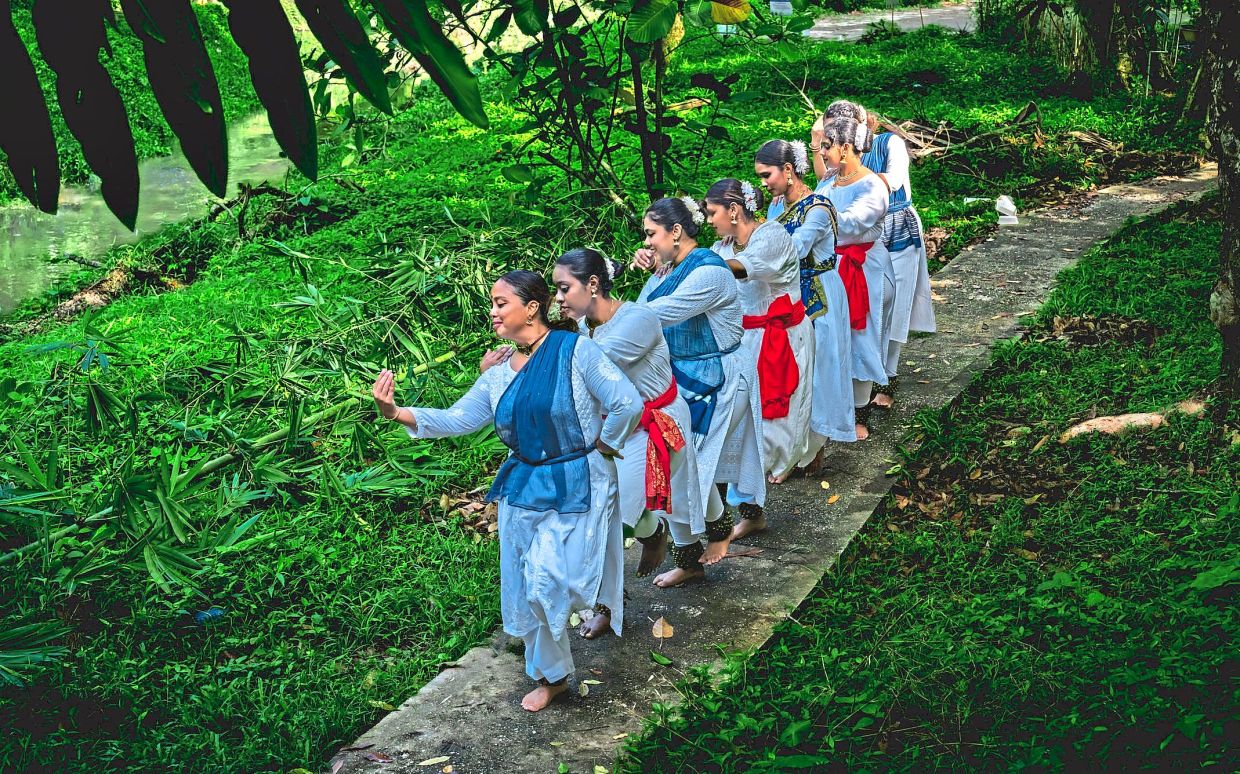
Kalpana Dance Theatre, the Kuala Lumpur-based institution helmed by founder-director Shangita Namasivayam, marks three decades of artistic existence this year with a production that marries classical Indian dance traditions to contemporary environmental concerns. The milestone celebration takes the form of a bharatanatyam concert scheduled for August 8 at the Shantanand Auditorium, Temple of Fine Arts, and represents yet another iteration of Namasivayam's philosophy of constant creative reinvention—a necessity, she explains, for any artist navigating the precarious terrain of independent performing arts in Malaysia and the broader region.
The production's conceptual foundation draws from two of India's most culturally significant waterways: the Ganga in northern India and the Kaveri in the south. Both rivers carry profound symbolic weight across Indian civilisation. The Ganga holds supreme spiritual status in Hindu tradition, while the Kaveri earns the epithet "Ganga of the South" owing to its critical role irrigating vast agricultural areas and powering communities throughout the southern peninsula. Beyond their religious importance, these waterways have functioned as arteries of commerce and cultural exchange for centuries, shaping the folk and classical dance forms that developed along their courses. For Namasivayam, this artistic heritage provided the perfect vehicle through which to explore themes of environmental stewardship with her young dancers.
Namasivayam articulates her vision through carefully chosen metaphor: "The Ganga is the shore of compassion, the Kaveri is the mother of prosperity. In one, sins are washed away and in the other, life flourishes." By positioning these rivers as repositories of human meaning and ecological importance, she transforms the production beyond mere cultural commemoration into a meditation on humanity's relationship with natural systems. The choice to ground artistic expression in water conservation directly addresses what she identifies as the defining crisis of the contemporary moment—the systematic abuse, pollution and abandonment of the very rivers and oceans upon which all life depends. Rather than confine these messages to performance alone, Namasivayam has ensured they permeate the entire production process.
Central to this integrated approach is the company's partnership with The Alliance of River Three (ART!), a Malaysian volunteer-driven environmental organisation founded in 2018 by Kennedy Michael. ART!'s mission focuses on restoring the Klang River ecosystem through the development of community-built River Three Parks, regular cleanup operations and comprehensive ecological rehabilitation spanning multiple years. The organisation's work earned recognition when it won The Star Golden Hearts Awards in 2020, validating its model for urban river restoration in an Asian context. Since January, the young dancers of Kalpana Dance Theatre have committed significant time to fieldwork alongside ART! volunteers, participating in cleanup operations at Taman Melawati River Three SDG Park and Mid Valley River Three SDG Park—initiatives that ART! aims to complete by 2030.
For dancers accustomed to studio training and theatrical performance, this immersion in environmental restoration work represents a genuine departure from conventional artistic practice. Namasivayam notes with evident satisfaction that the experience has proved transformative, particularly for younger generation dancers who rarely find themselves engaged in manual labour or direct contact with urban environmental problems. By requiring her performers to engage physically with the rivers they will be dancing about, she creates a material understanding that transcends abstract awareness. This pedagogical approach—learning through doing, understanding through embodied experience—deepens the authenticity of their eventual performances.
The production itself features 54 dancers ranging in age from six to 62 years old, notably including differently-abled performers, all integrated into a 90-minute thematic presentation. Rather than following conventional bharatanatyam structure centred on solo virtuosity, this work deliberately eschews featured performers and soloists. Every dancer occupies a meaningful role within the collective narrative, reflecting Namasivayam's commitment to democratic artistic participation and inclusive choreography. The script, composed in Tamil with English narration, pursues simultaneously poetic and philosophical registers, weaving together lyricism and deeper meaning in ways designed to resonate across generational and linguistic boundaries.
The collaborative infrastructure supporting this ambitious production reveals the depth of Namasivayam's professional networks developed over decades. She has worked extensively with choreographer PT Narendran, musician OS Arun and scriptwriter Dr Va Ve Subramanian—all based in Chennai—on more than half of her previous productions. This long-term collaborative relationship enabled months of sustained artistic discussion and creative development, ultimately converging on a vision that balances technical excellence with purposeful thematic engagement. The music ensemble comprises 30 artistes, though logistical constraints prevent bringing the entire team to Malaysia. Instead, Namasivayam has prioritised creating extended professional development opportunities for young Malaysian dancers to work directly with these internationally respected practitioners.
Namasivayam articulates the value of such cross-cultural artistic collaboration in frankly pedagogical terms: master artistes from India bring distinctive technical approaches, philosophical frameworks and performance philosophies that young Malaysian dancers cannot acquire through local training alone. These interactions provide far more than technical refinement; they cultivate in emerging artists a deeper appreciation for the diversity, richness and continuing evolution of bharatanatyam as a living tradition. Such exposure proves essential for developing dancers into intellectually engaged, artistically sophisticated practitioners rather than mere technical executors.
The practical reality of mounting theatrical productions in Malaysia remains fraught with challenges, particularly regarding funding and resource constraints. Yet Namasivayam identifies the performative moment itself as irreplaceable in artistic pedagogy. Regular classroom training, however rigorous, cannot substitute for the psychological, technical and emotional demands of performing before a live audience. The very act of stepping onto stage to share work with spectators represents a transformative initiation into artistic practice. For Namasivayam, this understanding motivates her continued navigation of financial precariousness and logistical complexity—she considers the experience of public performance a heritage that dancers must inherit and eventually transmit to future generations. Her determination to create performance opportunities for her students reflects a philosophy treating dance not as optional cultural enrichment but as essential transmission of artistic lineage and social responsibility.
As Malaysia continues grappling with environmental challenges—from urban river degradation to coastal pollution—artistic institutions like Kalpana Dance Theatre offer unexpected pathways for engaging communities with these urgent issues. By positioning environmental awareness alongside aesthetic experience and technical mastery, Namasivayam models an approach to arts practice that refuses compartmentalisation between creativity and social engagement. The August 8 production thus becomes more than celebratory retrospective; it represents a strategic intervention in how Malaysian performing arts might contribute to ecological consciousness during a period of mounting environmental crisis.

