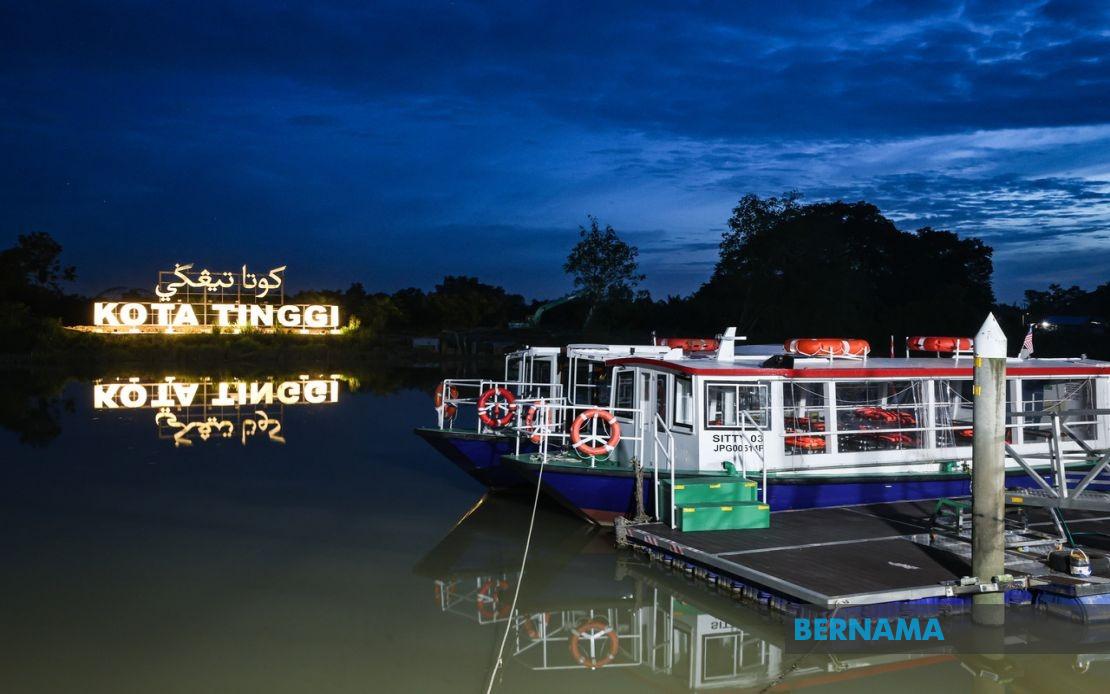
Along the quiet waters of Sungai Johor in Kota Tinggi, a modest but growing venture is reshaping how locals and international visitors experience one of Malaysia's most historically significant waterways. Kota Tinggi River Cruise (KTRC) has begun operating regular scenic journeys that marry the river's deep cultural heritage with contemporary nature-based tourism, marking a shift towards experiential attractions that highlight both preservation and economic development in Johor's heartland.
The 6.7-kilometre cruise departing from Pangkalan Kota Jetty represents an intentional pivot away from conventional town-centre tourism. As boats leave behind Kota Tinggi's commercial bustle, passengers encounter a landscape of dense riverine vegetation that creates a tangible sense of historical immersion. This deliberate juxtaposition—urban modernity giving way to verdant quietude—forms the experiential foundation of what KTRC has positioned as one of Johor's anchoring ecotourism offerings under the broader Visit Johor 2026 initiative, a state-level campaign aimed at consolidating Johor's position as a regional destination.
The historical narrative underpinning the cruise extends back to the 16th century, when Sungai Johor functioned as the vital artery of the Johor-Riau Sultanate following Malacca's collapse. According to KTRC operations manager Aiman Haikal Mohd Azmi, the river was not merely a geographic feature but the economic and administrative lifeline sustaining early settlements including Johor Lama and Kampung Makam, burial sites of multiple Johor sovereigns. This layering of sultanate history into the contemporary tourism product allows visitors to perceive the river not as scenic backdrop but as archive—a living historical document whose waters once bore the political and cultural fortunes of a major regional power.
The operational success achieved within KTRC's first seven months underscores growing demand for heritage-inflected tourism in Southeast Asia. The operator recorded more than 10,000 visitors during this nascent period, a figure suggesting robust appetite among both domestic travellers and cross-border visitors from Singapore, Indonesia, and Brunei. This geographic diversity of visitation patterns hints at the Sungai Johor cruise's positioning within a broader regional tourism ecosystem where heritage narratives and natural settings command premium appeal, particularly among audiences satiated by conventional urban attractions.
The daytime cruise itinerary strategically incorporates visual and narrative landmarks that reinforce Kota Tinggi's historical significance. Titian Laksamana, a pedestrian suspension bridge, and the Johor River Barrage function as photogenic waypoints that punctuate the journey while allowing passengers visual reference points from which to contemplate the river's transformation over centuries. Through recorded audio commentary and live narration, guides introduce passengers to legendary figures such as Sultan Mahmud Mangkat Dijulang and Laksamana Bentan, effectively converting the cruise into an informal educational platform where historical knowledge is transmitted via experiential encounter rather than institutional classroom settings.
As operational hours extend into evening, KTRC's offerings diversify to capture tourism demand across different temporal and experiential segments. The signature Mesmerising Fireflies package transforms the river environment entirely, converting darkness into theatrical backdrop where bioluminescent insects create natural spectacle. This evening iteration appeals to a distinct visitor psychology—one seeking novel natural phenomena rather than historical instruction—demonstrating how a single geographic asset can generate multiple distinct revenue streams by adapting presentation to visitor preference and temporal availability.
The Dining Cruise package represents a further refinement of KTRC's service architecture, combining hospitality with panoramic environmental experience. By anchoring meal service within the river setting, this offering addresses affluent leisure travellers willing to pay premium rates for integrated dining and sightseeing experiences, a market segment increasingly visible across Southeast Asian tourism. The price differentiation between day cruises (RM20 adult, RM15 child, RM10 senior/disabled) and sunset/firefly variants (RM23 adult, RM17 child, RM13 senior/disabled) reflects rational yield management calibrated to perceived experiential value across distinct visitor categories.
Operational scheduling reveals commercial sophistication attuned to Malaysian leisure patterns. Weekday operations spanning 9 am to 7 pm accommodate school holiday visitors and flexible-schedule tourists, while weekend extensions to 10 pm capture the Friday-to-Sunday leisure travel surge characteristic of Malaysian urban populations escaping city environs. Hourly departure intervals suggest capacity planning designed to balance accessibility with operational sustainability, avoiding both excessive crowding and inefficient vessel utilisation.
Aiman Haikal's articulation of KTRC's broader conservation mission signals awareness that ecotourism legitimacy depends upon demonstrated environmental stewardship. By framing the river cruise as ecosystem protector rather than mere commercial venture, KTRC aligns itself with global sustainability discourse increasingly influential among affluent, educated tourists. This rhetorical positioning—linking heritage preservation, nature protection, and economic opportunity—mirrors successful ecotourism models internationally where conservation serves as both genuine practice and marketing anchor.
For Kota Tinggi specifically, the KTRC operation carries implications extending beyond tourism revenue. The venture demonstrates that secondary towns possess marketable assets—historical narratives, natural landscapes, cultural heritage—previously underutilised by conventional tourism infrastructure focused primarily on urban centres and resort destinations. By activating these assets through experiential tourism products, secondary urban areas can generate distributed economic benefits across local communities while reducing pressure for exploitative large-scale resort development.
The venture's success within Johor's competitive tourism landscape remains contingent upon sustained state government support, as Aiman Haikal emphasised. Policy frameworks protecting riparian ecosystems, infrastructure investment in access points, and marketing coordination through Visit Johor 2026 collectively determine whether KTRC remains a localised attraction or scales into a flagship Johor tourism product. This dependency relationship underscores how heritage and nature-based tourism, despite inherent commercial appeal, requires institutional scaffolding to achieve sustainable growth and regional significance.
Looking forward, KTRC's positioning within Johor's tourism portfolio reflects a deliberate strategic shift toward differentiated, experientially-rich attractions capable of distinguishing the state from competitors across Malaysia and broader Southeast Asia. As leisure travel increasingly fragments into niche segments—heritage enthusiasts, nature photographers, epicurean travellers, family groups—operators like KTRC that offer multiple experiential iterations from single geographic assets possess competitive advantages in an increasingly crowded regional market. The Sungai Johor cruise thus represents not merely a local venture but a case study in how Southeast Asian secondary cities can leverage historical depth and environmental assets to construct compelling contemporary tourism narratives.

