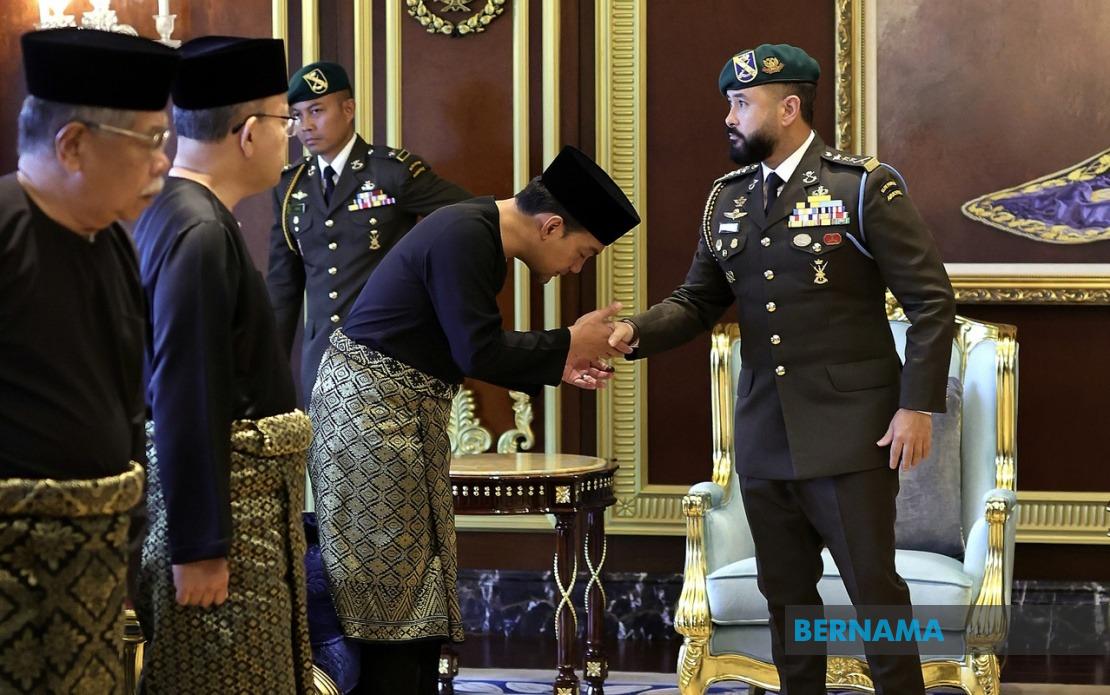
The newly constituted Johor State Executive Council will formally take the oath of office tomorrow at Istana Bukit Serene in Johor Bahru, marking the next phase of governance following the coalition's commanding electoral victory. The swearing-in ceremony represents a constitutional milestone for the state administration under Menteri Besar Datuk Onn Hafiz Ghazi's leadership, with the Regent of Johor, Tunku Mahkota Ismail, presiding over the proceedings in his formal capacity as the state's constitutional head.
The ceremony is scheduled to commence from the morning hours, with the palace having extended formal invitations to key government figures and members of the media. Among those expected to grace the occasion are officials integral to the state's governance apparatus, including Datuk Dr Abdul Rahim Ramli, who serves as president of the Johor Council of Royal Court, and Datuk Mohammed Ridha Abd Kadir, the state secretary. Their presence underscores the ceremonial significance of the event and the formality with which the state treats the transition of its executive branch.
For media practitioners seeking to document this constitutional moment, the palace has facilitated access through both main entrances from 9.30 am onwards. This transparency in allowing press coverage reflects the state government's commitment to public accountability and the importance attached to recording this formal transition of the state's administrative leadership. The decision to open the ceremonial grounds to journalists provides an opportunity for the public to witness and understand the processes through which government institutions maintain their constitutional integrity.
This swearing-in follows immediately on the heels of Datuk Onn Hafiz Ghazi's own oath-taking as Menteri Besar on July 12, just four days earlier. That ceremony confirmed his leadership of the state for a fresh term, having secured the mandate through the 16th Johor State Election held the preceding Saturday. The rapid succession of formal ceremonies demonstrates the efficiency with which Johor's political establishment has moved to consolidate its new administration and establish the full roster of ministerial portfolios necessary for governing the state.
The Barisan Nasional coalition achieved a commanding majority in the recent electoral contest, capturing 48 of the 56 available state assembly seats. This decisive mandate represents a strong endorsement from Johor's electorate and provides the new state government with substantial legislative support for its agenda. The scale of the victory eliminates any ambiguity about the government's popular support and provides a stable foundation for the exco members to pursue their governance objectives over the coming term.
The composition of the executive council, to be formally revealed through tomorrow's swearing-in, represents the culmination of negotiations and considerations regarding ministerial portfolios and allocations. The selection of individuals to fill these positions reflects calculations about regional representation, expertise in specific policy areas, and political balance within the broader coalition framework. For Johor, a state of significant economic importance within Malaysia, the calibre and composition of the executive council carries implications beyond the state's borders, given the state's role in national commerce and development.
From a constitutional perspective, the swearing-in ceremony serves as more than ceremonial pageantry. It represents the formal vesting of executive authority in individuals appointed to specific ministerial portfolios, with each oath-taking binding officeholders to uphold the Federal and State Constitutions. The presence of the Regent in presiding over these oaths underscores the constitutional monarchy's role in validating and formalising the transfer and allocation of executive power, a principle that remains central to Malaysia's system of governance across both federal and state levels.
For Malaysian political observers, the smooth and timely transition of Johor's state administration provides a case study in constitutional orderliness. In contrast to periods marked by political uncertainty or administrative gridlock, the state has moved swiftly from electoral contest through the appointment of a new chief executive to the formal constitution of the full state cabinet. This efficiency reflects both the technical capacity of the state's administrative machinery and the political consensus necessary for orderly governance transitions in Malaysia's federal system.
The implications of this swearing-in ceremony extend beyond ceremonial significance to substantive governance. The new exco members will assume responsibility for portfolios spanning health, education, economic development, infrastructure, and other critical state functions. The effectiveness with which they discharge these responsibilities over the coming months and years will shape the lived experience of Johor's citizens and contribute to the state's economic and social trajectory. For businesses and civil society organisations operating within the state, the new executive council represents the primary point of interface with state government decision-making and policy implementation.
Looking forward, the test of this new administration will lie in translating its electoral mandate into concrete policy outcomes that address the priorities of Johor's diverse constituencies. The swearing-in ceremony tomorrow formally initiates that process, moving from the abstractions of campaign promises toward the practical realities of governance. For Malaysia as a whole, the performance of Johor's government remains important, given the state's economic significance and its role as a bellwether for broader political trends within the country.

