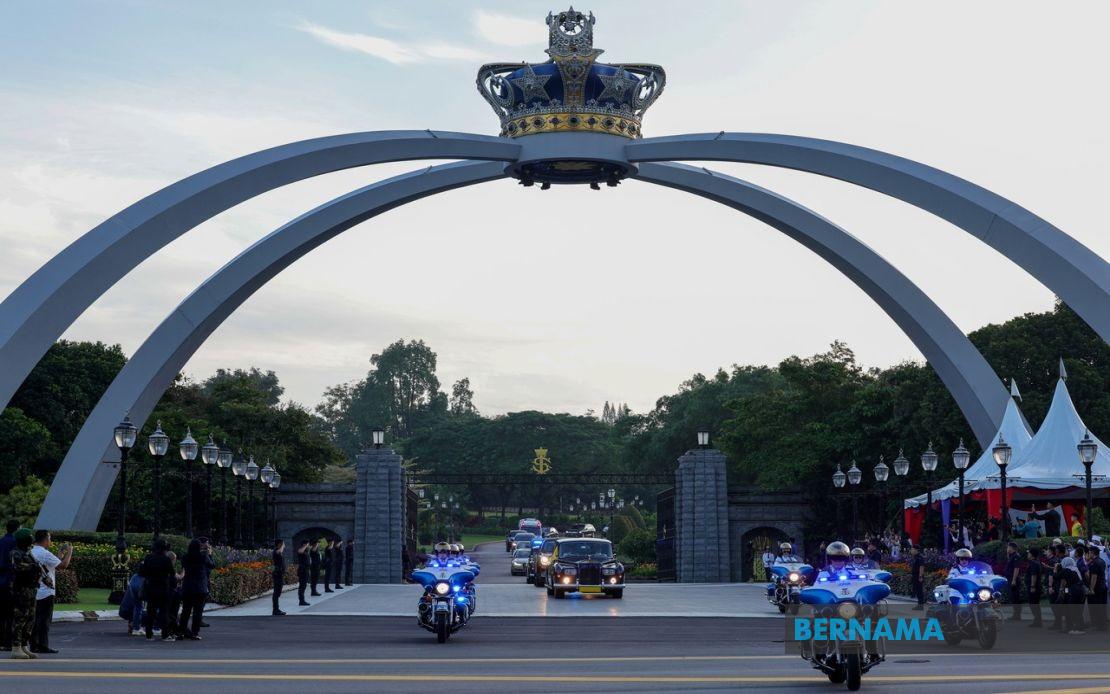
The formal investiture of Johor's new Menteri Besar is scheduled to take place this afternoon at Istana Bukit Serene, the state's historic royal residence, in a ceremony that will mark the culmination of Barisan Nasional's commanding electoral performance in the recently concluded state elections. Media representatives are invited to cover the proceedings from the Crown Arch entrance to the palace, with the swearing-in slated to commence at 3 pm, according to an official invitation distributed by the Johor Palace through messaging channels.
Despite the confirmation of timing and venue, the palace's announcement has deliberately withheld the identity of the individual who will assume the office of Menteri Besar, maintaining a veil of secrecy typical of such formal appointments. This discretion, while customary ahead of official ceremonies, has left observers awaiting the formal announcement of the incoming chief executive's identity. The deliberate withholding of this detail underscores the protocol surrounding high-level state appointments, where the Sultan retains ultimate discretion in matters of governance and ministerial appointments.
Intel from media operations on the ground suggests heightened activity throughout the state capital, with journalists and photographers maintaining vigil since midday at both the Menteri Besar's official residence in Saujana and the palace gates. This mobilisation reflects the significance attached to the ceremony and the uncertainty surrounding the appointment, even as political insiders closely monitor developments. The extensive media presence demonstrates public interest in which figure will ultimately lead the state administration.
The sequence of events leading to this afternoon's ceremony gained momentum earlier when Sultan Ibrahim Iskandar received Barisan Nasional chairman Datuk Seri Ahmad Zahid Hamidi at Istana Pasir Pelangi. The roughly hour-long audience, documented through the Sultan's official social media channels, included participation from Johor's BN chapter chief Datuk Onn Hafiz Ghazi. Such consultative meetings between the Sultan and senior party figures typically precede major administrative appointments, representing the formal consultation process that guides such decisions.
Barisan Nasional's commanding electoral mandate provides the political foundation for today's swearing-in. The coalition achieved a decisive victory in yesterday's state election, securing 48 of the 56 contested assembly seats—a landslide outcome that fundamentally reshapes Johor's political landscape. This substantial majority grants the incoming administration considerable latitude in pursuing its legislative agenda and implementing policy initiatives without navigating complex coalition dynamics that typically constrain minority administrations. The scale of the victory suggests voter confidence in BN's approach to state governance.
For Malaysian political watchers, the Johor result carries broader implications extending beyond the state itself. As one of the nation's most populous and economically significant states, Johor's electoral trajectory influences broader assessments of political momentum and voter sentiment across the peninsula. The decisive nature of BN's performance strengthens the coalition's position ahead of potential future federal-level elections and demonstrates the organisation's continued capacity to mobilise electoral support in significant population centres.
The swearing-in ceremony represents more than ceremonial formality; it marks a transfer of executive authority and the formal commencement of the new administration's tenure. The incoming Menteri Besar will inherit stewardship of critical state portfolios including economic development, infrastructure, education, and public services. The new leadership will confront existing challenges including urban development pressures in expanding centres, industrial diversification initiatives, and coordination with federal authorities on matters spanning across jurisdictional boundaries.
Historically, the Istana Bukit Serene setting carries symbolic weight in Johor governance. The palace, traditionally associated with the Johor royal institution and state authority, provides an appropriately ceremonial venue for formalising such transitions. The choice of venue reinforces the constitutional relationship between the Sultan and the state's chief minister, emphasising that executive authority ultimately derives from and operates within parameters established by the state's constitutional framework.
The formation of the new administration occurs against the backdrop of evolving political alignments within Malaysian governance. Barisan Nasional, having successfully reclaimed control in Johor, now oversees multiple state administrations across the country. This expanded footprint potentially influences the coalition's strategic positioning and negotiating capacity within Malaysia's complex multi-level governance system, where state and federal governments must coordinate on interconnected policy areas.
As the formal ceremony proceeds this afternoon, observers will be attentive not only to the identity of the appointed Menteri Besar but also to signals regarding ministerial appointments and administrative priorities. The composition of the state cabinet, to be announced in subsequent days, will provide clearer indication of the incoming government's strategic focus and how political rewards from the election victory will be distributed among successful candidates and party factions. These decisions will shape the administration's operational dynamics and capacity to execute its electoral mandate effectively.
The swearing-in also carries significance for Johor's development trajectory over the coming years. With a commanding majority and a fresh mandate, the incoming administration possesses political capital to pursue ambitious initiatives—whether in infrastructure development, industrial zones, or social programmes. The extent to which the new leadership translates electoral support into tangible improvements in service delivery and economic opportunity will ultimately determine how Johor's voters assess the incoming government's performance at subsequent electoral contests.

