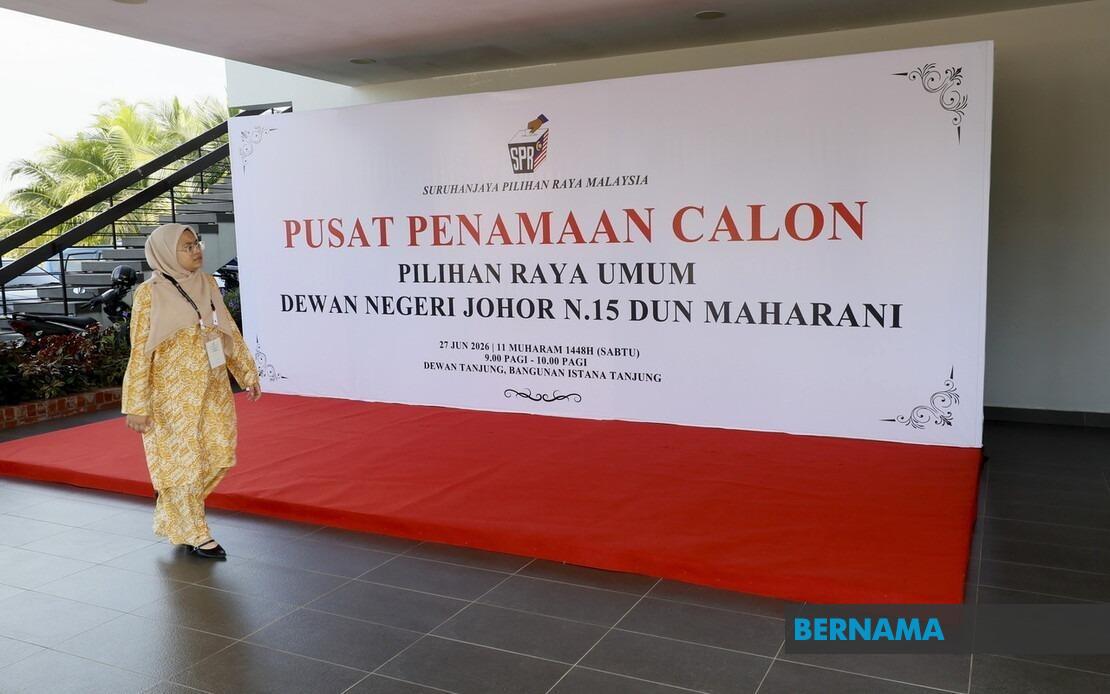
The 16th Johor State Election officially commenced today with the nomination process running concurrently across all 56 nomination centres throughout the state starting from 9 am. Prospective candidates faced a tight one-hour window to lodge their nomination documents with returning officers, with the final submission deadline set for 10 am. This marks the formal beginning of what is expected to be a fiercely contested electoral battle in Malaysia's second-largest state by population and economic significance.
Following the close of nominations, the Election Commission will announce the list of eligible candidates, after which the 14-day official campaign period will commence. This intensive campaigning window extends from today until 11.59 pm on July 10, giving parties less than a fortnight to mobilise supporters and persuade voters across the state's diverse constituencies. The election timetable follows the dissolution of the Johor State Legislative Assembly that occurred on June 1, with early voting scheduled for July 7 and the main polling day set for July 11.
As of yesterday morning, the nomination process had generated significant early momentum, with 593 nomination forms sold and 133 prospective candidates having already confirmed their intention to contest by submitting the required election deposits. This preliminary data suggests healthy competition across the state, though the final candidate count will only become clear once all submissions have been formally processed and verified by returning officers. The appetite for candidacy reflects both the perceived competitive balance in several constituencies and the strategic importance major coalitions place on the Johor result.
The 2,727,926 registered voters who will determine the outcome comprise a broad cross-section of Malaysian society. These voters include 2,703,175 ordinary electors, alongside 12,041 military personnel and their spouses, and 12,710 police personnel and their spouses. This expanded franchise reflects efforts to ensure comprehensive electoral participation while maintaining security personnel's voting rights. The voter roll size underscores Johor's demographic weight within Malaysian politics and the state's relevance as a bellwether for national political trends.
Pakatan Harapan is mounting a comprehensive challenge by contesting all 56 seats, fielding candidates from three coalition partners: PKR will run 20 candidates, Amanah fields 19, and DAP contributes 17. This full slate deployment reflects the coalition's confidence and commitment to competitive engagement across urban, suburban, and rural constituencies. The distribution of seats among PH partners reveals careful negotiation and allocation designed to balance intra-coalition interests while maximising overall competitiveness against rival coalitions.
Barisan Nasional, which controlled 40 seats prior to the assembly's dissolution, is similarly fielding candidates across all 56 constituencies through its three component parties: UMNO will contest 36 seats, MCA 16, and MIC four. The coalition's comprehensive participation signals determination to recapture lost ground and consolidate its historical dominance in Johor, a state long considered BN's traditional heartland. The seat allocation reflects UMNO's continued primacy within the BN structure while affording coalition partners meaningful representation in constituencies where they command community support.
Perikatan Nasional's participation demonstrates the coalition's continuing relevance in state-level politics despite national-level fluctuations. PAS will contest 11 seats, Bersatu fields 16 candidates, the Malaysian Indian People's Party contributes five, and Pejuang fields one candidate. This configuration reveals Bersatu's growing ambitions within PN's framework while PAS maintains selective engagement in constituencies where it possesses grassroots infrastructure. The coalition's selective approach suggests targeted strategies in specific geographic and demographic areas rather than blanket competition.
Newer and emerging political entities are also securing footholds in the contest, signalling an increasingly fragmented electoral landscape. MUDA is contesting four seats, representing the movement's expansion beyond its initial Selangor stronghold into peninsular Malaysia's heartland. The Socialist Party of Malaysia fields a single candidate, maintaining its historical pattern of limited but symbolic participation. Most notably, the newly registered Parti Bersama Malaysia is making its electoral debut with an expected 15 candidates, indicating fresh political entrepreneurship and the potential for voter realignment around new political offerings.
Nomination days traditionally generate lively, celebratory scenes as supporters gather at nomination centres to demonstrate enthusiasm for their candidates. The Election Commission has issued stern reminders to all candidates and party workers regarding compliance with the Election Offences Act 1954 and local authority regulations. Specific prohibitions target the use of musical instruments and loudspeaker-equipped vehicles for campaign activities, measures designed to prevent noise pollution and maintain public order during the formal nomination phase and subsequent campaign period.
Logistical preparations have been extensive. The Malaysian Meteorological Department forecasts rain in several Johor areas during morning hours, with afternoon thunderstorms expected across parts of the state, potentially affecting foot traffic at nomination centres. To maintain security and manage anticipated congestion, police have deployed 4,832 personnel statewide. These officers will oversee nominations centre operations while managing traffic flows through strategic road closures and diversions affecting 19 major roads throughout Johor, ensuring the process proceeds without disruption despite the scale of simultaneous activities.
The electoral contest emerging from today's nominations will reshape Johor's political configuration after years of shifting alignments. The previous assembly composition—with BN commanding 40 seats, PH holding 12, Perikatan Nasional controlling three, and MUDA claiming one—reflected Malaysia's broader political fragmentation and coalition dynamics. Today's nomination process and the ensuing campaign will test whether these alignments persist, strengthen, or undergo further transformation. For Malaysian political observers, the Johor result will carry significance beyond state boundaries, potentially signalling shifts in voter sentiment across the wider peninsula and influencing calculations about federal political viability.

