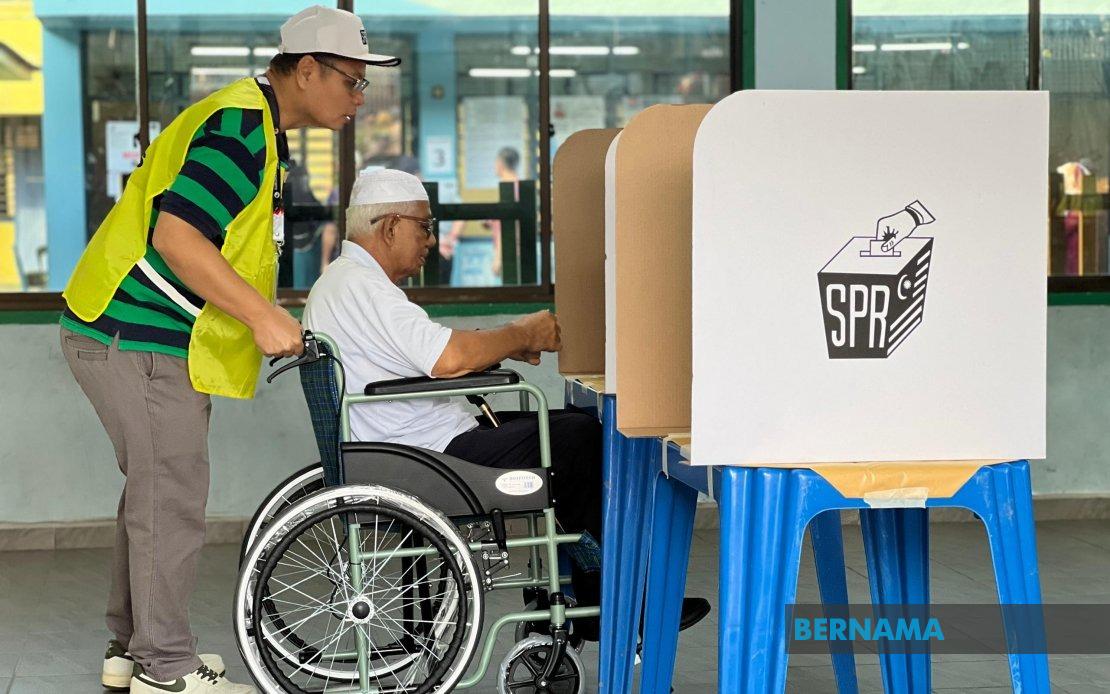
Voting commenced across Johor this morning as the state's 2.7 million registered electors began selecting their next government through a carefully coordinated electoral process. The Election Commission oversaw the simultaneous opening of 1,076 polling centres spread across 4,889 individual polling streams, marking the beginning of what officials anticipated would be a decisive day for the state's political direction. The voting exercise represents the culmination of a 14-day campaign period that concluded at midnight, and the commission has scheduled the process to run until 6 pm, barring any unforeseen disruptions.
The composition of this election underscores the competitive nature of Johor's political landscape. A total of 172 candidates are contesting for 56 State Legislative Assembly seats, creating a varied contest profile. The contests include 14 straight fights between two candidates, 27 three-cornered races involving three parties or coalitions, and 12 four-cornered contests where four separate entities are competing. This fragmentation across multiple races reflects broader shifts in Malaysian electoral dynamics, where traditional two-way contests have become less common than in previous decades. The diversity of contest types suggests voters in different constituencies will face distinct choices, potentially influencing turnout patterns and strategic voting behaviour across the state.
Operational considerations have been carefully managed by electoral authorities to accommodate the scale of participation. While most polling centres are expected to remain open throughout the scheduled voting window, the Election Commission has instituted staged closures at certain locations. Constituencies with smaller voter populations will see their polling stations close in phases beginning as early as 11 am, preventing unnecessary inefficiencies while ensuring all registered voters have adequate opportunity to cast their ballots. This tiered approach balances operational efficiency with democratic accessibility, reflecting lessons learned from previous elections conducted across the peninsula.
The election commission's preparation has been comprehensive, with security personnel deployed across polling stations to maintain order and safeguard the integrity of the process. Journalists had already begun assembling from 7 am onward, indicating considerable media interest in monitoring how the election unfolds. The presence of security and media at voting locations is standard practice in Malaysian elections, serving to deter irregularities while ensuring transparency. Ground conditions on election day were largely favourable, with clear weather across most of Johor, though the Muar district experienced rainfall that could have affected voter movement, though no reports indicated significant disruption.
The Election Commission has set an ambitious target of approximately 70 per cent voter turnout, suggesting expectations of substantial public engagement with the electoral process. Should this target be achieved, it would represent healthy democratic participation, though it remains below the turnout figures recorded in some previous Malaysian elections. The commission has also committed to announcing comprehensive results as early as 10 pm, a timeline that depends on the efficiency of vote counting operations across all polling centres. This expectation of rapid result declaration reflects improved administrative capacity and counting procedures that have been refined through successive state and federal elections.
For Johor voters, this election carries particular significance given the state's prominence within the Malaysian federation. As the second-largest state by population and a major economic contributor to the nation, electoral outcomes in Johor often influence broader political calculations at the federal level. The composition of the new state government will have implications not only for Johor's development trajectory but potentially for national political alignments, as coalition configurations at the state level can affect federal-level negotiations and parliamentary dynamics. Political analysts have been closely monitoring campaign messaging and voter sentiment across the state to gauge which issues have resonated most powerfully with the electorate.
The 16th Johor state election represents the latest iteration of electoral contests reshaping Malaysia's political map. In recent years, state elections have demonstrated significant volatility, with voters increasingly willing to shift support between established parties and coalitions. This fluidity suggests that traditional strongholds cannot be taken for granted, and that campaign ground work, candidate quality, and issue responsiveness have become more consequential than historical voting patterns. The variety of contest types across Johor's 56 constituencies means that different areas may experience quite different competitive dynamics, potentially affecting both turnout and result interpretation.
The voting process unfolding across Johor follows established Electoral Commission procedures designed to ensure orderly conduct and fair outcomes. Voter registration data indicating 2.7 million eligible participants provides the scale against which operational success will be measured. The commission's targeting of 70 per cent turnout suggests confidence in the electoral machinery's capacity to facilitate mass participation, though achieving such participation across Johor's diverse geography—spanning urban centres like Johor Bahru, industrial zones, and rural areas—presents ongoing logistical challenges. Weather conditions and voter motivation will interact throughout the day to determine actual turnout figures.
As voting proceeded through the morning and into the afternoon, the attention of political parties, media organisations, and ordinary Malaysians focused on how electoral preferences have shifted since the last state election. Whether 2.7 million voters would endorse continuity or demand change, consolidate existing coalitions or fragment established political arrangements, remained uncertain until ballot counting commenced. The diversity of contest types and the geographic spread of Johor's voting population ensured that the election would generate interesting sub-regional variations in results, with certain constituencies potentially emerging as bellwethers of broader state sentiment. By 10 pm, when results are expected to be announced, the composition of Johor's next government would be determined.

