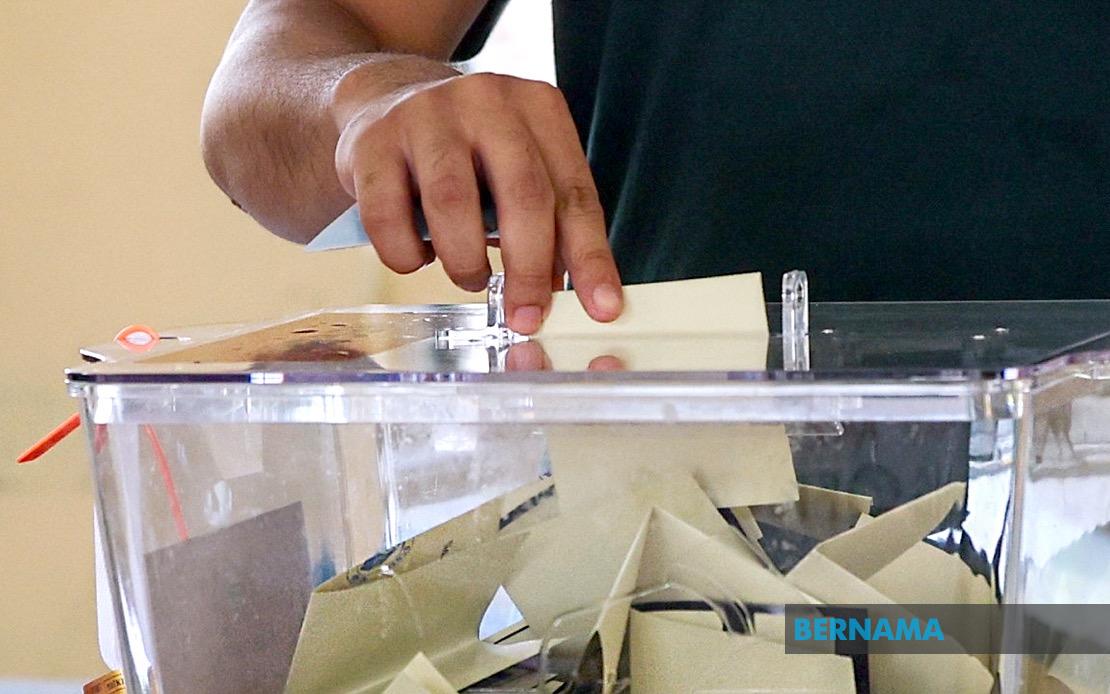
The 16th Johor state election delivered a bitter disappointment to Rahmat Shukor, a 57-year-old self-employed businessman, who travelled 120 kilometres from Batu Pahat only to arrive at his designated polling centre exactly one minute after voting had officially concluded. His experience underscores the unpredictable challenges voters face during electoral exercises, particularly those who must navigate significant distances and traffic disruptions to exercise their democratic rights.
Rahmat had planned his journey to SJK (C) Foon Yew 4 in Johor Bahru with careful consideration. Originally intending to return to the city the previous day, he decided instead to spend the night at his late mother's residence in Sri Medan, Batu Pahat, after exhaustion from plantation and contract work made immediate travel inadvisable. This last-minute decision, while understandable given his fatigue, ultimately placed him on the roads during what transpired to be one of the most congested traffic periods of election day.
The journey that should have been straightforward became a frustrating ordeal when Rahmat encountered severe congestion beginning at Simpang Renggam Rest and Recreation Area and continuing through Sedenak. Despite his non-stop driving and attempts to navigate alternative routes along Skudai road to bypass the heaviest traffic, the delays accumulated relentlessly. By the time he reached the polling centre, the election officials had already locked the doors precisely at 6 pm, the mandated closing time for all 1,076 polling stations across Johor.
When Rahmat spoke to election officials and journalists outside the polling centre, he carried proof of his predicament—photographs documenting the traffic conditions he had endured during his drive. His frustration was evident, yet he articulated a measured response to his exclusion from the democratic process. He acknowledged understanding the strict regulations governing polling hours, rules established to maintain order and ensure fair administration across multiple voting locations simultaneously.
The broader context of Rahmat's situation reveals a vulnerability in electoral systems that, while necessary for operational efficiency, can inadvertently disenfranchise voters through circumstances partially beyond their control. Traffic congestion, while foreseeable in major urban corridors, can be difficult to predict with precision. Voters who must travel longer distances—whether due to work commitments, family circumstances, or residential location relative to their assigned polling centre—face genuine logistical challenges that urban voters might not encounter.
Rahmat's family situation amplified his disappointment. His wife and other family members had returned to Johor Bahru earlier on Friday and successfully cast their votes, making Rahmat the sole family member unable to participate. This detail personalises the statistical reality that during every election, numerous voters miss the deadline through circumstances ranging from traffic delays to unexpected emergencies, though accurate figures on such instances are rarely compiled or published.
The phenomenon of time-zone delays affecting voter participation has occasionally surfaced in discussions about electoral accessibility in Malaysia. While the nation's relatively compact geography and developed transport infrastructure generally facilitate voting, isolated incidents like Rahmat's highlight how even minor inefficiencies in traffic management or unexpected congestion patterns can create barriers for determined voters. His willingness to drive 120 kilometres demonstrates substantial commitment to participation, yet the rigid closing time—while necessary for election administration—permitted no flexibility.
Rahmat's response to his exclusion demonstrated civic maturity. Rather than becoming bitter or argumentative, he expressed sadness and disappointment, yet explicitly stated his acceptance of the situation and his hope that the democratic process would proceed smoothly overall. This graceful acceptance, while admirable, does not diminish the legitimacy of questions about whether electoral systems might incorporate modest accommodations for voters who arrive marginally late due to documented traffic delays beyond their reasonable control.
The 16th Johor state election proceeded across the state with all polling centres operating under identical closing procedures. The statewide coordination required to manage over 1,000 polling locations simultaneously necessarily demands fixed timelines that cannot accommodate individual circumstances. Yet Rahmat's experience raises subtle questions about the tension between operational necessity and electoral inclusivity, particularly as urbanisation and traffic congestion become increasingly unpredictable factors in voter behaviour.
For Malaysian voters in similar circumstances—particularly those in Johor and other states where travel distances to polling centres can be substantial—Rahmat's experience offers a cautionary reminder. Departing early enough to accommodate unexpected delays has become essential election-day preparation. His journey, undertaken with genuine determination but ultimately unsuccessful, illustrates how narrow the margin between participation and exclusion can be when multiple variables converge adversely.
The incident also reflects broader questions about voter accessibility that election commissions periodically address. Whether through earlier advance voting periods, expanded postal voting provisions, or other mechanisms, democracies worldwide continually seek to balance accessibility with administrative integrity. Malaysia's Election Commission manages an inherently complex task, and Rahmat's case, while individually unfortunate, remains a singular instance rather than systemic failure. Nevertheless, it merits consideration in ongoing discussions about optimising electoral procedures for maximum legitimate participation.

