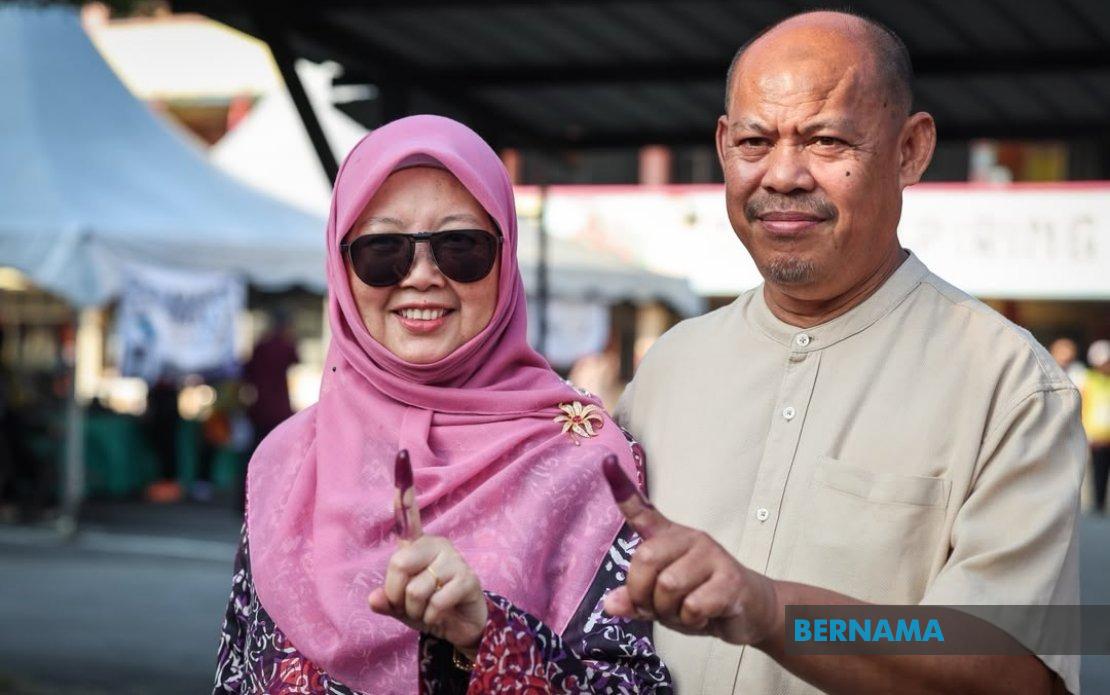
High-profile party officials have demonstrated strong commitment to democratic participation by arriving at polling stations in the early hours of the 16th Johor state election, setting an example for voters across the state. The symbolic gesture of senior leaders casting their ballots first carries particular weight in Malaysian electoral culture, where such actions serve to underscore the importance campaigns place on public engagement.
Johor PKR chairman Datuk Seri Dr Zaliha Mustafa exercised her voting right at 9 am at Sekolah Menengah Kebangsaan Bandar Baru Uda in Johor Bahru, where she cast her ballot alongside her husband, Dr Ahmad Adzlan Musa. The pair were contesting in the Larkin constituency, a pivotal seat that historically reflects broader trends across the state's political landscape. Her appearance at the polls underscored PKR's active mobilisation efforts on what many considered a crucial day for the party's representation in the southern state.
The former federal administrator, who previously held the position of Minister in the Prime Minister's Department overseeing Federal Territories matters, emerged as a vocal advocate for early participation. Her message to Johor residents reflected practical concerns about weather conditions that could suppress turnout during peak voting hours, a consideration that highlights how environmental factors intersect with electoral logistics in Malaysia's tropical climate.
Dr Zaliha's explicit encouragement for citizens to vote before midday precipitation reflected the electoral commission's ongoing challenge of maintaining steady polling rates throughout the day. Weather disruptions, particularly during monsoon seasons, have historically impacted voter attendance in various states, and her intervention suggested an awareness of how such external factors could influence overall participation levels and potentially skew demographic representation at the ballot box.
Meanwhile, Johor's Democratic Action Party contingent demonstrated similar early engagement when party chairman Teo Nie Ching arrived at Sekolah Jenis Kebangsaan Cina Kulai Besar in the Kulai district at approximately 9.30 am. Her participation reflected DAP's sustained effort to maintain organizational momentum in Johor following previous electoral cycles where the party sought to consolidate urban and suburban support bases.
The timing of these leadership appearances carried symbolic importance beyond the immediate act of voting. In Malaysian politics, where party discipline and hierarchical messaging remain influential, senior officials voting early effectively communicate to party machinery and grassroots supporters that the election merits urgent participation rather than casual engagement. This cascading effect of leadership example has long been recognized as a mobilization tool, particularly in contexts where traditional media coverage remains influential.
The convergence of multiple party leaders voting during the first hours of polling also reflected competitive dynamics within Johor's political ecosystem. PKR and DAP's coordinated emphasis on early voting participation suggested coordination within opposition-aligned frameworks, though both parties maintained distinct messaging tailored to their respective voter demographics and geographic strongholds.
Johor state elections historically carry significance beyond regional boundaries, as they often preview shifting political sentiment ahead of national electoral contests. The state's diverse demographic composition, encompassing urban constituencies like Larkin and Kulai alongside mixed rural-suburban areas, has made it a barometer for broader Malaysian political trends. Leadership visibility during voting serves not merely as ceremonial participation but as a calculated communication strategy aimed at reinforcing party narratives and organizational coherence.
The weather forecast cited by Dr Zaliha represented a practical reality affecting election administration across Malaysian states. Voter fatigue and the inconvenience of trudging through rain have documented effects on turnout, potentially disadvantaging parties whose support bases demonstrate lower rain-day mobilization capacity. By encouraging early participation, senior figures were effectively attempting to counteract such structural disadvantages while simultaneously demonstrating their own commitment to the democratic process.
These early voting moments also reflected broader trends within Malaysian electoral politics where senior figures increasingly prioritize visual presence at key campaign and voting moments. Social media documentation and news coverage of leadership voting have become integral to campaign narratives, allowing parties to extend their messaging beyond traditional rally formats and into citizens' digital information streams. The appearance of established political figures at ordinary polling stations serves to normalize voting as a routine civic responsibility while simultaneously elevating the perceived stakes of particular elections.
As the day progressed across Johor's 26 constituencies, these early voting patterns from party leadership would shape subsequent campaign messaging and media narratives. Political analysts would monitor whether such leadership interventions succeeded in driving early turnout or whether afternoon weather conditions ultimately suppressed overall participation rates. The relationship between leadership visibility and electoral outcomes remains contested within political science literature, yet Malaysian parties consistently invest resources in such symbolic demonstrations of engagement.

