The registration phase of Johor's 16th state election drew to a close on June 27 when all 56 nomination centres across the state shut their doors precisely at 10am, marking the end of the formal candidate submission window. The one-hour submission period, which commenced at 9am, allowed returning officers stationed at each venue to process final applications before sealing their rolls. This administrative milestone represents a critical juncture in the electoral calendar, transitioning the election machinery from registration to campaigning mode.
With nominations now concluded, the Election Commission will soon release the official roster of approved candidates and provide a comprehensive breakdown of how many contenders are vying for each of the state's legislative seats. This list carries significant implications for voters and party strategists alike, as it determines the competitive landscape across Johor's 56 constituencies and signals the intensity of contests in key battleground areas. The announcement will also reveal whether any seats face unopposed victories, a rarity in modern Malaysian elections.
The transition from nomination to campaign represents a crucial shift in electoral dynamics. The Election Commission has formally designated a 14-day campaign period that will run from June 28 through to 11.59pm on July 10, during which political parties and independent candidates must compete for voter attention and support. This campaign window provides ample opportunity for candidates to articulate their manifestos, engage with constituents, and distinguish themselves from rivals. The intensity of these campaigns will likely shape public perception and voter sentiment heading into the final week before ballots are cast.
In preparation for the electoral exercise, the Election Commission has established July 7 as the designated early voting date, allowing specific categories of voters including those working on polling day or with legitimate reasons to cast their ballots in advance. The main polling day has been set for July 11, when the majority of Johor's electorate will visit polling stations to elect their representatives. This staggered voting arrangement, common in Malaysian elections, accommodates voters' diverse circumstances while maintaining electoral integrity and security protocols.
The voter registration data reveals the substantial scale of democratic participation expected in this election. Approximately 2.73 million individuals are registered to participate, comprising 2.7 million ordinary voters alongside 12,041 military personnel and their spouses and 12,710 police personnel and their spouses. This voter population makes Johor one of Malaysia's most significant electoral battlegrounds, and the outcome will carry considerable weight in the national political equation. The inclusion of uniformed personnel in the voter rolls underscores the inclusive nature of Malaysia's electoral framework.
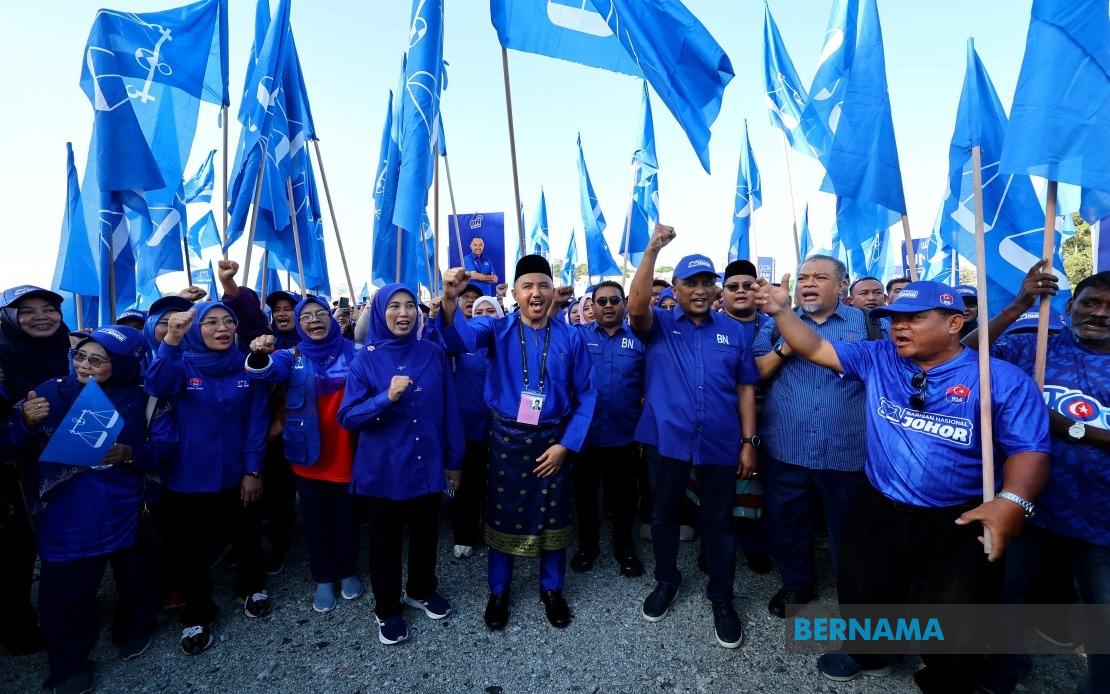
The nomination day itself unfolded without significant disruption, with a notably orderly atmosphere prevailing at all 56 centres statewide. Party supporters gathered to accompany candidates to their respective venues, demonstrating grassroots enthusiasm for the democratic process. However, the proceedings remained dignified and incident-free, with no recorded instances of provocation or confrontation between rival camps. This peaceful environment reflected the effectiveness of security arrangements deployed throughout the state.
The maintenance of order during nomination day was achieved through coordinated efforts involving multiple enforcement agencies. The Royal Malaysia Police deployed personnel across all centres to ensure compliance with electoral regulations and prevent disruptions, while the People's Volunteer Corps provided supplementary security assistance. This multi-agency approach reflects the seriousness with which Malaysian authorities regard the integrity and smooth conduct of state elections, particularly in a state as politically significant as Johor. The visible security presence served both as a deterrent to potential troublemakers and as a reassurance to candidates and voters that their participation would be protected.
For Malaysian observers and political analysts, the Johor election holds particular significance given the state's historical importance in national politics and its influence on broader political trajectories. Johor's political complexion has shifted considerably in recent years, making this election a crucial indicator of voter sentiment regarding current governance and future political direction. The nomination process itself suggested robust competition, with multiple candidates filing papers across constituencies, indicating healthy democratic engagement. The scale of participation at nomination centres signalled that parties are treating this election with the seriousness it deserves.
The campaign period ahead will be closely watched by political commentators, pollsters, and neighbouring states seeking to understand electoral trends in Malaysia's second-largest state by population. Campaigns in Johor typically showcase the rhetorical and organisational capabilities of competing political movements, and this election promises to be no exception. The 14-day window provides sufficient time for sustained messaging while maintaining electoral momentum without permitting complacency among candidates and their support structures.
As the state transitions into active campaigning, candidates must now marshal their resources, refine their messages, and mobilise their ground operations to maximise voter contact before the campaign period expires. Political parties will likely coordinate state-level strategies with national objectives, as Johor elections frequently signal broader patterns of electoral behaviour. The calm and orderly nature of the nomination process bodes well for the subsequent campaign period, suggesting that electoral stakeholders are committed to maintaining the professionalism and dignity expected of Malaysian democratic processes.

