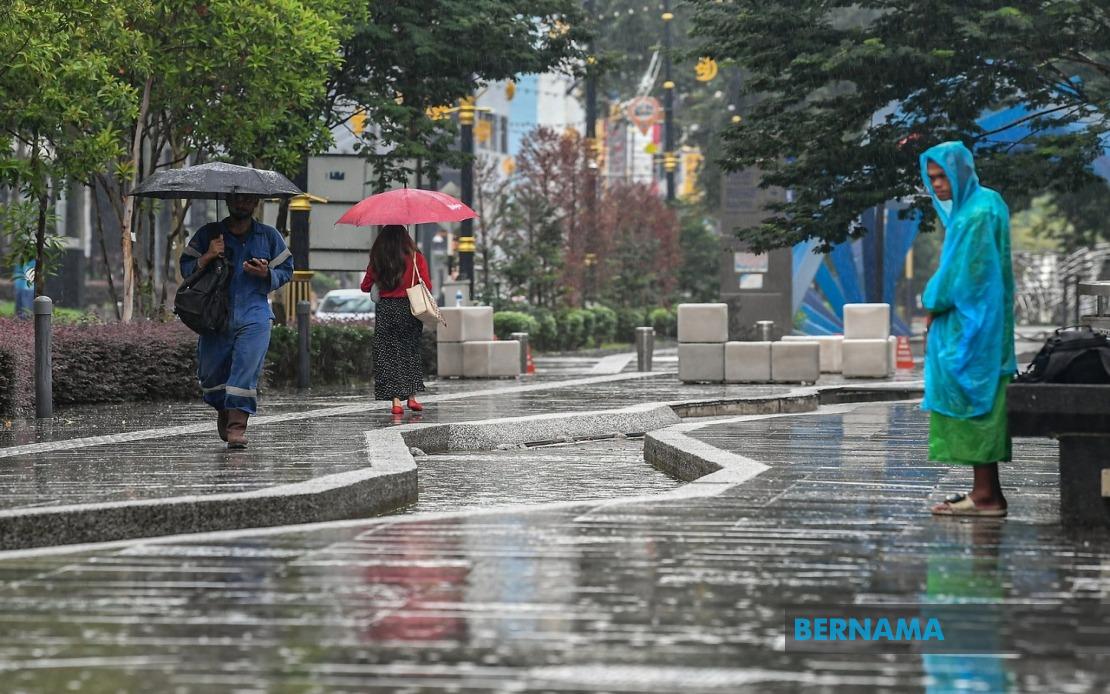
Tomorrow's nomination day for the Johor state election will coincide with wet weather across much of the state, according to forecasts released by the Malaysian Meteorological Department. Seven of Johor's ten districts are expected to experience rainfall throughout the morning hours when nomination proceedings take place, creating potential difficulties for prospective candidates and their campaign teams as they navigate between centres and manage their supporters.
The rainfall is anticipated in Johor Bahru, Muar, Batu Pahat, Kota Tinggi, Pontian, Tangkak and Kulai, according to Azlai Ta'at, the Johor director of MetMalaysia. Only Segamat, Kluang and Mersing are forecast to maintain clear skies during the morning, offering those districts more favourable conditions for nomination activities. This uneven distribution of weather across the state means that candidates and their support networks will experience vastly different logistical circumstances depending on their geographical location.
Temperature conditions will remain typical for this period of the year, with overnight lows ranging between 24 and 25 degrees Celsius and daytime highs between 31 and 34 degrees Celsius. Segamat is expected to record the highest temperatures, potentially reaching 34 degrees Celsius. While these figures are manageable, the combination of rain, heat and humidity will test the endurance of campaign workers and supporters attending the nomination centres throughout the morning.
MetMalaysia has also issued alerts for the afternoon period, when the official nomination process concludes and the state's campaigning period officially begins. Thunderstorms are expected to develop across Johor Bahru, Segamat, Kluang, Kota Tinggi, Pontian, Mersing and Kulai as the day progresses. Batu Pahat and Tangkak are forecast to experience further rain, while Muar alone is expected to remain hot and dry. These afternoon storms will mark an inauspicious start to the campaign season, potentially disrupting the initial momentum-building activities planned by the various contesting parties.
The nomination process itself is concentrated into a tight two-hour window, scheduled from 9 am to 10 am across 56 nomination centres throughout the state. Once candidates are formally registered and returning officers announce the full slate of eligible contestants, campaigning will commence immediately. The Election Commission has subsequently set July 7 for early voting and July 11 as the official polling day, providing candidates with roughly two weeks to conduct their ground campaigns despite the challenging weather forecast.
Four major political coalitions are contesting the election, presenting voters with a notably fragmented choice. Pakatan Harapan is fielding the full complement of 56 candidates, comprising 20 from PKR, 19 from Amanah and 17 from DAP, representing the opposition alliance's bid to consolidate the anti-establishment vote. Barisan Nasional, despite facing significant political headwinds nationally, is equally contesting all 56 seats through 36 UMNO candidates, 16 from MCA and four from MIC, attempting to retain its traditional hold on the state.
Perikatan Nasional presents a more complex coalition structure, with PAS contesting 11 seats, Bersatu 16, the Malaysian Indian People's Party five and Pejuang one, totalling 33 seats. This coalition, which includes the federal government party Bersatu, represents a significant electoral force in Johor despite internally contested strategies. The Malaysian United Democratic Alliance will contest four seats, with Parti Sosialis Malaysia fielding one candidate and Parti Bersama Malaysia, making its inaugural electoral appearance, contesting 15 seats.
The electoral battleground extends beyond traditional three-cornered contests in many constituencies. With nearly 60 separate candidate registrations across 56 seats, several constituencies will feature multi-way contests between representatives of opposing coalitions and independent candidates. This fragmentation reflects both the competitive intensity within Johor politics and broader shifts in Malaysia's electoral landscape towards more fluid political allegiances.
The election encompasses 2,727,926 registered voters across the state, comprising 2,703,175 ordinary voters alongside 12,041 military personnel and spouses and 12,710 police personnel and spouses. This represents a substantial and diverse electorate that will determine control of the Johor state government, one of Malaysia's most economically significant and politically consequential states. The size of the registered voters roll suggests strong participation potential, though weather conditions on nomination day and during the campaign period may influence overall turnout patterns.
For Malaysian observers and political analysts, the Johor election carries implications extending beyond state-level governance. As the geographic and economic anchor of the southern region, Johor's political direction influences broader national political calculations. The performance of the various coalitions in this election will provide early indicators of voter sentiment ahead of future national elections and will test the viability of different political configurations in Malaysia's evolving multi-party system. The weather-dampened nomination day serves as a modest reminder that Malaysian elections must accommodate the considerable environmental and climatic realities of conducting campaigns during the monsoon season.

