The Johor state election campaign entered its critical closing hours on July 10, with all major political coalitions deploying their heaviest artillery to convince voters before the official campaign period ended at midnight. With 172 candidates competing for 56 state legislative seats in the 16th state election, the final day represented the last opportunity for parties to consolidate support and address any lingering doubts among undecided voters. The intensity of these final manoeuvres underscored just how competitive the race had become, with every coalition believing victory remained within reach.
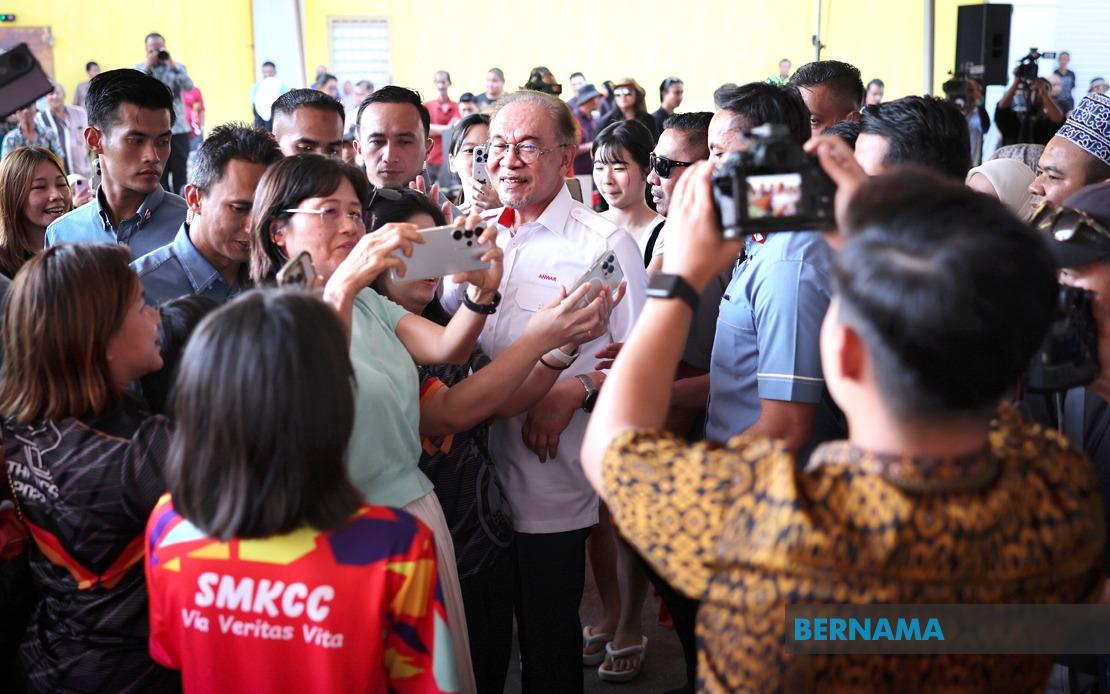
Pakatan Harapan leadership, guided by its Chairman Datuk Seri Anwar Ibrahim, orchestrated an ambitious five-location whistle-stop tour designed to energise candidates and supporters across the state. The Prime Minister's itinerary began in the Bukit Gambir State Legislative Assembly constituency and progressed through Bukit Batu and Layang-Layang before culminating in a major event called the Johor Ke Depan, Undi Harapan Grand Finale Programme in Pasir Gudang. By personally visiting multiple constituencies on the campaign's final day, Ibrahim sought to signal PH's confidence and commitment, while simultaneously providing critical morale reinforcement to coalition candidates facing what many feared would be a difficult electoral contest. Through social media, the Prime Minister also invoked spiritual dimensions to the election, praying that PH's efforts would be facilitated and ultimately rewarded.
Within PH's Johor campaign machinery, individual candidates adopted varied strategies to reach voters in their final hours. Suhaizan Kaiat, contesting the Larkin state seat on the PH ticket, chose an understated grassroots approach, conducting informal walkabouts through shopping malls in the city centre with Amanah Vice President Datuk Seri Dr Dzulkefly Ahmad. This intimate, ground-level engagement style contrasted with the grand rallies elsewhere, reflecting a calculated effort to appear accessible and responsive. Suhaizan emphasised that the extensive feedback gathered throughout the campaign represented a profound responsibility he would discharge if voters granted him the mandate, framing the election as more than a political competition but rather a personal commitment to constituents.
Barisan Nasional's closing campaign strategy diverged markedly, emphasising spiritual and moral dimensions. The coalition's Chairman, Deputy Prime Minister Datuk Seri Dr Ahmad Zahid Hamidi, participated in a BN Grand Supplication and Doa Selamat event in Kulai district, signalling that BN viewed the election through a lens combining political calculation with religious observance. This approach reflected Malaysia's political culture, where coalitions frequently appeal to voters' spiritual sensibilities alongside policy platforms. Meanwhile, incumbent Johor Menteri Besar and BN's Machap candidate Datuk Onn Hafiz Ghazi adopted a notably humble posture, publicly apologising via Facebook video for any shortcomings during his administration. Such contrition, whether genuine or tactical, suggested that even frontrunners recognised the need to acknowledge public grievances and project accountability.
Bersatu, the Mahathir-founded party now positioned differently than in previous electoral cycles, sought to maintain its electoral relevance through President Tan Sri Muhyiddin Yassin's direct appeals to voters. Muhyiddin urged Johoreans to make deliberate, informed choices based on comprehensive analysis of all contesting parties accumulated over the two-week campaign period. His framing positioned the election as a rational decision rather than merely a partisan tribal choice, potentially reflecting Bersatu's attempt to appeal beyond its traditional support base. The emphasis on voter agency and careful deliberation also subtly suggested that electoral outcomes should reflect genuine popular preference rather than organisational machinery or incumbent advantage alone.
Bersama, the reformist coalition whose ascendance had energised younger voters and those seeking alternative voices, staged their campaign finale featuring the prominent pairing of Datuk Seri Rafizi Ramli and Nik Nazmi Nik Ahmad. Rafizi promised his final election speech would comprehensively address and rebut the various claims and counter-claims exchanged throughout the campaign, suggesting that Bersama viewed this election as fundamentally about substantive policy debate rather than personality-driven politics. This rhetorical positioning appealed particularly to voters fatigued by what they perceived as negative campaigning and wanted detailed policy engagement instead.
MUDA, the youth-oriented political force that had disrupted Malaysian electoral dynamics in recent years, concluded their campaign with the Puteri Wangsa Grand Finale Lecture, with party President Amira Aisya Abd Aziz reminding Johor's electorate of their fundamental democratic power. MUDA's emphasis on empowerment and citizen agency reflected the party's broader messaging strategy, which positioned itself as representing generational change and democratic revitalisation. By focusing on voters' agency and power rather than party machinery, MUDA attempted to mobilise constituencies that felt disconnected from traditional political establishments.
The Malaysian Meteorological Department forecast that most Johor areas would experience clear morning conditions on polling day, with afternoon rainfall and potential thunderstorms possible. Such weather considerations, while apparently technical, carried electoral significance—rain and storms could suppress voter turnout, potentially affecting which coalitions benefited from lower participation levels. This underscored how even seemingly external factors could influence election outcomes in Malaysia's tropical climate.
The convergence of these final campaign efforts demonstrated the extraordinary stakes inherent in Johor electoral contests. As Malaysia's second-most populous state and home to significant economic activity, Johor's electoral outcome carried implications extending beyond state boundaries. Control of Johor state government would influence not only local policy priorities but also internal party dynamics within whichever coalition ultimately formed government, potentially reshaping Malaysian national politics. The diversity of final campaign strategies—ranging from spiritual appeals to policy-focused rhetoric to youth empowerment messaging—reflected how Malaysia's electoral competition had evolved to accommodate multiple political vocabularies and constituencies simultaneously.

