%22%2F%3E%3C%2Fpattern%3E%3C%2Fdefs%3E%3Crect%20width%3D%22100%25%22%20height%3D%22100%25%22%20fill%3D%22url(%23ph21vh2g)%22%2F%3E%3Crect%20width%3D%22100%25%22%20height%3D%22100%25%22%20fill%3D%22url(%23ph21vh2p)%22%2F%3E%3Ctext%20x%3D%2250%25%22%20y%3D%2250%25%22%20text-anchor%3D%22middle%22%20dominant-baseline%3D%22central%22%20fill%3D%22rgba(255%2C255%2C255%2C0.95)%22%20font-family%3D%22Georgia%2C%20'Times%20New%20Roman'%2C%20serif%22%20font-weight%3D%22700%22%20font-size%3D%22272%22%20letter-spacing%3D%22-0.02em%22%3EJohor%3C%2Ftext%3E%3C%2Fsvg%3E)
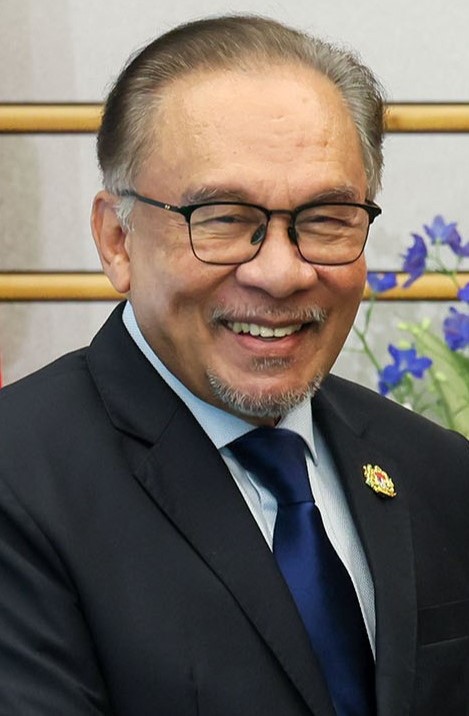
The Regent of Johor, Tunku Mahkota Ismail, received Prime Minister Datuk Seri Anwar Ibrahim in an official audience on June 22, reflecting the collaborative framework that continues to characterise relations between Johor and the federal government under the current administration. The meeting, held at the royal palace, provided an opportunity for the two leaders to discuss matters of mutual interest and reaffirm their commitment to advancing the state's development agenda in concert with national priorities.
Johor remains one of Malaysia's most economically significant states, serving as the country's manufacturing and maritime hub while maintaining a substantial agricultural sector. The audience between the Regent and the Prime Minister underscores the importance Putrajaya places on maintaining strong diplomatic and administrative ties with the state, particularly given Johor's strategic position in the southern corridor and its role in regional trade networks that extend into Singapore and beyond. Such high-level engagements are customary in the Malaysian constitutional framework, where state rulers play ceremonial and symbolic roles while working alongside elected governments on governance matters.
The Regent's position as Tunku Mahkota Ismail carries significant constitutional weight within Johor's governance structure. As a senior member of the royal household, he maintains broad engagement with both state administration and federal institutions, bridging the gap between the monarchy and elected officials. This meeting reflects the established protocol whereby senior federal leaders periodically seek audience with state rulers to update them on national developments and solicit their perspectives on matters affecting their jurisdictions.
Under the current political arrangement, maintaining constructive relations between Putrajaya and state governments has proven essential for policy implementation and legislative cooperation. Johor, with its substantial representation in Parliament and significant economic footprint, represents a crucial component of Malaysia's federal structure. The visible affirmation of these ties through formal audiences sends an important signal about political stability and institutional cooperation across Malaysia's thirteen states.
The meeting also carries implications for broader federal-state dynamics that have occasionally been contentious in Malaysian politics. Johor's historical significance as the largest and one of the most developed states means that its relationship with the federal centre can influence perceptions of governance effectiveness nationwide. By maintaining cordial and regular high-level contact, both the state leadership and federal government demonstrate a commitment to collaborative problem-solving rather than adversarial approaches to state-level issues.
Development projects spanning from infrastructure to economic diversification likely featured in discussions during the audience. Johor's ongoing initiatives in areas such as manufacturing innovation, port modernisation, and urbanisation require coordination with federal agencies, funding mechanisms, and regulatory frameworks. The Regent's engagement with the Prime Minister helps ensure that state aspirations are understood at the highest levels of federal decision-making and that impediments to development can be addressed through appropriate channels.
The symbolic importance of such meetings extends beyond administrative coordination to encompass the constitutional relationship between Malaysia's federal system and its component states. Johor, as the territorial equivalent of a modern nation-state in terms of governance complexity and economic output, necessitates regular consultation and engagement with federal leadership. The audience demonstrates respect for the state's constitutional position while affirming the Prime Minister's role in maintaining harmonious federalism.
Regional stability in Southeast Asia also benefits from stable internal Malaysian politics, and visible demonstrations of federal-state cooperation contribute to that stability. Johor's proximity to Singapore and its role as a gateway for regional trade mean that consistent governance and predictable state-federal relations have implications that extend beyond Malaysia's borders. Investors, regional partners, and international observers monitor the health of Malaysia's internal relationships as indicators of overall political reliability.
The timing and nature of such audiences reflect the careful choreography of Malaysian constitutional monarchy and democratic governance. While electoral politics may generate competition between different political groupings, the parallel relationship between elected administrations and royal institutions provides continuity and a forum for transcending partisan considerations. For Johor specifically, this means that developmental priorities and state interests can be advanced through multiple channels, both through elected state government and through direct engagement between federal leadership and the royal household.
Moving forward, the maintenance of such regular, high-level contact between the Prime Minister and the Regent of Johor suggests a stable foundation for addressing forthcoming challenges. Whether regarding economic restructuring in response to global market changes, infrastructure development required for population growth, or adaptation to emerging technological opportunities, these established channels of communication provide essential frameworks for coordination. The meeting thus represents not merely a ceremonial exercise but a reaffirmation of institutional mechanisms that enable effective governance across Malaysia's complex federal structure.