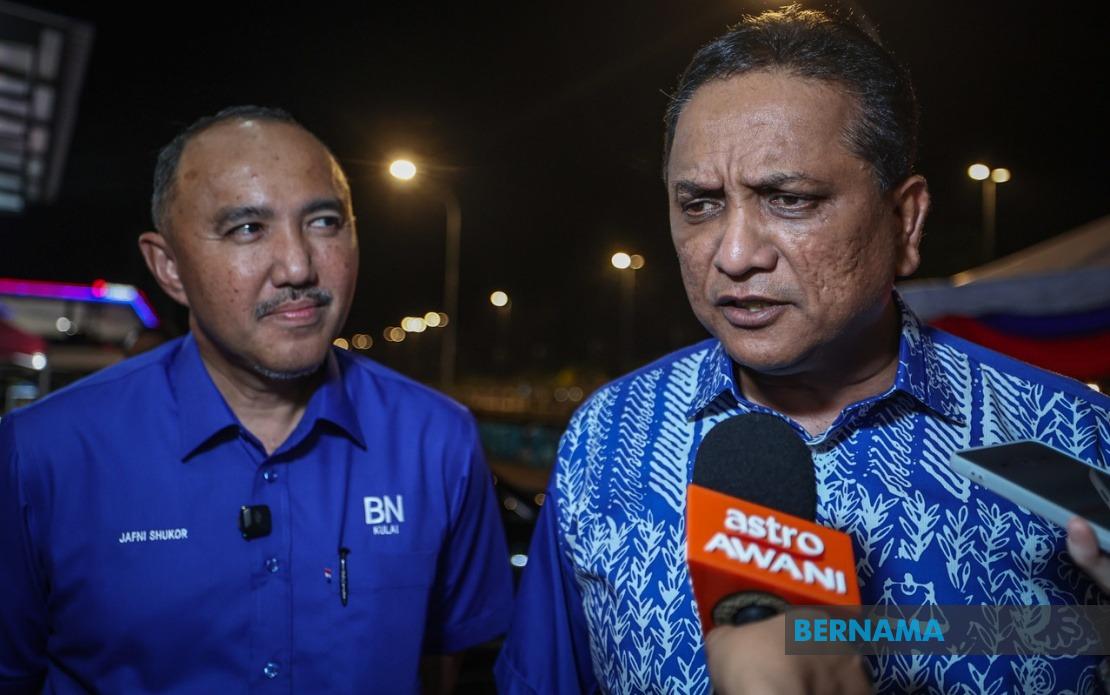
A senior UMNO figure has firmly pushed back against allegations that the Regent of Johor, Tunku Mahkota Ismail, exercises improper control over the state government, characterising such claims as politically motivated distortions with no basis in fact. Datuk Seri Reezal Merican Naina Merican made the remarks in Johor Bahru on June 25, responding to recent controversies surrounding the relationship between the royal institution and the state administration during a particularly sensitive electoral period.
Reezal Merican, who holds a seat on the UMNO Supreme Council, argued that the Regent's public pronouncements on matters affecting Johor's development have been misrepresented by detractors seeking to undermine confidence in the state's leadership. He contended that the Tunku Mahkota Ismail's willingness to address governance issues should be recognised as a legitimate expression of his constitutional duties rather than an overreach of royal authority. The distinction between fulfilling institutional responsibilities and wielding executive control has become increasingly important as Johor prepares for its state election.
According to Reezal Merican, the Regent operates within his proper constitutional framework by serving as a check and balance mechanism on the Menteri Besar and State Secretary. This role, he stressed, reflects the fundamental principles of Malaysia's constitutional monarchy system, which deliberately vests monarchs with oversight functions. Far from representing governmental dysfunction, these interactions represent the intended operation of institutional checks designed to protect public interest and ensure administrative accountability within each state.
The UMNO leader questioned whether those making such allegations genuinely understood the structure of state governance or were simply employing inflammatory rhetoric for political advantage. He noted that throughout his involvement with UMNO's highest decision-making body, he had never encountered any internal acknowledgment that party leadership in Johor operated under palace control or direction. Such a suggestion, he implied, contradicted both the factual operation of party structures and the constitutional arrangements governing Johor's administration.
Reezal Merican's statements were prompted by the recent departure of Datuk Dr Mohd Puad Zarkashi from UMNO, who claimed that Menteri Besar Datuk Onn Hafiz Ghazi had effectively become subordinate to palace interests. Mohd Puad, formerly the Speaker of the Johor State Legislative Assembly, made his exit from the party accompanied by allegations of institutional capture. The timing of such accusations, emerging just weeks before a state election, raised questions about whether political calculations drove the narrative rather than genuine governance concerns.
The controversy arrives at a particularly delicate moment for Johor politics, with the Election Commission having designated June 27 as nomination day and July 11 as polling day. The injection of palace-related allegations into campaign discourse reflects broader tensions within the coalition governing Johor and hints at underlying fractures within UMNO's state structures. These internal conflicts may complicate Barisan Nasional's campaign messaging as it seeks to present a unified front to voters.
Reezal Merican explicitly questioned Mohd Puad's motives in raising such sensitive matters at this juncture, suggesting that the timing betrayed political rather than principled concerns. By attempting to draw the royal institution into state-level political battles, he argued, parties like Mohd Puad risked damaging public confidence in the very institutions meant to provide stability and constitutional oversight. This perspective reflects broader discomfort within UMNO about involving the monarchy in partisan electoral contests, which could undermine the institution's unifying function across Malaysian society.
The situation underscores persistent tensions within Johor's political establishment regarding the balance between royal prerogative and ministerial autonomy. While constitutional monarchies like Malaysia necessarily involve some degree of royal involvement in state affairs, the precise boundaries of such engagement remain contested, particularly when governance disputes arise. Johor's experience suggests these questions become especially fraught during electoral periods when political factions compete intensely for legitimacy and public support.
For Malaysian observers more broadly, the Johor controversy illuminates important questions about institutional relationships within a constitutional monarchy. The delegation of check-and-balance functions to state rulers serves vital purposes in preventing executive overreach and protecting constitutional principles. Yet the effectiveness of such arrangements depends partly on political actors respecting the distinction between legitimate oversight and improper interference in day-to-day administration. When politicians characterise normal royal functions as illegitimate control, they risk both destabilising the system and politicising the monarchy itself.
Reezal Merican's defence of current arrangements reflects a perspective shared by many UMNO leaders who view accusations of palace interference as unfounded and potentially damaging to institutional credibility. However, the persistence of such claims, even if exaggerated, suggests genuine disagreements exist within Johor's political circles regarding the appropriate scope of royal involvement. These disputes may continue influencing state politics long after the upcoming election concludes, shaping how future administrations navigate their relationships with the palace.
The allegations also serve as a reminder that political crises in Malaysian states often involve complex institutional dimensions beyond simple factional disputes. Questions of power distribution between elected officials and constitutional institutions inevitably arise when governance faces stress. How political actors address such questions—whether through respectful dialogue respecting institutional autonomy or through inflammatory rhetoric—will significantly influence whether Malaysia's constitutional systems remain robust and broadly accepted or face erosion through partisan conflict and institutional politicisation.

