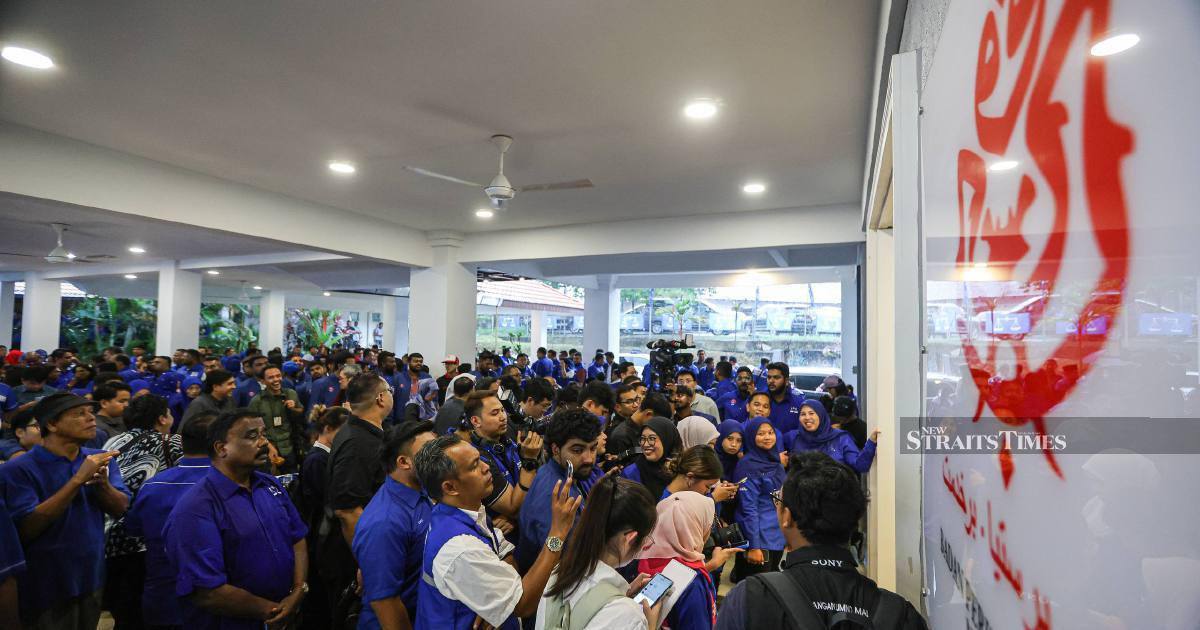
The momentum is building in Johor as Barisan Nasional prepares to reveal the faces who will carry the coalition's hopes in the 16th state election. At the Johor Umno headquarters in Johor Baru, a palpable energy fills the air as senior party officials, grassroots members and loyal supporters converge for what has become one of the most anticipated moments in the state's political calendar. The gathering reflects the significance of the Johor election cycle, particularly for a coalition that has dominated the state's politics for decades and views this contest as crucial to maintaining its electoral dominance.
Barisan Nasional's candidate announcement represents far more than a ceremonial ritual. It signals the coalition's strategic priorities and the confidence it places in particular individuals to win back or defend their constituencies. For Umno specifically, Johor remains a traditional stronghold where the party has historically performed strongly, making the selection of candidates a matter of considerable internal and external scrutiny. The assembly of supporters reflects grassroots enthusiasm, though it also underscores the competitive pressures the coalition faces in contemporary Malaysian politics, where incumbency alone no longer guarantees electoral success.
The timing of the announcement carries strategic weight in the broader context of Malaysia's political landscape. Johor has proven to be a significant battleground in recent elections, with results often carrying implications beyond the state itself. The coalition's ability to retain control of the Johor state government hinges substantially on whether its candidates can connect with voters across demographic and socioeconomic divides. Umno and its BN partners have invested considerable effort in evaluating potential contenders, balancing considerations of local influence, administrative capability, and broader appeal with party loyalty and internal factional dynamics.
The diversity of those gathering at headquarters reflects the multiethnic and multifaith composition of Johor's electorate. Barisan Nasional's traditional strength has rested on its capacity to maintain support across different communities, though this coalition has faced challenges in recent elections from both Pakatan Harapan and fragmentation within its own ranks. The candidates who will be announced must therefore possess not only party backing but also demonstrated ability to appeal to Chinese and Indian voters, whose support remains decisive in many Johor constituencies. Recent electoral patterns suggest that any erosion of minority support could prove consequential for BN's overall performance.
The announcement event itself serves important functions beyond the formal unveiling of names. It provides an opportunity for the coalition to frame its narrative for the campaign ahead, highlighting continuity where it wishes to emphasise stability and introducing fresh faces where generational change appears prudent. For supporters gathered at headquarters, the occasion offers a moment of collective affirmation and renewed commitment. The excitement evident in these gatherings often translates into campaign energy at the grassroots level, where door-to-door canvassing and community engagement ultimately determine electoral outcomes.
Umno's position as the dominant partner within Barisan Nasional means that the Johor election carries particular weight for the party's national standing. Any significant losses in the state could embolden challengers within the coalition and weaken Umno's claim to leadership status within the broader government structure. Conversely, a decisive victory would reinforce the narrative that the party has successfully navigated past controversies and recovered public confidence. The candidates announced today become embodiments of that larger struggle for political relevance and legitimacy.
The logistics of managing such gatherings—coordinating different party components, accommodating party hierarchies, and maintaining security—reflect the institutional maturity of Barisan Nasional, which has organised elections under various circumstances for generations. Yet even as these structures function smoothly, the underlying political questions remain formidable. Can BN's candidates overcome the appeal of opposition messaging? Will local economic concerns about employment, cost of living, and infrastructure development favour or harm the incumbent coalition? Do the selected candidates possess sufficient personal standing to overcome any national-level political headwinds?
Johor's electoral history provides context for understanding why this announcement matters. The state remains Malaysia's second-largest by population and third-largest by economic output, making it a crucial prize in national politics. Control of the Johor state apparatus influences resource allocation, development priorities, and political patronage across a populous region. For BN, maintaining dominance here is not merely a matter of pride but a practical necessity for sustaining influence within the federal government.
The candidates who emerge from this announcement will face a campaign environment markedly different from previous cycles. Voter sophistication has increased, social media now dominates political communication, and economic pressures weigh heavily on household finances across Johor. Successful candidates will need to demonstrate genuine understanding of constituent concerns while projecting competence and integrity in their personal conduct. The calibre of those selected reflects BN's assessment of what will be required to navigate these contemporary electoral challenges.
As supporters disperse from the headquarters following the announcement, they carry with them the names and faces who will represent Barisan Nasional in the coming months. The enthusiasm evident today will be tested against competing visions offered by opposition parties and against the lived experiences of voters concerned with tangible issues affecting their daily lives. The announcement marks the formal beginning of the campaign, but the real contest for Johor voters' confidence has only just begun.