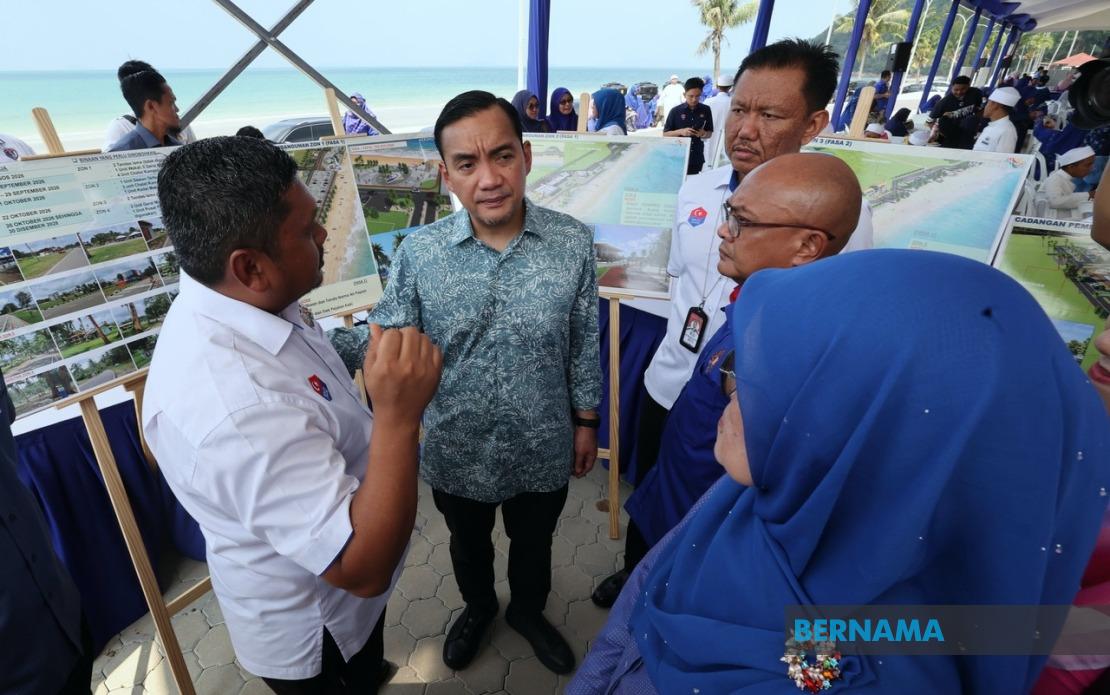
The Johor state government has committed RM1.5 million to advance Mersing's infrastructure and public services, underscoring efforts to distribute the fruits of economic expansion beyond the state capital. Menteri Besar Datuk Onn Hafiz Ghazi made the announcement during a district engagement, signalling the administration's intention to replicate successful urban development models across all of Johor's territories, including the coastal district which is home to approximately 80,000 residents.
The initiative reflects a deliberate strategy to ensure that prosperity generated by state-level economic policies reaches communities beyond Johor Bahru. Onn Hafiz emphasised that tourism infrastructure and investment opportunities mean little if local populations do not participate in job creation and benefit-sharing. This messaging addresses a persistent tension in Malaysian economic development: the concentration of wealth and employment in metropolitan centres at the expense of smaller districts and rural areas.
The allocation forms part of the broader Johor Economic Transformation Plan (JETP), a comprehensive policy framework that establishes development targets across short, medium, and long-term horizons. The JETP aims to strengthen Johor's overall economic competitiveness whilst simultaneously creating pathways for youth employment and skills development. For a state seeking to position itself as a regional economic hub, the dual focus on macro-level growth and micro-level livelihood improvement represents a maturing approach to development policy.
Healthcare improvements constitute a significant portion of the investment. RM500,000 has been earmarked to upgrade the Mersing Hospital Haemodialysis Unit, addressing a critical gap in kidney disease treatment services in the district. This allocation acknowledges the healthcare disparities that often emerge in non-metropolitan areas, where specialised medical facilities remain limited. Access to dialysis services is particularly vital for elderly populations and those with chronic conditions, making this investment a direct response to public health needs.
Recreational and cultural infrastructure also features prominently in the funding breakdown. RM200,000 has been designated for carpet replacement at Kampung Sri Lalang Mosque, while another RM200,000 will establish a futsal court at Taman Sri Mersing. An additional RM200,000 addresses maintenance needs for existing sporting facilities at Felda Nitar. These investments in sports and community spaces reflect recognition that quality-of-life improvements extend beyond economic metrics to encompass social cohesion and youth engagement.
Rural electrification and infrastructure improvements for indigenous communities form another component of the spending plan. RM100,000 each has been allocated to install solar-powered streetlights in Kampung Peta and Kampung Tanjung Tuan, villages inhabited by Orang Asli populations. This allocation acknowledges both environmental sustainability concerns and the historically marginalised status of indigenous communities in development planning. Similar investment of RM100,000 targets upgrading facilities at the Kami Anak Felda Malaysia building in Felda Tenggaroh Timur, recognising the specific needs of federal land settlement communities.
Sporting infrastructure development extends to traditional Malaysian pursuits, with RM80,000 allocated for constructing a sepak takraw court in Felda Tenggaroh 6. This commitment to heritage sports reflects cultural values whilst simultaneously providing recreational outlets and potential avenues for youth talent development. The specific focus on Felda settlements suggests targeted engagement with these historically significant communities.
Beyond immediate capital projects, the state government has signalled longer-term strategic initiatives that could reshape Mersing's economic trajectory. A proposal to establish a petrol station serving the Special Forces Group at Camp Iskandar represents coordination between district-level administration, local representatives, and security infrastructure planning. Simultaneously, plans to establish a Religious Affairs Office and a Technical and Vocational Education and Training (TVET) campus in Mersing indicate institutional capacity-building efforts designed to anchor skills development and spiritual services within the district.
The TVET initiative carries particular significance for Southeast Asian economic competitiveness. As manufacturing and service sectors increasingly demand skilled technical labour, the availability of vocational training within districts reduces barriers to workforce development for disadvantaged communities. This approach aligns with regional trends towards addressing skills gaps that persist despite overall economic growth. For Mersing specifically, accessible TVET provision could transform employment prospects for school-leavers who might otherwise migrate to urban centres.
The announcement reflects broader state-level political calculations within Johor. Menteri Besar Onn Hafiz's emphasis on inclusive growth and district-level prosperity appeals to constituencies beyond the Johor Bahru metropolitan area, whilst simultaneously demonstrating that the state government retains capacity for targeted investment despite competing fiscal demands. This positioning becomes increasingly important in Malaysian politics as urban-rural disparities attract electoral attention and social media scrutiny.
The initiatives also underscore Johor's strategic importance within the Malaysian federation. As the nation's southernmost state and a crucial component of the Klang Valley-Johor Bahru economic corridor, Johor's development trajectory influences broader regional competitiveness. Investment in secondary districts like Mersing supports the state's capacity to function as a cohesive economic unit rather than fragmenting into metropolitan enclaves and neglected peripheries.
For Malaysian policymakers and administrators elsewhere, the Mersing allocation offers a instructive case study in translating macro-level development plans into tangible district-level improvements. The specificity of the spending breakdown—from hospital equipment to streetlights to sports facilities—demonstrates how development funds can address accumulated infrastructure deficits whilst simultaneously signalling state commitment to equitable growth. Whether these investments generate sustainable livelihood improvements and employment expansion, as policy objectives suggest, will require ongoing monitoring and impact assessment beyond the initial disbursement phase.

