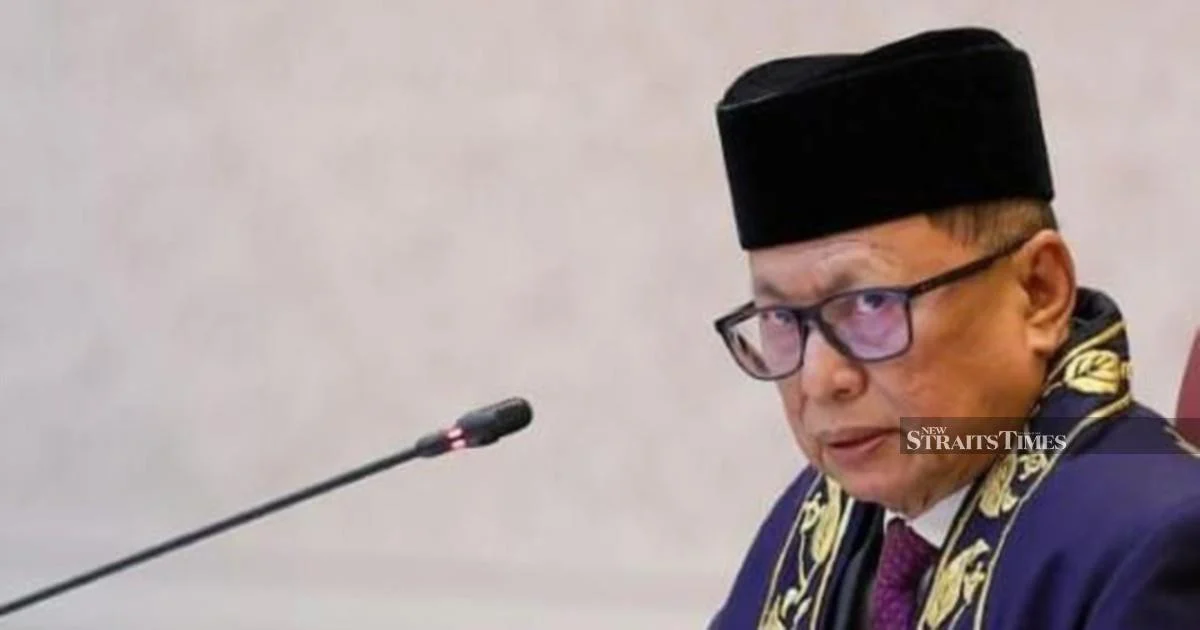
The People's Justice Party in Johor has escalated its confrontation with veteran opposition figure Datuk Dr Mohd Puad Zarkashi, demanding he furnish tangible proof to back up his recent contentions regarding alleged royal involvement in the state's political landscape. Addressing party members in Pontian, PKR officials rejected what they characterised as vague accusations lacking substantiation, positioning the demand as essential for maintaining democratic transparency and public confidence in governance.
Puad Zarkashi, who previously held significant standing within Umno's upper echelons before departing the party, has made several public pronouncements suggesting the palace has played an active role in shaping political developments within Johor. These allegations carry considerable weight given his former proximity to power structures, yet PKR representatives argue that such serious claims demand more than rhetorical assertions if they are to be taken seriously by voters and the political establishment.
The confrontation reflects broader anxieties within Malaysia's political sphere regarding the appropriate boundaries between institutional monarchical authority and elected civilian governance. The constitutional position of Johor's sultanate remains a sensitive matter, particularly given the state's unique historical status and the enduring influence of the royal institution over both ceremonial and substantive matters. PKR's intervention signals an attempt to inject greater clarity into discussions about where legitimate royal prerogatives end and inappropriate political involvement begins.
Johor politics has experienced considerable turbulence in recent years, with multiple shifts in governmental composition and coalition alignments creating an environment where competing narratives about causation gain traction. Puad's allegations, if substantiated, would represent a significant challenge to the legitimacy of recent political outcomes. Conversely, if left unsubstantiated, they risk becoming merely another contribution to the growing pool of unverified political claims that erode public trust across the spectrum.
The PKR position also contains a strategic dimension worth examining. By publicly challenging Puad to produce evidence, the party positions itself as defender of institutional integrity against shadowy forces, simultaneously protecting the image of elected state administration from implications of being merely royal puppets. This rhetorical positioning becomes increasingly important as various coalitions compete for voter confidence based partly on their perceived independence from unelected influences.
Johor occupies singular importance within Malaysian federalism, combining economic significance with historical prestige and institutional complexity. The state government's legitimacy depends substantially on public perception that decisions emerge from transparent democratic processes rather than behind-the-scenes palace direction. Any credible evidence of systematic royal interference would undermine governmental effectiveness, while unsubstantiated accusations contribute only to corrosive cynicism about political authenticity.
Puad Zarkashi's departure from Umno and subsequent evolution as a political commentator reflects deeper divisions within the coalition that once dominated Malaysian politics. His willingness to make provocative claims about palace involvement suggests he may be operating outside traditional party constraints, yet this independence also raises questions about the evidentiary standards underpinning his assertions. Without documentation, correspondence, or testimony from other participants in allegedly interfered-with decision-making processes, allegations remain speculation rather than demonstrated fact.
The timing of this public dispute carries implications for Johor's political trajectory ahead of anticipated elections and governance transitions. If the state faces potential electoral contests, such accusations could influence voter calculations about which coalitions might better insulate governance from palace pressure. Conversely, if Puad cannot substantiate his claims, the episode could diminish his credibility as a political voice, potentially benefiting those he has implicitly criticised.
For Malaysian observers and regional analysts monitoring institutional health, this confrontation illustrates persistent tensions between traditional authority structures and democratic governance frameworks that remain incompletely resolved in Malaysian constitutional practice. Unlike Westminster systems where monarchical roles have been decisively circumscribed, Malaysian federalism preserves substantial sultanate authority, creating ongoing ambiguity about appropriate exercise of that authority in contemporary political contexts. Johor's situation thus becomes a microcosm of larger questions about institutional evolution across Malaysia.
The PKR challenge also reflects evolving expectations about political accountability and transparency. Modern voters across Southeast Asia increasingly expect public figures to substantiate serious political allegations rather than rely on reputation or position to lend credence to claims. By demanding evidence, PKR taps into widespread sentiment that politics should rest on verifiable fact rather than rumour, innuendo, or privileged insider knowledge inaccessible to ordinary citizens.
Moving forward, the spotlight falls squarely on Puad Zarkashi to either advance specific, documented examples of palace interference or acknowledge that his assertions reflected speculation rather than established occurrence. This binary presents a critical test of whether Malaysian political discourse can meaningfully distinguish between genuine institutional breaches requiring remediation and the perpetual jockeying for advantage that characterises any competitive political environment. The outcome will likely shape how similar allegations are received in the future, either strengthening standards of political discourse or further eroding them.

