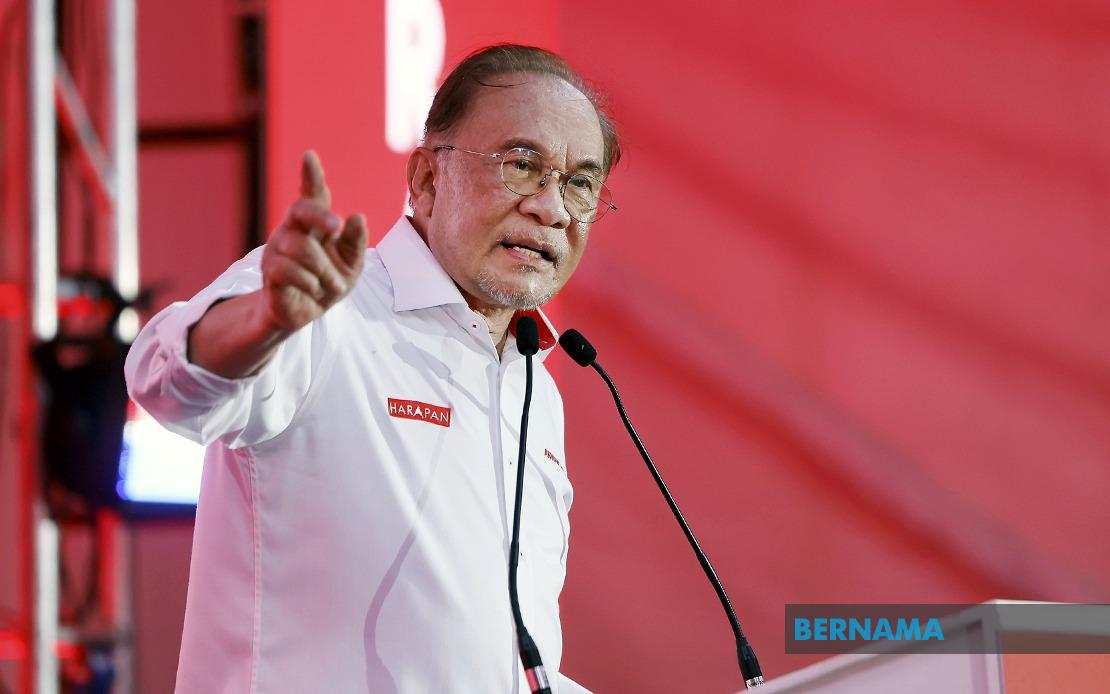
Prime Minister Datuk Seri Anwar Ibrahim has appealed to Johor's electorate to choose representatives who combine strategic thinking with decisive action and a deep grasp of community concerns. Speaking through a Facebook video message ahead of the 16th Johor state election, the Pakatan Harapan chairman emphasised that the coalition remains committed to amplifying the voice of ordinary Malaysians while protecting Johor's interests and accelerating its development.
Anwar's call represents a broader attempt by PH to position itself as the vehicle for measured, thoughtful governance in the southern state. The messaging moves beyond typical campaign rhetoric to focus on qualities of leadership—wisdom in prioritisation, courage in decision-making, and authentic connection to grassroots concerns. This framing suggests PH believes voters in Johor are seeking substantive change rather than simply exchanging one ruling party for another.
The Prime Minister began his campaign efforts in Johor on the opening day of PH's push, undertaking seven separate engagement programmes across different areas. These activities ranged from town halls and public talks to community interactions and localised events, all designed to deepen the coalition's connection with voters and provide visible backing for its candidates standing in the election.
At the heart of Anwar's messaging lies an appeal to unity and collective progress. He specifically referenced the need for elected representatives who would champion the interests of all Malaysians—invoking Malays, Chinese and Indians working together to build the nation and elevate Johor's standing. This inclusive framing is particularly significant given Johor's diverse demographic composition and the state's historical importance as an economic and political powerhouse within Malaysia.
Pakatan Harapan has committed to contesting all 56 state constituencies in the election, deploying 172 candidates across the ballot. The coalition's composition reflects its multiparty structure: PKR is fielding 20 candidates, Amanah is running 19, and DAP is contesting 17 seats. This distribution represents an attempt by the three-party alliance to balance regional strength and party-specific support bases across different constituencies.
The broader context of Johor politics adds weight to the campaign. As Malaysia's southernmost state and a major economic contributor, Johor has long been a proving ground for political strategies and a barometer of public sentiment. The state's electoral decisions often reverberate across the country, making the outcome here particularly relevant for assessing support for the federal government and its policy direction.
Competition in this election is substantial, with a total of 172 candidates vying for the 56 available seats. This density of candidates indicates vigorous competition not just between PH and its opponents, but potentially within opposition coalitions and among independent candidates. The crowded field means individual campaigns must work harder to establish distinct identities and connect with specific voter demographics.
The electoral calendar is set for polling day on July 11, with early voting scheduled for July 7. This timeline provides a brief campaign window for candidates to mobilise supporters and address voter concerns. For the Johor electorate, the compressed campaign period means key issues—whether related to cost of living, employment, infrastructure development, or service delivery—must be communicated efficiently and persuasively.
Anwar's public appeal to PH's organisational machinery reflects awareness that campaign success depends not merely on national leadership visibility but on effective ground organisation. By explicitly calling on the coalition's machinery to work intensively, the Prime Minister is signalling that success in Johor requires sustained effort from party workers, community leaders and volunteer campaigners across all 56 constituencies.
For Malaysian voters and political observers, this election represents a significant test of public confidence in the current federal administration. Johor's outcome will provide insight into whether support for PH's governance model extends into crucial state-level contests, or whether regional and local considerations are pulling electorate sentiment in different directions. The state's response to Anwar's calls for visionary leadership will carry implications for future political alignments at both state and federal levels.
The choice before Johoreans extends beyond a simple binary between coalitions. Voters are being invited to evaluate which candidates and parties offer the qualities Anwar identifies—wisdom, courage and genuine responsiveness to community needs. In a political environment marked by frequent electoral cycles and shifting coalitional arrangements, these qualities of leadership and accountability increasingly appear to be what Malaysian voters are seeking at the ballot box.

