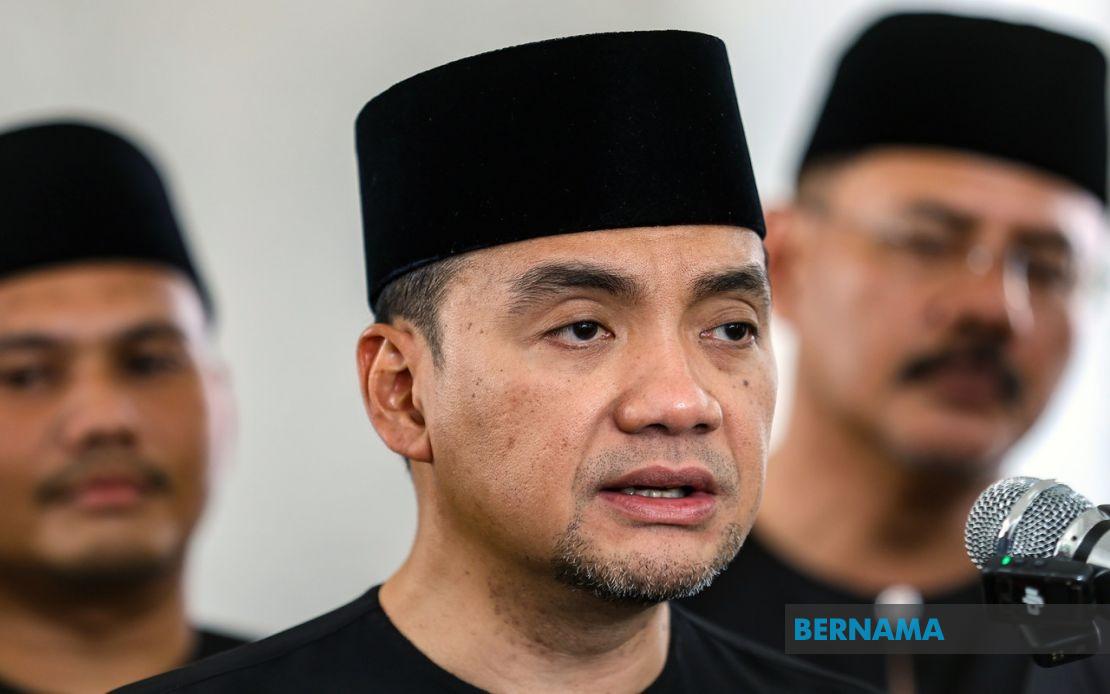
The Johor state government has rolled out a fresh initiative aimed at revitalising mosque participation and deepening religious observance among Muslim residents across the state. The Semarak Maghrib and Isyak programme represents an expansion of earlier efforts focused on dawn prayers, with the objective of drawing larger congregations to evening prayer services held in mosques throughout Johor. Menteri Besar Datuk Onn Hafiz Ghazi announced the launch, framing the effort as integral to the government's vision of sustaining mosques as dynamic spiritual and educational hubs that strengthen bonds of brotherhood among the faithful.
The initiative was formally inaugurated at Masjid Jamek As-Syakirin in Bukit Saujana, where the first gathering featured religious instruction and Quranic recitation. The inaugural session included a discourse on the 40 Hadith centred on the principle of "Niat Penentu Perbuatan Hamba" (intention determines the worth of deeds), delivered by Mohd Zaini Mohd Salleh, the district kadi for Johor Bahru. This emphasis on spiritual guidance and theological depth signals that the programme extends beyond merely encouraging attendance; it seeks to provide meaningful religious education alongside congregational worship.
Onn Hafiz articulated the programme as a natural progression from the state's earlier concentrated push to bolster Subuh (dawn) prayer congregations. By extending this model to Maghrib (sunset) and Isyak (night) prayers, the Johor government is pursuing a more comprehensive approach to mosque revitalisation. The timing of these two prayer times—occurring in the late afternoon and evening—may prove strategically valuable for engaging working professionals and families who may find dawn prayers logistically challenging. This phased expansion suggests a strategic methodology to building sustainable religious practice across diverse segments of the population.
The programme directly addresses a manifesto commitment made by Barisan Nasional during the 16th Johor state election, positioning it within a broader political mandate. This connection underscores how religious and cultural initiatives in Malaysia often intersect with electoral pledges and governance accountability. By linking the programme to election promises, the state government seeks to demonstrate responsiveness to constituents' expectations regarding Islamic affairs and community development. The fulfilment of such pledges carries symbolic importance in Johor's political landscape, where religious initiatives command substantial public attention and voter interest.
From a practical standpoint, the Semarak Maghrib and Isyak initiative addresses a genuine challenge facing many Malaysian mosques: maintaining consistent congregation sizes and ensuring mosques function as active community spaces beyond prayer times. Many mosques struggle with declining evening prayer attendance, particularly among younger worshippers and professionals. By pairing congregational encouragement with structured religious learning—as demonstrated by the inaugural session's scholarly presentation—the programme attempts to make mosque visits more intellectually and spiritually rewarding, potentially reversing engagement trends.
The emphasis on syiar Islam (propagation of Islamic values) within the context of building a "progressive Johor guided by the Quran and the Sunnah" reflects a particular theological orientation. This framing positions religious development not as traditional or conservative, but as integral to a modern, forward-looking state vision. For Johor and the broader Malaysian context, this messaging is significant as it attempts to reconcile Islamic observance with contemporary governance and development narratives—a balance many Southeast Asian Muslim-majority societies actively pursue.
Onn Hafiz's explicit call for Muslim residents to participate demonstrates that government initiatives of this nature require sustained grassroots engagement to succeed. Mosque committees, religious leaders, and community volunteers will play crucial roles in publicising the programme, organising activities, and maintaining momentum. Without active community participation and word-of-mouth promotion, even well-intentioned government schemes can falter. The appeal for broader public support suggests awareness that top-down initiatives require bottom-up enthusiasm to generate meaningful outcomes.
The programme also reflects broader Southeast Asian trends where governments increasingly invest in religious infrastructure and community engagement. As nations across the region navigate questions of religious identity, social cohesion, and modernity, mosque-centred initiatives represent one policy response. In Malaysia specifically, state-level religious programmes carry added significance given the constitutional framework allocating Islamic affairs to state governments. Johor's initiative therefore exemplifies how individual states leverage their religious authority to shape community life and demonstrate governance effectiveness in a domain where public expectations remain high.
Looking forward, the success of Semarak Maghrib and Isyak will likely depend on consistent implementation across diverse mosque communities, sufficient resource allocation for educational components, and genuine effort to make participation accessible to working adults and younger generations. The programme's reliance on religious scholarships and structured teaching suggests seriousness beyond mere symbolism. If effectively executed, it could serve as a model for other Malaysian states considering similar approaches to mosque revitalisation and community religious engagement, potentially influencing broader Southeast Asian discussions about sustaining Islamic practice in increasingly urbanised and modernised societies.

