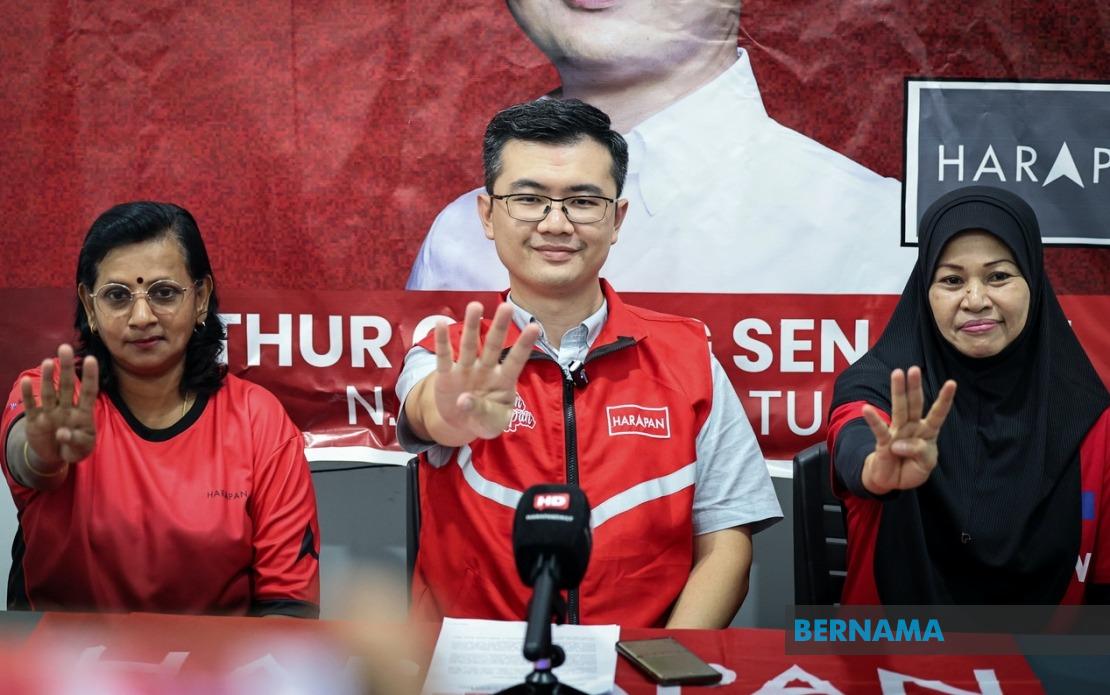
Arthur Chiong Sen Sern, the incumbent Bukit Batu state assemblyman representing Pakatan Harapan, believes the outcome of Johor's upcoming election on July 11 hinges significantly on voter participation levels. Speaking at his campaign headquarters in Kulai this week, Chiong emphasised that securing a turnout exceeding 60 per cent would substantially bolster his chances of retaining the seat he won in 2022 by just 137 votes—a margin so narrow it underscores the constituency's competitive nature and the critical importance of mobilising supporters.
The incumbent's focus on turnout reflects mathematical political reality in Bukit Batu. In the 2022 Johor state election, overall voter participation hovered at 54.9 per cent, leaving significant untapped potential among registered voters. By targeting a turnout above 60 per cent, Chiong appears calculating that a more engaged electorate, particularly among younger and first-time voters who tend to back reform-minded candidates, could work in his favour. His campaign machinery has reportedly intensified ground operations in recent days, conducting daily outreach activities across the constituency to remind voters of the importance of casting their ballots.
Chiong articulated seven strategic priorities aimed at demonstrating his government's developmental achievements and his commitment to continued progress in Bukit Batu. These platforms encompass establishing a data centre industry training programme to create employment pathways for constituents, undertaking the long-awaited widening of FT001 road, and implementing intelligent traffic management systems to ease congestion. Additionally, his agenda includes enhanced healthcare through clinic upgrades, youth-focused interventions against vaping and substance abuse, tourism sector expansion, increased school infrastructure and capacity, and complimentary Malay language and history tuition for students.
The assemblyman positioned these initiatives not merely as election promises but as tangible continuations of work already begun during his first term. He argued that maintaining political continuity allows for cumulative development benefits, citing the necessity of sustained relationships with state and federal governments to efficiently execute projects affecting constituents' daily lives. This framing attempts to justify his re-election as matter of pragmatism rather than ideology, particularly appealing to voters primarily concerned with bread-and-butter issues like transportation, education, and employment.
Chiong noted encouraging feedback from his ground operations across the diverse demographic makeup of Bukit Batu. His campaign team reported receptiveness from voters of all ethnic communities to both the manifesto and the candidate's policy explanations. Such observations, if accurate, suggest Bukit Batu maintains the cross-communal political dynamics characteristic of Malaysia's competitive urban constituencies, where no single ethnic voting bloc determines outcomes and coalition-building remains essential. The positive voter reception claimed by Chiong's machinery could indicate either genuine support or the standard optimism campaigns typically project.
Remarkably, Chiong commended the conduct of the election campaign in Bukit Batu, characterising it as an exemplar of mature political culture. He highlighted the respectful interactions between competing candidates, including goodwill wishes exchanged despite electoral rivalry. Such commentary, whether reflecting genuine political cordiality or campaign positioning, speaks to Malaysians' evolving expectations for election conduct divorced from acrimony and personal attacks. In constituencies like Bukit Batu, where results are genuinely unpredictable and repeat candidacies likely, maintaining civil relationships holds practical value beyond moral considerations.
The Bukit Batu contest exists within the broader context of Johor's ongoing political restructuring following Malaysia's 2022 general election seismic shifts. Johor's state elections, now separated from federal polls, have created distinct electoral dynamics where state-level messaging and local development records carry heightened weight. For Chiong and other incumbents statewide, the ability to demonstrate concrete developmental progress within their constituencies becomes the primary campaign battleground, particularly for swing voters evaluating whether to maintain or change representation.
Chiong's emphasis on the 60 per cent turnout threshold reflects sophisticated electoral mathematics. Incumbents with narrow victory margins typically benefit from higher engagement, as mobilised voters tend to reward candidates who have invested campaign resources in reaching them. Conversely, low turnout often favours opposition challengers able to motivate their concentrated base. By publicly committing to the turnout target and framing it as positive for his prospects, Chiong simultaneously energises his supporters with optimism while establishing a measurable metric for evaluating campaign success.
The July 11 election will involve early voting on July 7, providing flexibility for working professionals and others unable to vote on the main day. This staggered voting arrangement offers campaigns additional windows to monitor momentum and potentially adjust final outreach strategies. For Chiong specifically, maximising turnout across both early and main voting periods becomes essential, particularly in demographic segments that have previously shown lower participation rates. His campaign's daily operations intensity appears calibrated to ensure such maximum engagement.
For Malaysian observers and political analysts, the Johor election cycle demonstrates how electoral strategy adapts to local conditions and competitive thresholds. Bukit Batu, like several Johor constituencies, represents genuinely competitive terrain where party strongholds no longer guarantee victory. This competitive reality has elevated the importance of voter turnout engineering, local issue responsiveness, and candidate-specific popularity metrics. Chiong's campaign approach—emphasising concrete deliverables, invoking developmental continuity, and targeting participation benchmarks—encapsulates the modern state-level electoral playbook in Malaysia's increasingly sophisticated political marketplace.
As polling day approaches, the real test remains whether Chiong's intensive ground campaign successfully converts reported voter receptiveness into actual votes and whether achieving the 60 per cent turnout threshold materialises as his campaign forecasts. The stakes extend beyond individual constituency outcomes, as Johor remains a crucial political battleground influencing national political balance and coalition viability. Bukit Batu's voters, despite comprising just one of Johor's state assembly constituencies, participate in electoral dynamics that reverberate across Malaysia's political landscape.

