Johor's ambitious education transformation agenda has entered a new phase with the government's decision to incorporate religious schools into its flagship reform initiative. The establishment of the first Sekolah Agama Rintis Bangsa Johor (SARBJ) in Kota Iskandar this year represents a strategic broadening of the Sekolah Rintis Bangsa Johor (SRBJ) programme, which has already reshaped four conventional public schools across the state. The expansion reflects a recognition that comprehensive educational reform in Malaysia must extend beyond secular institutions to encompass the religious school system, which educates tens of thousands of students in Islamic knowledge and values.
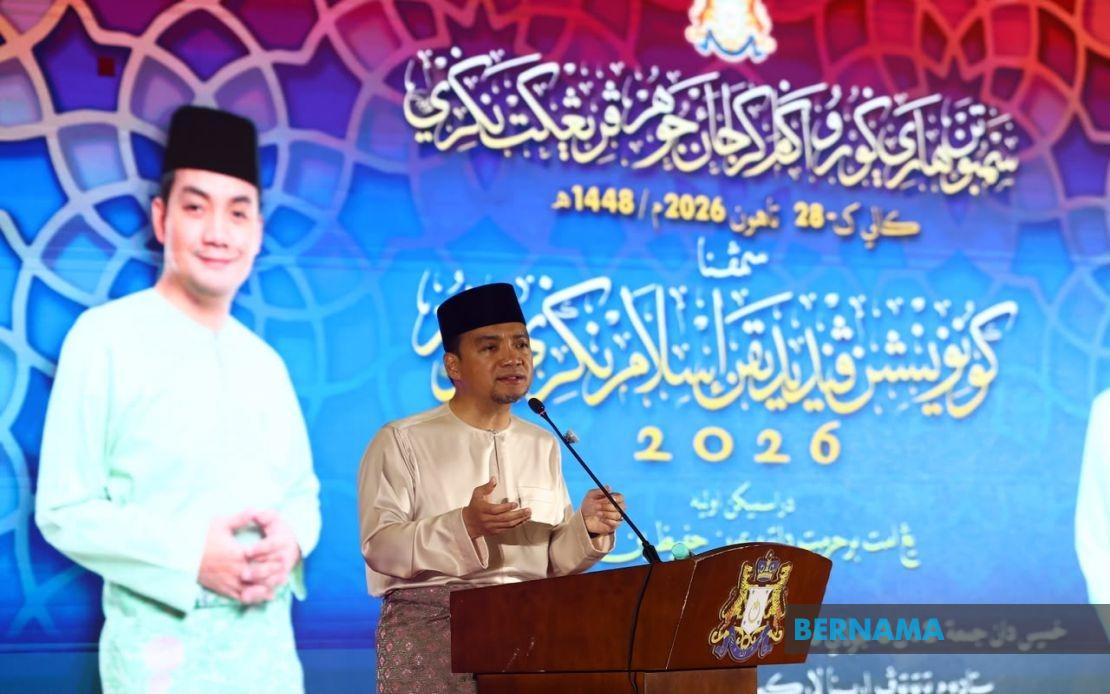
Menteri Besar Datuk Onn Hafiz Ghazi attributed the initiative's conception to Tunku Mahkota Ismail, the Regent of Johor, positioning the royal leadership as the driving force behind what officials describe as a transformative approach to state education policy. This credit to the Regent underscores how Johor's education reforms have become aligned with the palace's vision for modernising the state's institutional capabilities. The Menteri Besar's emphasis on the Regent's role reflects the deep integration of royal patronage within Johor's governance structure, a characteristic that distinguishes the state's policy-making processes from other Malaysian jurisdictions.
The four existing SRBJ schools—Sekolah Menengah Kebangsaan Seri Kota Puteri 2 and Sekolah Kebangsaan Seri Kota Puteri 4 in Pasir Gudang, alongside SMK Tasek Utara and SK Tasek Utara in Johor Bahru—serve as operational templates for the new religious school programme. These pilot institutions have functioned as laboratories for testing and refining educational methodologies before scaling them across the state system. The inclusion of both primary and secondary schools in the original cohort indicates that the programme's architects intended to create a comprehensive pipeline of reformed education, beginning from foundational years and extending through secondary certification.
The SRBJ framework encompasses five strategic pillars designed to modernise Malaysian public education: digital learning integration, multilingual capability development, character education, enhanced teacher training, and improved physical infrastructure. These components address persistent weaknesses in the conventional education system, particularly the gap between digital readiness and classroom capacity. The emphasis on linguistic proficiency acknowledges Malaysia's competitive positioning in an increasingly globalised economy, where monolingual graduates face diminished employment prospects. Character development reflects concerns about values formation in a complex modern environment, recognising that academic achievement alone is insufficient for producing socially cohesive citizens.
Extending this framework to religious schools presents distinct operational challenges and opportunities. Islamic educational institutions operate within specific pedagogical traditions centred on Quranic scholarship, hadith study, and Islamic jurisprudence. Integrating digital platforms, multilingual instruction, and character development programmes into these institutions requires careful calibration to preserve their distinctive religious mission while modernising delivery mechanisms. The religious school system in Malaysia has historically maintained separate governance structures, teacher qualification standards, and curriculum frameworks, necessitating bespoke adaptation rather than direct transplantation of secular school reforms.
The Johor government's announcement that it will further expand the approach to early childhood education through pilot kindergarten programmes indicates intention to construct a seamlessly reformed system spanning from pre-school through secondary years. This vertical integration reflects contemporary education research suggesting that early childhood intervention produces compounding developmental benefits throughout subsequent schooling. Kindergarten pilots allow authorities to test methodologies with younger cohorts before implementing them at larger scales, providing evidence for policy refinement.
The timing of this expansion, announced during the 28th Johor Government Religious Teachers' Day celebration, carries symbolic significance within Malaysia's Islamic education landscape. Religious teachers represent a crucial constituency whose professional development directly impacts classroom outcomes and student experience. By framing educational reform in conjunction with recognising these educators, the state government signals commitment to supporting rather than supplanting the religious education sector. This approach contrasts with political narratives in some jurisdictions that frame conventional and religious education as competitors rather than complementary systems serving distinct student needs.
For Malaysian education policy broadly, Johor's expansion into religious schools establishes a significant precedent. While other states operate Islamic schools, few have attempted comprehensive systemic reform across both conventional and religious institutions simultaneously. The SARBJ initiative creates an opportunity to demonstrate whether modernisation frameworks developed for secular contexts can successfully transfer to religiously-oriented institutions. Success could influence education approaches in other states and potentially inform federal policy discussions about balancing Islamic educational traditions with contemporary skill development requirements.
The infrastructure investment required for this expansion extends beyond Kota Iskandar. The government must develop teacher training programmes adapted to religious school contexts, establish digital learning platforms compatible with Islamic curriculum requirements, and create facilities meeting both modern educational standards and religious institutional expectations. These requirements demand coordination between multiple state agencies, including the Department of Islamic Affairs, the Education Department, and capital development authorities. Successful coordination demonstrates governmental capacity for complex cross-functional implementation.
For students in Johor's religious schools, these reforms promise enhanced learning experiences combining traditional Islamic scholarship with contemporary educational methodologies. The multilingual component addresses a significant disadvantage many religious school graduates experience in competitive employment markets, where English proficiency and digital competency have become non-negotiable. Character development programmes can strengthen values formation while equipping students with practical skills for contemporary citizenship. However, implementation quality will ultimately determine whether these promised outcomes materialise, requiring sustained commitment beyond initial policy announcement.
The expansion also reflects demographic and economic considerations shaping Johor's education strategy. As a state experiencing significant urbanisation and industrial development, Johor requires a workforce combining technical competency with values-grounded decision-making. Religious schools educate substantial student populations who deserve equivalent modernisation investments as their peers in conventional institutions. By integrating religious schools into systematic reform, Johor acknowledges their role in preparing competitive, skilled, ethically-grounded citizens capable of contributing to state economic and social development objectives.

