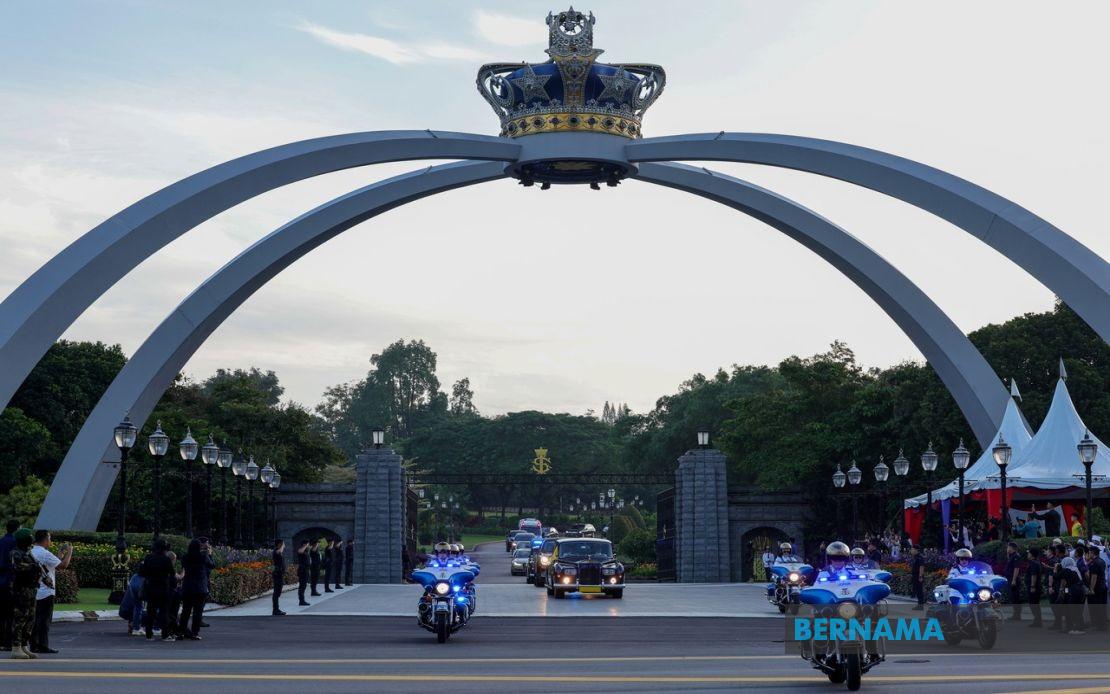
Johor's newly elected State Executive Council will now take its oath of office on Saturday rather than Friday, marking a last-minute adjustment to a constitutional ceremony that was to have been presided over by the state's Regent. The swearing-in, originally scheduled to occur at Istana Bukit Serene in Johor Bahru, was postponed without elaboration, with media outlets only receiving word of the change early on Friday morning.
The ceremony was expected to formalise the appointments of senior officials following the state election held the previous Saturday. Menteri Besar Datuk Onn Hafiz Ghazi, who secured his second consecutive term at the helm of the state government, was set to present his cabinet members before Tunku Mahkota Ismail, the Regent of Johor. The postponement, while unusual, did not alter the fundamental composition or timing of the broader political transition already underway.
Datuk Onn Hafiz himself was sworn in as Menteri Besar the previous Sunday after Barisan Nasional delivered a commanding performance at the ballot box. The coalition secured 48 of 56 available seats in the Johor State Legislative Assembly, granting it a decisive mandate to govern the state for another five-year term. This emphatic electoral victory represented vindication for BN's political strategy in Johor and reflected voter confidence in its administration of the oil-rich southern state.
The Menteri Besar, who represents the Machap constituency, wasted little time commencing transition proceedings once results were certified. Having served in the role previously, Onn Hafiz moved swiftly to begin assembling his new cabinet, a process that culminates in the formal swearing-in of Exco members. These ceremonial proceedings carry constitutional weight, as they formally invest ministers with their respective portfolios and executive authority within state government structures.
Several key figures were scheduled to participate in the ceremony. Datuk Dr Rahim Ramli, who holds the position of Johor Royal Council president, and Datuk Mohammed Ridha Abd Kadir, the State Secretary, were both expected to attend. The presence of such dignitaries underscores the significance of the occasion within Johor's political calendar and its alignment with state institutional processes.
No official statement explained the reasoning behind the delay, leaving political observers and media to speculate about potential causes. Such postponements occasionally reflect logistical considerations, health-related factors affecting participants, or administrative adjustments to ceremonial schedules. In Malaysian political practice, however, such last-minute changes are relatively infrequent at this level of formality, lending some curiosity to the decision.
The postponement carries little substantive impact on governance, as Onn Hafiz's appointment as Menteri Besar had already been formalised. However, it does defer the moment when his cabinet collectively assumes office, a symbolically important juncture in the transfer of power. For the newly appointed Exco members, the delay means waiting an additional day before their ministerial authority becomes formally operational.
For Johor, the state election result represented a significant political moment. The Menteri Besar's ability to secure a second consecutive term is no trivial achievement in Malaysia's competitive political landscape, where regional governments frequently face challenges from opposition coalitions. Barisan Nasional's performance in Johor demonstrated resilience and continued electoral appeal among the state's diverse constituencies, encompassing urban centres, industrial areas, and rural regions with distinct demographic and economic profiles.
The restructured cabinet that Onn Hafiz will now lead faces considerable expectations. Johor, as Malaysia's second-most populous state and a critical economic hub, requires capable stewardship across portfolios spanning infrastructure, education, commerce, and social services. The performance of this new executive council will significantly influence the trajectory of development and service delivery across the state over the coming years, with implications extending beyond Johor itself given the state's importance to the broader Malaysian economy and regional connectivity.
Saturday's ceremony will formally conclude a transition process that commenced with the election result announcement. Once Exco members have taken their oaths before the Regent, the newly constituted state government will be positioned to advance its governance agenda. The delay, while unexplained, ultimately represents a minor procedural adjustment within a broader political cycle that has already gathered substantial momentum.

